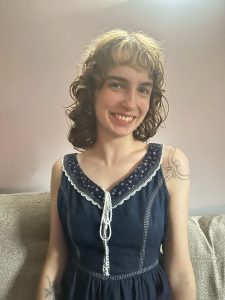
Immigration Legal Services with Clio Morbello ’26


Name
: Clio Morbello
Class Year: 2026
Major: Political Science

Internship Organization: The Immigrant and Refugee Community Organization (IRCO)
Internship Title:  Legal Services Intern

What’s happening at your internship? We would love to hear what kind of work you are doing! 

The Immigrant and Refugee Community Organization (IRCO) is a non-profit based out of Portland, OR. IRCO provides culturally specific services to immigrants, refugees, and families across Oregon and Washington. The legal services team, where I worked, provides low-cost legal education and assistance, including application aid and representation, for a diverse group of community members.  

Why did you apply for this internship? 

I’m originally from the Pacific Northwest and wanted to be close to home, so I sought out opportunities in the area. I also knew that I wanted my work to have a direct impact on the lives of my community members, and I am passionate about civic rights and supporting the immigrant community. 

Can you talk about the skills you are learning and why they are important to you? 

Working in an office has been a new experience for me, as was the entire field of legal services outside of my undergraduate coursework in Political Science. The most valuable skill I’ve practiced this summer has been asking questions, both for practical purposes and to further my learning in nonprofit administration and law. I’ve always had a difficult time asking others for help, but it has been essential in this internship. I’ve also become much more detail-oriented, and I’ve learned that it’s worth it to take extra time before submitting work to my supervisor for review. The stakes of making a mistake at the expense of a client or the ILS office are much higher than the stakes of my potential embarrassment. I’m happy to report that, in fact, nobody has ever been disappointed in me for asking too many questions.  

At the start of this internship, I was also very nervous about making direct phone calls to potential clients, namely because I worried that I would not have the answers or good news to offer. More often than not this was true, given my own lack of experience with the complexities of immigration law, our lack of capacity, and the general insanity of immigration policy in the U.S. However, I overcame my own anxieties and was able to begin the intake process for close to fifteen families, all the while becoming more confident in my own ability to communicate effectively and politely with community members, remain professional at all times, and answer questions.  

Although I’ve only scratched the service, my experience with immigration law has given me knowledge and practical skills that I intend to build upon and utilize in the future. I am currently looking for other avenues for involvement in legal services and direct support for the immigrant community, so that I can continue to advocate for and support my neighbors. 

What is most rewarding about your internship? 

It has been rewarding to know that my efforts to help streamline the client intake process and the provision of services to clients has directly allowed ILS to assist more people. This is an incredibly scary time to navigate the U.S. immigration system, and I’m grateful that my contributions have helped connect community members with legal aid and support, and offer some security.  

On the personal side, engaging firsthand with legal writing, operations, and professionals has increased my interest in law school and a career in legal aid. I’m grateful that I still have a year left at Bryn Mawr to take full advantage of the academic and career advisors that can help me plan my next steps. 
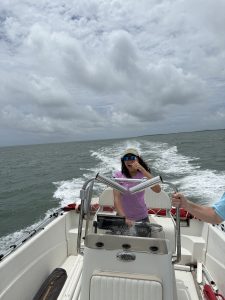
Geology Lab and Fieldwork by Charlize Hoeun ‘27 


Name
: Charlize Hoeun
Class Year: 2027
Major: Geology 

Internship Organization: Department of Geology, Bryn Mawr College
Internship Title: Student Researcher
Location: Bryn Mawr, PA

What’s happening at your internship? We would love to hear what kind of work you are doing! 

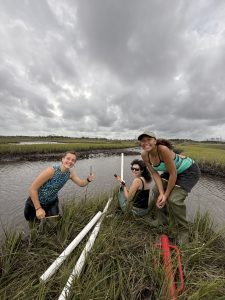
Two lab mates and I installing a water conductivity meter in a NC marsh

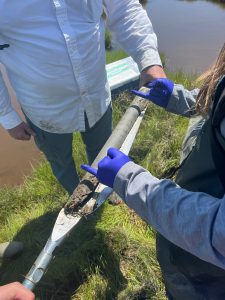
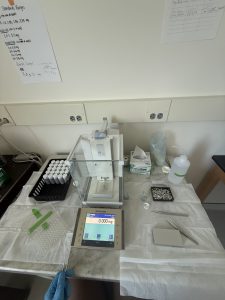
This summer I was able to work in a Sedimentology lab under my recent professor, Don Barber. Our main focus was to answer the question of whether or not the salinity levels of soil have any effect on carbon sequestration in salt marshes along the East Coast. While I’ve spent the majority of the summer inside of the lab here at Bryn Mawr, I’ve traveled to New Jersey and spent a couple of weeks in North Carolina with my professor and lab group. In New Jersey, we learned how to collect core samples from the ground and properly preserve them in order to be analyzed later on. In North Carolina, we collected more core samples from coastal wetlands but also installed multiple water level monitors that would constantly feed live data about the water conductivity back to us. Salt marshes are large recipients of atmospheric carbon due to the abundance of organic matter contained within marshes that accumulates and traps CO2. We made this data available to the public via a short infographic that could be accessed through a QR code. The QR codes are pasted onto the water monitors in the small coastal town we studied in North Carolina, whose population consists of a tight-knit community that has generally been uninformed of the seriousness of sea-level rise and how directly they will be affected in the near future. Inside of the lab, we analyze our core data through a series of procedures that tell us things like the mass of the organic matter and carbon concentration per centimeter. The mix of both scientific and social work has allowed me to adopt an array of new skills in the enriching environments I never would have been exposed to had I not been given this opportunity.

Why did you apply for this internship?  

Visual analysis of a core sample out in the field

I have worked with environmental organizations before, and I loved the learning experience it provided me with. I think it’s extremely important to begin sharing information and developing solutions for the inevitable effects of climate change; it’s much too late to reverse it, so keeping people safe and informed is the next best priority. Much like my professor, Don Barber, my hometown and surrounding areas are at high risk of being impacted by the heating of our oceans. His passion for research and getting through to residents in coastal cities reminded me of my own interests, and I was elated to be offered a position to work under him this summer. 


What has been your favorite part of this internship?
 

My favorite part of this internship has definitely been the fieldwork. Although it’s proven extremely challenging to dig meters down into the ground on hot days in full coverage clothes and high rubber boots, the fun of it outweighs the struggle. When we would hit sand and clay material during the coring processes, we would use the full body weight of everyone in the field to penetrate through the sticky, dense layers. The contrast between the strenuous labor we did outside together and the tedious analyses that took place in the laboratory made for a very engaging workload; it was never boring because we were always tasked with something different and cool. I also happen to enjoy road trips, and my lab has had our fair share of them this summer to get to the sites we’d mapped in multiple states.  

Lab balance for weighing milligrams of samples to be analyzed for their carbon

Can you give us three adjectives and three nouns that describe your internship experience?  

The adjectives I would give this internship are exciting, thought-provoking, and relevant. Some nouns I’d use to describe it would be nature, team and mud.  

Kasey Quiche ’27 Interns with Voces Latinas 


Name
: Kasey Quiche
Class Year: 2027
Major: Sociology, Political Science

Internship Organization: Voces Latinas
Internship Title:  Legal Service Intern
LocationJackson Heights, NY

What’s happening at your internship? We would love to hear what kind of work you are doing!  

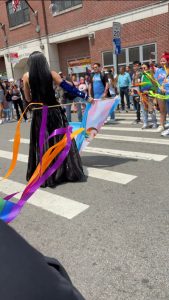
Pride Parade in Queens that Voces Latinas staff all attended!

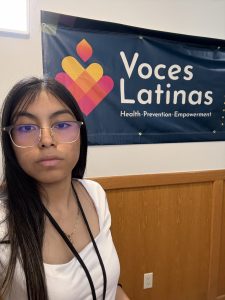
Voces Latinas is a nonprofit organization that started with a mission to reduce the rates of HIV transmission and violence among immigrant communities within the Latinx population. Since then, Voces Latinas has expanded its mission and now operates across eight central pillars: sexual health and wellness, domestic violence, health care services, workforce development, women’s services, legal immigration, mental health, and community outreach. In particular, the legal service team has helped newly arrived immigrants with asylum applications, employment authorization applications, and legal consultations. In addition, they help with advocacy letters to judges, connections to pro bono lawyers, and declaration documents. During my time here, I have assisted clients with asylum applications, EAD applications, and translation of important documents like birth certificates.  

Why did you apply for this internship?  

I am really passionate about helping the immigrant community, especially because I’ve seen firsthand how difficult it can be for people to navigate systems that aren’t designed for them. I also participated in this internship because it was the perfect opportunity to gain direct, hands-on experience in the legal field while also contributing to work that truly matters to me. I’ve always known that I wanted to pursue a career where I could advocate for others, and this experience has made me more confident that becoming a lawyer is the right path for me. Working alongside attorneys and legal staff has given me a much clearer sense of what legal work entails on a day-to-day basis – from filling out complex applications to drafting advocacy letters and assisting clients in preparing for court. I enjoy the work I’ve been doing. 

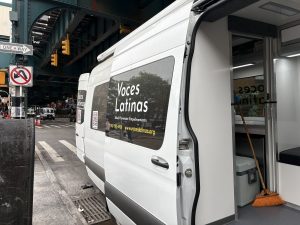
Voces Latinas community outreach van

I’ve also learned a lot just by talking with my colleagues about their own journeys through law school and public interest work. Law school is a big investment, both financially and emotionally, so being able to ask questions and get honest advice from people who have already gone through it has been incredibly valuable. These conversations have also opened my eyes to other career fields I hadn’t seriously considered before, such as immigration policy work, nonprofit leadership, or paralegal roles in community-based organizations. Even if I ultimately choose to become an attorney, I now understand the many ways people can support immigrant communities through legal and advocacy work.

What was your favorite part of this internship?  

My favorite part of this internship has been meeting and talking to clients! I am always interested in learning about other people’s lives, so when clients feel comfortable sharing, I am always happy to listen. It’s one thing to see on the news how a country’s poor conditions are affecting families and another to interact with them face to face and hear about them.
  
Can you talk about the skills you are learning and why they are important to you? 

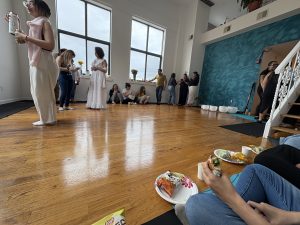
The whole Voces Latinas team attended a free soul immersion experience hosted by Siembra Today. The workshop included an evening of sound healing, “charla” or chit-chat, and artistic expression led by licensed and holistic practitioners.

During my internship at Voces Latinas, I’ve developed several important skills that are deeply connected to both my personal values and professional goals. One of the most valuable has been improving my communication skills, especially in Spanish. Since many of our clients are mainly Spanish speakers, I’ve learned how to explain complex legal processes in another language. I now feel much more confident speaking Spanish, even when handling sensitive topics. This is important to me not just because I am passionate about becoming a lawyer, but because I hope to serve immigrant communities who often face language and cultural barriers in legal settings. 

I’ve also strengthened my legal writing and research skills, particularly through helping draft asylum applications and letters to immigration judges. Writing advocacy letters and compiling country conditions reports for asylum cases has taught me how to make compelling legal arguments while being mindful of each client’s unique story. These experiences are critical for my future in the legal field, especially if I pursue immigration or public interest law. 

In addition, I’ve become much more adaptable and efficient in a fast-paced environment. On any given day, I may need to troubleshoot a printer, translate a birth certificate, or walk a client through the next steps for their case. These situations have helped me build my problem-solving and time management skills, which are essential in legal and nonprofit work where resources are often limited. 

Finally, I’ve learned the importance of ethical responsibility and community trust. Seeing how many of our clients have been misled or exploited by unlicensed “lawyers” has been upsetting, but it has also reinforced how important it is for me to build trust and offer accessible, honest support.

What has been the biggest challenge you have faced at your internship? 

The biggest challenge I’ve faced during my internship at Voces Latinas has been managing the emotional weight of clients’ stories while still remaining professional. Many of the individuals Voces Latinas helped have experienced trauma, violence, family separation, or extreme poverty in their home countries. It’s incredibly moving – and sometimes heartbreaking – to hear what they’ve gone through, especially when they share details about leaving children behind or being mistreated on their journey to the U.S. 

At first, I found myself feeling overwhelmed after some of these interactions. I wanted to help in every way possible, but I quickly realized that I needed to set boundaries to avoid burnout and stay grounded in the legal tasks I was assigned. Over time, I’ve learned how to balance empathy with professionalism – listening actively while still focusing on how I can best support them with the resources the organization offers. 

This challenge has made me stronger emotionally and more self-aware. It has also deepened my commitment to pursuing a legal career where I can continue advocating for vulnerable communities while also valuing and taking care of my own mental health.

Returning to Serve: A Public Health Internship at Akropong, Ghana


Name
: Theresah Tawiah
Class Year: 2027
Major: History
Minor: Biology, Health Studies

Internship Organization: Akropong Government Polyclinic 
Internship Title:   Public Health and Epidemiology Intern
Location: Ghana

What’s happening at your internship? We would love to hear what kind of work you are doing! 

Community outreach at the Boko Catholic School about menstrual hygiene

 At the Akropong Government Polyclinic, I’m gaining hands-on experience in vaccine distribution, disease control, and health monitoring. I’ve learned how vaccines are sourced globally through the Global Alliance for Vaccines and Immunization (GAVI), stored at controlled temperatures (+2°C to +8°C), and transported through Ghana’s health system, from national to sub-district levels via cold rooms and cold boxes. I’ve also seen how damaged vaccines are carefully disposed of to prevent contamination, with EPA and NDA oversight. 

Using digital tools like DHIMS2, with the help of the team, I track vaccine administration, while immunization monitor charts help me visualize campaign progress. I am working under the guidance of Mr. Marfo, the District Disease Control Officer for Atwima Nwabiagya North. 

In the disease control area, I’ve learned about TPT (Tuberculosis Preventive Therapy), which is used to protect individuals exposed to TB from developing active disease. 

I’ve also begun learning a bit about nutrition, including how accurate assessments play a key role in monitoring child health and avoiding misdiagnoses. 

I had the opportunity to lead a community health outreach about Menstrual hygiene at the Boko Catholic school, where I spoke to about 90 girls and educated them on the menstrual cycle and how to keep themselves healthy and clean during menstruation.

Why did you apply for this internship?  

A picture with the Atwima Nwabiagya North Disease control officer

I chose this internship because it brings together my passion for public health, my academic background, and my personal connection to the Akropong community. Having previously worked at the Akropong Government Polyclinic around the COVID-19 pandemic, I saw firsthand how clear communication and local trust can shape health outcomes. That experience sparked my interest in epidemiology and disease prevention. Returning now as an intern allows me to deepen my practical knowledge of health systems, strengthen my community engagement skills, and contribute meaningfully to the place that first inspired my public health journey.

Was there anything special about how you found this internship? 

 Yes, this internship is special to me because it’s not something I just stumbled upon. After connecting with the Akropong Government Polyclinic during the COVID-19 pandemic and being a volunteer there to support health education and vaccine awareness, gave me experience that has sparked my passion for public health. So coming back now as an intern feels intentional and personal, like continuing a journey that began during a critical time for the community and for me.

What has been your favorite part of this internship?  

A picture of vaccines for the various sub district clinics and hospitals

My favorite part has been working with young girls, children, and the wider community. I’ve especially enjoyed the moments spent interacting with people, listening to their concerns, answering their questions, and helping them understand how to take care of their health. Whether it’s educating mothers about immunizations or encouraging young girls to prioritize their well-being and menstrual hygiene, these one-on-one connections have been the most rewarding part of this experience.     

What is something you have learned from your internship that you didn’t expect? 

One important thing I’ve learned is that effective public health work goes beyond data and policies, it’s about people. Building trust, listening with empathy, and communicating clearly are just as vital as knowing the science. I’ve seen how small actions, like educating someone about vaccine safety or correcting a nutrition misconception, can make a big difference. This experience has taught me that true impact often starts at the community level. 

Can you talk about the skills you learned and why they are important to you? 

I’ve learned practical skills in vaccine handling, cold chain management, and data tracking through systems like DHIMS2. I’ve also become more familiar with how immunization campaigns are organized and monitored. Alongside these technical skills, I’ve grown in health communication and community engagement, especially when educating people on disease prevention and interacting with vulnerable groups. These skills are important to me because they’ve given me real-world insight into how public health systems function and shown me how to connect compassion with action in the field. 

What has been the biggest challenge you have faced at your internship? 

My biggest challenge has been working in environments where there aren’t always enough resources to do the job effectively. At times, the lack of adequate tools, materials, or support systems made it difficult to carry out certain tasks smoothly. I also had to take time to understand how things work within the public health structure, how decisions are made, how data is managed, and how interventions are implemented. These challenges have taught me to be resourceful, to ask questions, and to keep learning even in tough situations. 

Can you give us three adjectives and three nouns that describe your internship experience? 

Eye-opening experience  

Community-centered work 

Impactful

What is most rewarding about your internship?  

The most rewarding part has been engaging directly with the community, especially working with young girls and children. I’ve really enjoyed the opportunity to interact with people, listen to their concerns, and share helpful health information in ways they can relate to. Being part of something that builds trust and awareness at the grassroots level has been incredibly fulfilling and has reminded me why I am choosing public health in the first place.

Was this internship what you expected it to be? 

Not entirely. I came in with an idea of learning about vaccines and public health systems, but being on the ground showed me so much more. I didn’t expect the level of adaptability it would require or how much I’d enjoy connecting with the community. It challenged me in new ways, but it also confirmed that I’m on the right path. 

Serving in My Homeland! by Juanita Beenyi


Name
: Juanita Beenyi
Class Year: 2026
Major: Chemistry

Internship Organization: Family Life Pharmacy
Internship Title:   Pharmacy Technician
Location: Winneba, Ghana

What’s happening at your internship? We would love to hear what kind of work you are doing!  

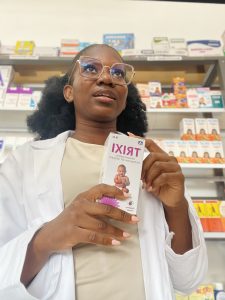
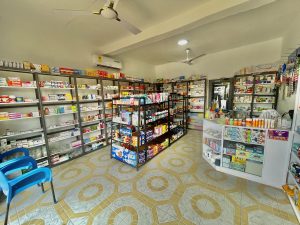
At Family Life Pharmacy, I’ve been getting a real hands-on feel for what goes into patient care. I spend a good part of my day talking with patients who are either picking up prescriptions after a hospital visit or preparing for one. I help make sure they’re getting the right medications for their needs. I also run a few basic tests (like malaria, typhoid, and blood pressure checks), which give more insight into what patients are dealing with based on the symptoms they share. 
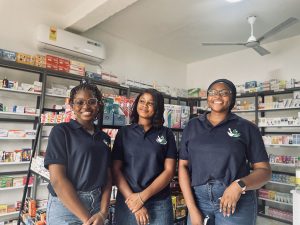
On the logistics side, I help with inventory tasks such as sourcing, ordering, and restocking pharmaceutical supplies. I also play a role in monitoring drug stock levels to prevent both shortages and overstocking, ensuring that essential medications remain available for patient care.

Why did you apply for this internship?

I was always very interested in applying for a psychology-related internship. When I found out about the opportunity to intern in Vienna, I was immediately sold. Not only would it be really cool to be able to do an internship in a different country and explore the differences in psychology and therapy between the U.S. and Austria, but, since I am from the Netherlands, it was also a chance for me to be closer to home and family. Additionally, the opportunity to work at the trauma institute in the psychotherapy department aligns well with my interests and academic goals.
What has been the biggest challenge you have faced at your internship?

Although I was raised in Ghana, I wasn’t familiar with many local languages due to the country’s ethnic diversity and the dominance of English in schools. At the pharmacy, I was surprised to find that most clients communicated in “Fante” when describing medical conditions or requesting medications. Many drugs – even foreign ones –  had local names, which made it challenging to assist them initially. However, with the support of the staff and my willingness to learn, I picked up the frequently used names over time. This experience deepened my appreciation for cultural and linguistic competence in healthcare settings.

Can you give us three adjectives and three nouns that describe your internship experience? 

Empathetic, Fast-paced, Restorative 

What is most rewarding about your internship? 

One of the most rewarding moments of my internship happened on my way to the pharmacy one morning. I was walking when I saw a middle-aged man wave at me – he was a former patient I had helped a few weeks earlier. He came into the pharmacy extremely weak, to the point that I had to assist him into a chair that day. Now, here he was, standing strong, and telling me how much better he felt after he took the medications we gave him. Seeing someone recover and knowing I played a part in that process was incredibly fulfilling. Moments like that reminds me why I am passionate about healthcare – it is not just about medicine, but about people, restoration, and hope.

Priita Peterson ’26 interns at Innovation Academy in Germany’s “Green City” 


Name
: Priita Peterson
Class Year: 2026
Major: Environmental Studies
Minor: Spanish

Internship Organization: Innovation Academy e.V.
Internship Title:   Summer Intern 
Location: Freiburg, Germany

What’s happening at your internship? We would love to hear what kind of work you are doing!  

Test run of in-progress climate adaptation tour

I am working at Innovation Academy e.V, a small non-profit that runs sustainability focused tours in Freiburg and other cities in Europe for students and professionals and organizes various other projects around sustainability education. My first project was to research and create a presentation on waste management policy in the E.U. as a part of a waste management tour. This was added onto their presentation about Freiburg’s waste management which I also updated and translated to English. My main project has been to develop a tour about climate adaptation in Freiburg for high school age students. The city can serve as a great example for heat and rainwater adaptation, especially with the city’s implementation of the sponge city concept. For this tour I have researched the city’s policy on climate adaptation and the many locations where it has been implemented. I have also developed a route, quiz questions, and activities for the tour. Along with this project, I have been preparing materials for tours, sometimes also going on the tours and taking photos/videos as well as running the organization’s instagram.

Why did you apply for this internship? 

A sea of Frelo bikes

Having taken classes from both Victor Donnay and Carol Hager – both of whom organize the 360 that goes to Freiburg, Germany – I had heard about the Innovation Academy Sustainability Internships multiple times and therefore decided to look into it. As an environmental studies major I am interested in urban issues of sustainability and environmental justice and was fascinated by the “Green City” of Freiburg. I was interested in experiencing it for myself and learning about how it had earned that title and maybe take ideas back to the US with me.

What has been the biggest challenge you have faced at your internship? 

My biggest challenge at this internship has been working an office job for the first time that is primarily in front of a computer. This is both an adjustment from my past work environments as well as an adjustment from US work culture to German work culture. A lot of my work is independent and without strict deadlines or stepping stones. Therefore, it requires much more initiative, time management, and communication. It has been a challenge for me to not be scared to ask questions. I am working to be more independent and organized with my projects while still being communicative about the process. In terms of German work culture, I am loving the separation of work and personal life.  

What has been your favorite part of this internship? 

“Sponge city” model which is used as a stop on the climate adaptation tour

My favorite part of this internship has been going on tours and meeting students from all over the US who all have different backgrounds and interests under the topic of sustainability and environmental studies. By talking to them and hearing them compare Freiburg to their hometowns, I have learned about not only Germany, but also about cities in the US. It was especially fascinating to hear about what the city of Gainesville, Florida is doing around climate mitigation and resilience. These tours have also opened my eyes to innovative city planning, especially in the area of transportation, as well as food sustainability and waste management. These topics that I am learning about and researching about become part of my lived experience in Freiburg as I now try to bike everywhere and be more conscious of my own waste to try to re-use products and share food as much as I can. 

Interning at the UNESCO Black Forest Biosphere Reserve by Ellen Valliere ’27 


Name
: Ellen Valliere
Class Year: 2027
Major: German Studies
Minor: International Studies

Internship Organization: UNSECO Biosphärengebiet Schwarzwald
Internship Title:   Public Relations Intern
Location: Schönauim Schwarzwald, Germany

What’s happening at your internship? We would love to hear what kind of work you are doing!  

The UNESCO Black Forest Biosphere Reserve works to preserve the unique cultural and natural environment in Southwest Germany by encouraging collaborative relationships and exchange between conservationists, farmers, local businesses and educators alike. My role involves maintaining the team’s social media (@biosphaerengebiet_schwarzwald) and supporting community outreach through educational events, research projects, and regional tours. Working in public relations provides insight into each of the Biosphere Reserve’s interwoven departments: 
  • Land Use 
  • Nature conservation, Landscape Care, Research, and Monitoring 
  • Regional Development, Tourism, and Economy  
  • Education, Society, Culture, and Social  

The Biosphere’s team works alongside the local community to further the interests and efforts described by each department. Environmental sustainability is at the forefront of all the Biosphere Reserve’s projects, especially with drought, floods, heat waves and other effects of climate change already evident in the region.

Why did you apply for this internship? 

I found the internship at Biosphaerengebiet Schwarzwald through Dr. Margaret Strair in the bi-co German Department and Innovation Academy in Freiburg – an independent non-profit offering sustainability-based education in the region. I pursued the opportunity, in the interest of practicing German and supporting global climate justice. Also, so I could spend the summer outside, surrounded by gorgeous nature!
What has been your favorite part of this internship?

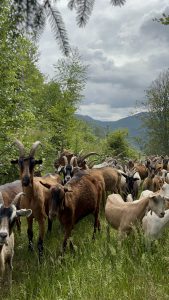
 One highlight I witnessed was the opening of a modern forest pasture in June, where 150 goats were brought to graze in a section of dense forest for three days. Forest grazing was a traditional Black Forest farming practice for centuries before being banned in the 19th century for its toll on the land. However, when practiced in moderation the goats help clear invasive plants, allowing more space and light into the forest. This greatly benefits the species diversity of native insects, flora, and fauna. By integrating the knowledge of both environmentalists and farmers, the Biosphere Reserve and the local town of Utzenfeld have been able to renew the tradition — it was beautiful to see all the happy goats!

What is most rewarding about your internship? 

It’s been super rewarding to feel my German improve week by week, especially the moments when I realize I’m able to converse and express myself more naturally! Hiking through the woods to and from work everyday has been similarly rewarding, as it too gets a bit easier each time. Overall, I am inspired by the widely shared commitment to caring for the land here in the Black Forest – ensuring that a mosaic of forest, meadows, pastures and villages over 1000 years old may live and grow together long into the future.

Bioinspired Polymer Research in the Sustainable City of Freiburg: Emma Blersch ‘27 


Name: Emma Blersch
Class Year: 2027
Major: Geology
Minor: Environmental Studies

Internship Organization: University of Freiburg
Internship Title: FIT Research Intern
Location: Freiburg, Germany

What’s happening at your internship? We would love to hear what kind of work you are doing!  

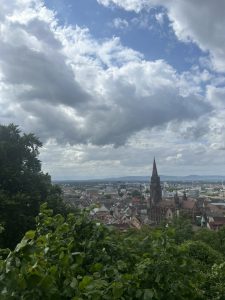
The beautiful city of Freiburg!

FIT is a lab group at the University of Freiburg made up of many professors and post-bac students doing bio-inspired tech research. I was placed with two PhD student advisors doing active research, who have been guiding my personal research project. The main focus of the research is bio-inspired polymer-based actuators, specifically testing the thermo responsiveness and the effect of different materials on the actuation. My days are mostly spent in the lab, carrying out tests and collecting data!

Why did you apply for this internship? 

I applied for this specific internship because I’m interested in sustainability research and what that looks like in an international university. I found this internship through Bryn Mawr’s connection with Innovation Academy. There were multiple sustainability-based internships offered, but I want to go into research, and so working with a lab at the University of Freiburg appealed to me the most. It’s an incredible opportunity to work with such an active and international lab abroad! 

What has been the biggest challenge you have faced at your internship? 

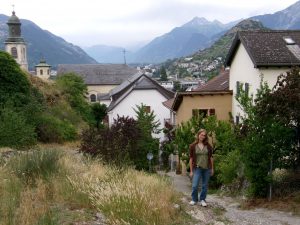
Travel opportunities; took the train to Sion, Switzerland

This is my first research-based internship and it’s a bit challenging to figure everything out, especially in a lab abroad! The German university and research system works a bit differently and it was very confusing to get settled and understand what I was supposed to be doing in the beginning. It was also my first time being outside the US on my own, so getting my bearings in a new job and a new country at the same time was very challenging at first. But once I overcame that initial newness, I’ve come to love my internship and the city I’m doing it in! It’s a challenge I’ve been happy to face! 

What has been your favorite part of this internship? 

The people and the place! FIT is a very international lab with people from all over the world doing so many different kinds of research projects. It’s a wonderful community to learn about science and about others’ experiences. I also love the University and the city of Freiburg so much! It’s such a beautiful place to spend the summer, surrounded by the Black Forest, and with a great public transportation system and sustainability initiatives. 

Building Software for Google with Saniya Mukhambetkaliyeva ‘27


Name
: Saniya Mukhambetkaliyeva
Class Year: 2027
Major: Computer Science

Internship Organization: Google
Internship Title:   Associate Software Developer Intern
LocationSan Francisco, CA

What’s happening at your internship? We would love to hear what kind of work you are doing!  

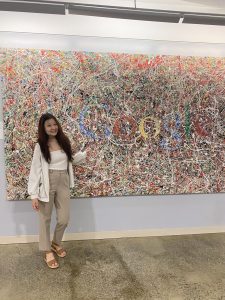
I build software for an internal System Health monitoring web tool used by thousands of Google Engineers to diagnose issues and maintain applications stability and quality. I use web developmental frameworks to build a new feature that fetches data from external backend servers and display it for users. My internship also involves me collaborating with other engineers to devise design solutions, discuss data optimization strategies.
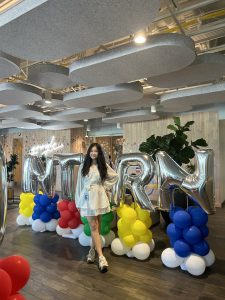
Why did you apply for this internship?  

This is my second time interning at Google and I’ve loved my past summer so much that I decided to return. I love the company culture of collaboration and many self-developmental opportunities like courses, panel talks and conferences I can attend, cooking classes and other amenities.  

I also believe that as a Computer Science major, one of the best ways to practice my skills is to build software that directly impacts users 

What has been your favorite part of this internship? 

Since it’s such a large company I’ve been meeting so many people, including lots of interns from all over the continent. And there are so many opportunities for non work related development like cooking, fitness classes. And I’m also happy to spend a summer in the San Francisco Bay Area, for tech people it’s one of the best cities to be in. 
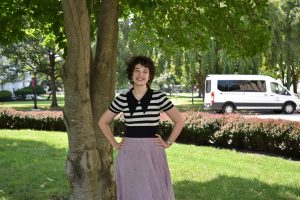
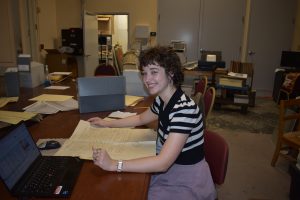
One key thing I learned was from my managers and mentors that emphasized the importance of being seen and showcasing your work to others. Because oftentimes it may seem that your value as a software engineer is bases solely on your output, but you can bring lots more value by being a team player, supporting others, showing up to places and just being present for team lunches, meetings.  

What is something you have learned from your internship that you didn’t expect? 

One key thing I learned was from my managers and mentors that emphasized the importance of being seen and showcasing your work to others. Because oftentimes it may seem that your value as a software engineer is bases solely on your output, but you can bring lots more value by being a team player, supporting others, showing up to places and just being present for team lunches, meetings. 

The Sailor Project at Girard College with Vivian Bloom ‘26 


Name
: Vivian Bloom
Class Year: 2026
Major:  English
Minor: Spanish

Internship Organization: Founder’s Hall at Girard College
Internship Title:   Collections Intern
Location: Philadelphia, PA

What’s happening at your internship? We would love to hear what kind of work you are doing! 

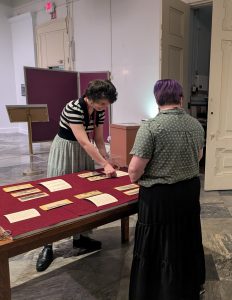
This internship was the culmination of a three-year project collecting and documenting information about sailors who worked for Stephen Girard, a merchant, banker, and philanthropist in early America, and the richest man in America when he died. Girard saved all of his papers, allowing us access to information that is usually lost. This project is exciting because it highlights individuals often left out of history. Sailors were often poor, lower-class, or people of color. These documents contained names, jobs, wages, physical descriptions, family details, literacy status, arrest records, clothing brought on board, and other small details that help create a picture of real people who lived and worked during this time. Founders Hall has maintained these records for a long time, but accessing the information about the sailors was challenging due to the large volume of papers and the extensive period covered. The project aimed to create a spreadsheet that organizes the crew members on each ship, along with any details about them in one place. This effort to make this information easier to access will help people better understand the maritime world of the late 18th and early 19th centuries.
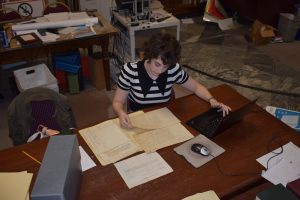
Why did you apply for this internship? 

Many people wonder why as an English major I applied for an internship focused on history. I approach English with a historical lens. I am particularly interested in how literature and media shape our understanding of history and affect the historical record. Plus, I just love old things. My favorite spot on campus is special collections, so when I learned about the internship at Founder’s Hall that involves working with historical documents, I was eager to apply. This internship also caught my attention because it focuses on the maritime world, which I developed an interest in when I took a course on Moby-Dick last semester. I am particularly fascinated by the social, class, and racial dynamics on ships and working with records of real sailors lets me explore those interests further.

What has been your favorite part of this internship?

I love puzzles and this project felt like one big historical puzzle. We had to review documents with incomplete information and compile them to gain a clearer understanding of the bigger picture. For example, one document listed names and jobs, while another showed wages. Our job was to connect the information from both. Sometimes, we encountered different spellings of the same name, and we had to determine if they referred to the same person. It was sometimes tough to figure out, but it was so satisfying when the pieces fit together.  

What is something you have learned from your internship that you didn’t expect? 

I discovered that there is such strong network of relationships between museums in Philadelphia. We had several opportunities to visit other museums, engage with their archivists, all thanks to connections within the museum community. There was one day when we were unable to work from Founder’s Hall due to electrical work, but thanks to my supervisor’s connections, we were able to relocate our documents and continue working at the American Philosophical Society for the day. There is such a spirit of collaboration and cooperation between institutes.