Ariya Bandy ‘27 Crafts Character Arcs for a Magical Game World


Name:
Ariya Bandy
Class Year: 2027
Major: Philosophy

Internship Organization: Icarus Alpha Inc.
Internship Title: Game Writer
Location: Remote

What’s happening at your internship? We would love to hear what kind of work you are doing!

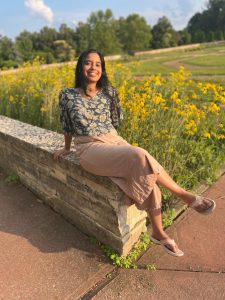
This summer, I am a game writing intern on a 3D game in development at Icarus Alpha Inc. These past few months, I have been constructing character profiles, including backstories, personalities, and relationships for the main characters of the project, weaving these elements with existing and expanding worldbuilding. In collaboration with other writers as well as members of other teams, we are making sure the narrative aspects of the game seamlessly integrate with the art and level design.

Why did you apply for this internship?

Prior to applying to this position, I had been writing and publishing my own creative writing, and in the summer of 2025, I made and released my first interactive fiction game. While I fully intend to continue to pursue personal creative projects, through working behind the scenes at Querencia Press and khōréō magazine, I learned that I really have a passion for working in teams on projects that are larger than the sum of their parts. I found what some people at Icarus had been working on and, upon further investigation, discovered that their goals of bringing creatives from around the world together to create innovative and meaningful experiences were highly aligned with my own. Frankly, I wasn’t expecting to hear back when I first applied, but I am incredibly grateful that I did!

Can you talk about the skills you are learning and why they are important to you?

I’d have to say that my favorite part of this internship has been getting the opportunity to work with so many other talented and intelligent people. Writing can sometimes be a fairly isolating act, so it has been incredibly refreshing to get to bounce ideas off of other writers and gain new perspectives from people who may have more experience writing for games than I do. Collaborating with members of other departments has introduced an entirely new dimension to how I think about creative projects. I am not required to attend meetings of other departments, but I always love to join because I gain a much better understanding of what all goes into making a game and what all I need to consider in writing for one. It is so inspiring to witness the processes of creatives in different mediums, and I will take what I have learned from them into future endeavors.

What is most rewarding about your internship?

The fact that my work has a direct impact on the work that others do and the creative direction of the game is definitely the most rewarding aspect of my internship. At first, I was terrified. My first task was to develop the player character of the game. I was so afraid of suggesting something that wasn’t in line with the existing vision, and it took time for me to not fear my own voice, but as I have gotten to know my peers and project leads and they have gotten to know me this summer, it has become much easier to share my perspective. Seeing how my ideas shape this larger project reminded me of why I do this. It turns out there was nothing to be scared of.

Maia Tsalik ’26: My Berlin Summer Internship 


Name
: Maia Tsalik
Class Year: 2026
Major:  Philosophy
Minor: Political Science
 
Internship Organization:  Berlin International University of Applied Sciences
Internship Title:   Research Assistant
Location:  Berlin, Germany
 
What’s happening at your internship? We would love to hear what kind of work you are doing!  

This summer I worked as a research assistant at Berlin International University of Applied Sciences! I worked with a professor there on his research about biopolitics, necropolitics, and migration theory. The research focus was to explore how migrants in Germany are impacted by health care and death care policies. To do this, we used biopolitics theories from various philosophers, political scientists, and anthropologists. My focus this summer was to help come up with a theoretical framework for the research, something that was heavily supported by my experience at Bryn Mawr taking philosophy and political science classes.
 
Why did you apply for this internship?  

I applied for this internship because I was hoping to get more experience doing philosophical research. I was also motivated to pursue an internship abroad after having such a good experience living internationally during my study abroad semester.
 
Was there anything special about how you found this internship? 

I found this internship through someone at the career center! I set up a meeting to get help finding a summer internship, and was connected with the IES Abroad Summer Internship Program! It ended up being fully supported by Bryn Mawr and a perfect opportunity.  

What has been your favorite part of this internship? 

Getting to read philosophy and political science papers! I had hoped to do an internship where I got some exposure to the disciplines, but hadn’t expected to be able to do so to the extent that I did. All summer I just got to read about research and different theories about biopolitics and necropolitics. I got to learn about an area of political philosophy I previously hadn’t. 

Maritime Mysteries: Finding the Forgotten Sailors of 18th and 19th century Philadelphia by Sam Ritter ‘27 


Name
: Sam Ritter
Class Year: 2027
Major: History
Minors: English, Philosophy
 
Internship Organization: Girard College
Internship Title:   Founder’s Hall Curatorial Intern
Location: Philadelphia, PA
 
What’s happening at your internship? We would love to hear what kind of work you are doing! 

My internship involved combing through the ship records of Mr. Stephen Girard, one of Philadelphia’s wealthiest merchants during and since the Revolutionary Era. After his death, all of Girard’s papers were packed up and preserved through the centuries, nearly exactly as they were in life. As such, many more records of individual sailors and craftsmen are preserved here, primarily in ship’s logs and wage records. My work extracted information on individual sailors on Girard’s ships Liberty and Superb, his Brigs Sally I, Sally II, and Polly, and various smaller ships he partially owned or worked with. Together with my fellow intern, Vivian Bloom, and two previous interns in 2023 and 2024, our work now grants a full statistical picture of those working on Girard’s ships, people who have disappeared from the historical record in every other case.

Why did you apply for this internship?  

One of the many reasons I applied to and chose to come to Bryn Mawr was its proximity to Philadelphia, one of the most historically rich cities in America. This internship granted me an opportunity to take advantage of that proximity and engage first-hand with Philly history and with the city’s museum scene. I hope to continue research and archive work after graduation; This was an opportunity to add directly to the general historical database and shed light on individuals who do not appear anywhere else in the historical record but who built the Philly economy with their labor.     

What is something you have learned from your internship that you didn’t expect? 

Before this internship, I did not have a particularly clear understanding of the structure of the historical maritime world, nor did I know exactly who featured within it. This internship taught me quite a bit about historical record keeping, the positions on historical sailing ships, and the kinds of people who did sailing work. One thing that surprised me was just how many countries sailing individuals came from. One particular voyage, courtesy of Brig Modest, had only 4 American sailors. The rest came from Portugal, Scotland, England, France, and Germany, among others. My work on this internship in particular also paves the way to analyze statistics on sailors of color working for Mr. Girard. We only have records of 73 sailors of color (physical description was recorded less than other information), but they served in a wide variety of positions – Seamen, Carpenters, Apprentices, Cooks, even as First Mate. It was a unique experience to uncover these facets of the lives of individuals.  

Can you give us three adjectives and three nouns that describe your internship experience? 

Unique: There is very little like the environment of working in a small museum, and nothing like working with the Girard collection. The passion everyone has toward the work they are doing and the effort everyone puts in to make things happen is something I have yet to see anywhere else. 

 Museum: While my internship itself was based in the Girard Archives, my place of work also hosted the Girard College Museum. Over the course of my internship, I got a glimpse into its workings, including helping set up a new exhibit!  

Engaging: You would think that going through literally thousands of papers looking for names and dates would become quite dreary after a while. And while it did become monotonous at times, there is something about uncovering the stories of individuals – the first person to do so in centuries – that never stopped feeling special.  

Opportunity: Outside of my internship itself, I also had incredible opportunities to meet other museum and historical leaders around the Philly area. From meeting the woman who led the work to have Philly listed as a UNESCO World Heritage City to listening to presentations at the American Philosophical Society on the impact of nuclear testing on Indigenous Peoples of the Pacific, I had a plethora of unique and unexpected opportunities to engage with the work others were doing parallel to mine.  

Demanding: Trying to finish going through Mr. Girard’s records by the end of the summer was an ambitious goal from the beginning. We managed to do it, but we had to be disciplined to get it done. Furthermore, Girard College is an hour to an hour and a half from Bryn Mawr by public transit. I loved the internship I did, but it really took all of my time and energy to commit to it.  

Career: More than anything else, this internship absolutely fulfilled the promise of career connections and opportunities. Though I don’t know where I will go after college, working at Girard meant I made some invaluable connections in museums, archives, and non-profit work in Philadelphia. Those connections will be beneficial no matter where I go, and could help kick-start a career in museum or archival work. 

Between the Synapse by Nirvaa Shah ‘27 


Name
: Nirvaa Shah
Class Year: 2027
Major: Biology
Minor: Philosophy

Internship Organization: Department of Neurosurgery, Perelman School of Medicine
Internship Title:  Research Assistant
Location: Philadelphia, PA

What’s happening at your internship? We would love to hear what kind of work you are doing!  

Through my pursuit of the sacred harmony of the brain and the automotive factory that lies within it, I have been gifted with the opportunity to work with neurosurgeons and medical/graduate students who have engaged themselves with the chasms of the brain. Through the unique marriage of both the basic, clinical, and translational aspects of medicine, in this lab, I have worked in projects such as the CCI repair project which aim to study the impact of organoids as cornerstones to the future of neurosurgery. By gaining experience with techniques such as brain sectioning, imaging, and brain analysis, I have been exposed to the specific pathways of research and the manner in which model animals such as rats can echo the inner workings of the human brain. 

Why did you apply for this internship?  

As a child, it had been a deep fascination of mine the way in which certain elements of the human body, like the heart, can be transplanted from an entirely different body and restore function to the host body as though nothing had ever been dysfunctional in the first place. Although I had previously considered the brain to be a domain that was ill-accustomed to the consequences of traumatic injuries, through exploring Dr. Han-Chiao Isaac Chen’s lab online, I was keen on altering and sharpening the lens in which I had formerly viewed the potentials of transplantations in neuroscience. Through reading about his work and efforts in optimizing neural interface technologies for the restoration of brain function, the potentials of neural rewiring seemed both holistic and vast.  

What is something you have learned that you didn’t expect? 

The intertwining of techniques such as surgical transplantations, immunohistochemistry, and other such disciplines, has cultivated an experience that not only focuses on the development of rudimentary lab skills but on the overall impact and significance of each step of the story. One of my most treasured lessons is that of brain sectioning, which is ironically both a therapeutic and challenging process. It involves the slicing of a brain covered in a frozen film, and the integration of arts in order to align a single slice onto a given slide. I would have never thought I would have to pick up the paintbrush after elementary school, but this specific activity allows for the sweet engagement of the inner child and the inner scientist. As part of my training, I have been learning how to become one with the brush and to align the slice as perfectly as possible for the successful analysis of the brain’s recovery upon the transplantation of an organoid.  

What is most rewarding about your internship? 

Every Monday our lab hosts a session in which we can communicate and learn about the narratives of each member, whether it be a medical student, a doctor, or a computer scientist and further. The diverse walks of life that are true to the journeys of each member invite me to explore the “why’s” and the “how’s” that depict their stories. As the Mondays pass by, I have learned that passion and effort are not on a steady timeline. They do not exist on a linear curve or on a scale defined by the terms of success. Instead, they may arise at any point and may dim through the passage of time, but their existence is all that matters. Through my time in this lab I hope to come out not solely learning but in being open to giving myself the time to grow and develop my passion into not simply a dream but a lifelong pursuit. 

Cass Fischer Murphy ’26 Explores Immigration Law in Philadelphia


Name: Cass Fischer Murphy
Class Year: 2026
Major: Spanish
Minor: Gender and Sexuality Studies, Philosophy
 
Internship Organization: Esperanza Immigration Legal Services
Internship Title:   Legal Intern
Location:  Philadelphia, PA
 
What’s happening at your internship? We would love to hear what kind of work you are doing!  

 I work at Esperanza Immigration Legal Services, the small legal department of the nonprofit Esperanza, which serves low-income immigrant communities in Philadelphia. Due to its limited capacity for representation (there is only one attorney), its legal services primarily comprise work outside of the courtroom. A large amount of this work involves assisting people with their citizenship applications. Though a relatively lower-risk immigration status to be in, the process is still difficult for our clients for a variety of reasons, be they related to finances, language, age, or literacy. Completing the application for naturalization can involve assisting clients with their taxes, medical records, among other bureaucratic things. Naturalization clients are very rewarding to work with, as citizenship represents a big step for them and is easy to achieve with the right advocacy. Two of my most happy moments at work have been interpreting for a woman who passed her citizenship interview, and co-teaching a citizenship interview test prep class. The second-most common kind of petition I have dealt with is asylum– a much riskier and harder to access legal protection. Eligibility for asylum is multi-tiered and fairly specific, and highly influenced by contemporary politics. Constructing a claim involves a balance of personal testimony, country conditions, and legal analysis. Filing pro se asylum applications has illuminated to me the vast failures of the US immigration system. For example, the fact that the executive branch was legally able to cancel Temporary Protected Status for 350,000 Venezuelan asylum seekers in the US without advance notice highlights the chaotic and unstable nature of the system as a whole. It is very disheartening to not be able to give an answer to asylum seekers when they ask about their futures– nothing is certain anymore. Yet, helping someone file their application makes a huge difference for them, even if their chances of it being granted are slim. It isn’t up to me to decide what work is “worth it” or not– though the system makes it harder and harder to help people, it means that the need for immigration advocacy is even more urgent.

Why did you apply for this internship?  

I’m interested in pursuing immigration law as a potential career, and for that reason I decided to intern at an immigration nonprofit. I want to work in immigration law because it’s one of the most pressing issues of our time, and because it allows me to draw on my studies in Latin American history.     

What is something you have learned from your internship that you didn’t expect? 

My experiences with immigration law have shown me the real-life effects of the historical events I have studied here at Bryn Mawr. Through my studies in Latin American history, I understand that a lot of the turmoil plaguing Latin America today is a direct consequence of U.S. interventions and extractivist policy dating from the 20th century to today. The U.S. has made itself rich from Latin America, and then it exploits and dehumanizes the people that it has displaced. That’s what makes recent events all the more galling. Yet, I’m glad that I am able to use my studies in a way that directly helps people. 

Can you talk about the skills you learned and why they are important to you? 

For anyone interested in helping asylum seekers, many nonprofits will have regular clinics where you can help people apply for asylum, both remote and in person. Philly has a lot of great organizations– I would recommend looking at the member groups of the Pennsylvania Immigration Coalition to start!