Summer at the Everywhere Project with Michelle DeMilia ’28

Name: Michelle DeMilia
Class Year: 2028
Major: Growth and Structure of Cities       

Internship Organization: The Everywhere Project
Internship Title: The Everywhere Project Student Intern
Location: Philadelphia, PA

CBS News Report of Everywhere Project FIFA food recovery donation pickup

What’s happening at your internship? We would love to hear what kind of work you are doing!

The Everywhere Project is a Harm Reduction organization helping communities all around the Philadelphia area. A major aspect of this work which I have been particularly involved with is food recovery, recovering food items which otherwise would be thrown away and distributing them out to folks in need. This work has certainly been physically demanding, including having to load and unload mass quantities of food and other items, but has also been extremely rewarding and has allowed me to engage with all sorts of people I wouldn’t have otherwise. During an average workweek, I’ve also helped with acquiring food and clothes, making harm reduction kits and more to prepare for our biweekly outreach sites in Love Park and Kensington.

Everywhere Project distribution site giving out fresh fruit in Kensington

Why did you apply for this internship?

A friend of mine volunteers at for Everywhere Project’s Saturday outreach sites in Kensington and, already familiar with some of the team, put me in contact with them. I really wanted to spend my summer working directly with the community, rather than in an office, and the Everywhere Project provided a really great opportunity for that.

What has been your favorite part of this internship?

My favorite part of working with the Everywhere Project has been the people. Everyone I’ve met has been so kind and generous, and it has been such a privilege getting to know my fellow colleagues and volunteers and community members that we serve. I’ve met some of the best people in the world doing this work, heard some of the funniest and wildest stories about their lives and experiences and gained a few of my own in turn. The people and community of it all really just makes every task I’m given, big or small, feel rewarding and enjoyable. I’ve found this internship to be so meaningful and eye-opening and fun. There’s a lot of love all around and that’s really special.

What is most rewarding about your internship?

For me, some of the most rewarding moments of this internship has been seeing the sheer output of our big food recovery pickups. One of these moments I’d like to highlight is when we picked up over 500 full cases of fruit from a food processing plant out in Hatfield. Me and my supervisor had to drop all our prior plans to go out to the plant and pick up the fruit, and had to distribute all of it by the end of the day due to a lack of refrigeration storage space. It was a long day, and took a lot of coordination other organizations, distribution sites and volunteers, but we managed to get all of the fruit distributed by the end of the day. It was so rewarding seeing our truck, stuffed to the brim when we started the day, emptied out by the time I went home. It was also lovely to take some of that fruit back home with me and share it with friends after a hot day.

Mia Rey ’27 Explores Summer Internship in Berlin

Name: Mia Rey
Class Year: 2027
Major: Growth & Structure of Cities     

Internship Organization: Berlin International University
Internship Title: Research Assistant
Location: Berlin, Germany  

What’s happening at your internship? We would love to hear what kind of work you are doing!

This summer I am working as a research assistant at Berlin International University under Professor Yüksel Pöğün-Zander. The research project explores how different forces interact to redefine contemporary architectural curricula and teaching methods in relation to technological advancements and globalization.
My role consists of synthesizing and organizing data, literature reviews, and designing data visualizations.

Why did you apply for this internship?

I was drawn to this internship because of the unique experience to conduct research abroad about a topic that deeply fascinates me. I really enjoyed the social approach to architectural questions. Additionally, the opportunity to live and work in Berlin was incredible.

What has been your favorite part of this internship?

My favorite part of this internship was the opportunity to work primarily remotely and have a lot of autonomy in the research project. Since the team was only three people, I got the opportunity to work in a tight knit atmosphere where all input and decisions were able to be discussions. We would come together multiple times a week to brainstorm and crosscheck work. When I worked independently, I got to explore different Berlin public libraries and cafes.

What is most rewarding about your internship?

It was very rewarding to see the project progress and evolve as we took new approaches and explored new ideas. Additionally, this experience gave me a lot of insight into how I envision my post-college life and what I desire in a grad school program.
 

Researching to Prevent Gentrification in South Everett by Margeaux Thompson ‘28 

Name: Margeaux Thompson
Class Year: 2028
Major: Sociology, Minor: Growth and Structure of Cities

Internship Organization: Housing Consortium of Everett and Snohomish County
Internship Title: Casino Road Anti-Displacement Housing Research
Location: Everett, WA

What’s happening at your internship? We would love to hear what kind of work you are doing!

The conference we hosted and two images from property walks our board members conducted after I found the properties and set up the tours!

This summer, I am utilizing research tools and conducting community engagement to identify potential affordable housing development opportunities around the Casino Road neighborhood of Everett, Washington. This neighborhood has around 13,000 residents, about ¼ of who are immigrants, mostly from Mexico. This area has a strong community, thriving small businesses, and a unique cultural heritage. It is at high risk for gentrification and displacement, as our regional transit system, Link light rail, is set to expand to Casino Road in the next 10-15 years.

Residents here are particularly vulnerable, as it’s largely low-income, with many families living doubled up or couch surfing, over half of all households are families with (often young) children, and right now, there are no Section 8 rental subsidies, lowered rent, or affordable homeownership loans serving this area. As more people want to move here to access the train, rents will go up, and people may be forced out of their incredible community.

I am using tools like title insurance searches, assessor’s maps, interviews with residents and service providers, and more to identify potential properties that members of the Housing Consortium could acquire and secure as affordable housing options, both rentals and home ownership opportunities. I meet with real estate agents, make offers to property owners, and more, all helping me to build a GIS map that can advise affordable housers on which properties they may want to pursue, even after I leave!

The interior image is from a property that will be purchased this month and stabilized for families making 50% of the area’s median income (AMI).

Why did you apply for this internship?

I am extremely passionate about affordable housing. I see it as an intersection of my majors and minors (Sociology, Growth and Structure of Cities, and Africana Studies). Understanding the history of housing helps explain many of the racialized gaps in privilege in this country, and addressing housing inequity is a crucial step in remedying racial marginalization. I also think of how class and racial oppression culminate in worse economic opportunities and outcomes for many Americans, and the ultimate fear of those under financial stress is losing their housing and food stability.

By helping to alleviate that pressure and actually build wealth through homeownership, that stress, and thus the impact of systemic racial oppression, is lessened. Everyone deserves to feel stable, safe, and happy in a home with adequate space, amenities, and green communal areas, within a safe, walkable neighborhood that provides community support, access to jobs, healthy food, and public services like transit.

I want the residents of Casino Road to actually benefit from the improvements and expanded services coming to their neighborhood. Gentrification is such a widespread issue that I see happening constantly around me, especially in Philadelphia, that having the chance to proactively fight to prevent it is rare, valuable, and felt important to me to pursue!

Was there anything special about how you found this internship?

This opportunity has been a true tri-co connection for me! Two of my friends are siblings, also from Northwestern Washington. One is a fellow Mawrter, and the other attends Swarthmore. They kindly connected me to this opportunity after hearing about my interest in affordable housing!

Can you talk about the skills you are learning and why they are important to you?

I have learned how to use ArcGIS to build an interactive map for housers to reference when trying to discover opportunities. This has been a difficult but rewarding skill to build! I have not taken a class in GIS yet, so I have been flying a bit blind. However, I am very passionate about data science and mapping, so I have always wanted to have the confidence with ArcGIS I am currently building. I am grateful that this opportunity has pushed me to learn, and for the opportunity to build from the back end the kind of tool I would want to use.  

Photos – Captions (did not indicate which one with which photo, will need to manually add!)

 The conference we hosted and two images from property walks our board members conducted after I found the properties and set up the tours!  

The interior image is from a property that will be purchased this month and stabilized for families making 50% of the area’s median income (AMI). 

Aimee Crozat ’27 Interns with Cities Professor


Name
: Aimee Crozat
Class Year: 2027
Major: Growth and Structure of Cities
Minor: Literatures in English

Internship OrganizationBryn Mawr Humanities & Social Sciences Research Program
Internship Title:   Summer Research Intern
LocationBryn Mawr, PA

What’s happening at your internship? We would love to hear what kind of work you are doing! 

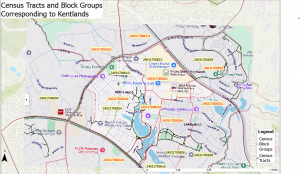
A map I made in ArcGISPro showing project boundaries in relation to census tracts and block groups, to aid with data collection

I am working as a research intern with Professor Hurley in the Growth and Structure of Cities department. I am helping with her research project, “Oral Histories of New Urbanism.” As part of this, I am conducting interviews with professionals who were involved in the early years of New Urbanism, which was an urban planning movement that began in the 1980s focused on creating dense, walkable communities. I am also compiling data on numerous new urbanist developments, and writing literature reviews centered around New Urbanism and how best to measure success in the context of urban planning. Additionally, I have been using GIS to create maps that show development boundaries in relation to block group and census tract boundaries. She is still in the early stages of the project, which has allowed me a lot of creativity in what I want to work on and the best ways to help gather data.

Why did you apply for this internship? 

I took Urban Culture and Society with Professor Hurley and Professor Restrepo last fall semester, and when I saw that Professor Hurley needed a summer intern, I thought it would be the perfect way to combine my majors of Growth and Structure of Cities and Literatures in English. Her research project sounded so interesting that after doing a deep dive into New Urbanism, I knew I had to apply.

Can you talk about the skills you are learning and why they are important to you? 

I have been able to use this summer as an opportunity to develop a multitude of skills! Since beginning the summer, I have developed my abilities in ArcGISPro and Zotero, and I have become proficient in Microsoft Excel. I’ve also gained experience in conducting and transcribing oral history interviews. Later in the summer, I should have the opportunity to learn NVivo, which is a qualitative analysis software that analyzes the data I’ve been collecting from interviews. Being able to pick up skills quickly is something that will hopefully come in handy, and I’m glad I was able to cultivate that this summer. 

What is most rewarding about your internship?   

The most rewarding part of this internship for me has been the ability to dive into the academic topics that I find interesting without the stress of being graded. I meet with Professor Hurley once a week, but almost all of the work I do is alone, meaning that I can work on my own schedule and at my own pace. If I don’t understand something, I can table it to ask about later and work on something else in the meantime. This has allowed me to learn qualitative and quantitative skills without fear that I’m doing something “incorrectly”. I have also been able to follow my passions within Cities: I took Intro to GIS last semester, and when I asked if I could incorporate those skills and create maps to aid with the research project, I was met with enthusiasm.

Working From Home: My Time at the Jacksonville’s Mayor’s Office by Dalia Ibrahim ‘27 


Name
: Dalia Ibrahim
Class Year: 2027
Major: Growth and Structure of Cities
Minor: Data Science

Internship Organization
Internship Title:   Mayor’s Office Intern – Office of Civic Engagement and Youth Participation
LocationJacksonville, FL

What’s happening at your internship? We would love to hear what kind of work you are doing!  

Civil Rights Trail Photoshoot

During my internship, I’ve been involved in several impactful projects. One of those projects has been applying for Jacksonville to become designated as a Civil Rights Trail City and completing the formal application process, cold-calling for endorsements and letters of support, and ensuring the application is up to the requirements and standards. Given Jacksonville’s history, I was surprised to find it hadn’t already received this designation. I’ve also undertaken research on redlining in Jacksonville and conducted interviews with a diverse group of individuals who are advocating for justice. These interviews included voices from various backgrounds, including pastors, activists, and community planners. I have also been involved in collaborating with departments and organizations like the Neighborhoods Department, and the Jacksonville Run Club. I’ve also represented our branch at workshops and youth career fairs. Our main focus is on engaging youth aged 16-23, ensuring their voices are amplified and that they feel included in our initiatives. A few other projects I’m currently working on include What Young People Want, State of the Union, Debates, the YES Summit, our Volunteer Program, research for the Mayor’s Town Hall, and the Legacy Project

Why did you apply for this internship?  

At Youth Career Fair

Last summer, I was a Historic Preservation Intern at Riverside Avondale Preservation, which sparked my desire to explore new opportunities so I was avidly willing to branch out to work at a different level. I applied for this internship because I wanted to obtain a first-hand experience in a government-entry level job within a major city. I was excited for a unique opportunity to gain a solid grasp of the inner workings of the Mayor’s Office and its approach to community matters. Jacksonville is unique in that it is the largest city in the United States by landmass and has a total population of 1 million; Jacksonville is a hub to a plethora of communities that I was eager to represent and work with, and have been proud to be a part of.

Can you give us three adjectives and three nouns that describe your internship experience? 

Transformative, Dynamic, Eye-opening Innovation, Outreach, Advocacy  

What is most rewarding about your internship? 

One of the most rewarding aspects about my internship was being able to engage with diverse clients and organizations while being a part of a very close-knit team affiliated with the Mayor’s Office. The specific branch I worked for emphasized hands-on community engagement rather than executive meetings, allowing me to make meaningful connections with Jacksonville residents, particularly youth in the community. I learned a lot about out-reach and the logistics it takes to start initiatives from the government side, and understanding the process and the reasoning on how some initiatives need time and others can be dealt with immediately. I appreciated the flexible hours and healthy work environment, especially collaborating with fellow interns in my age group. The professional relationships and connections I’ve built during this experience are ones I will value long after my internship concludes. 

Natalie Schliekelman ’26: Summer of Advocacy with PennEnvironment!


Name: Natalie Schliekelman
Class Year: 2026
Major: Environmental Studies, Growth and Structure of Cities
Minor: English

Internship OrganizationPennEnvironment
Internship Title:   Advocacy Intern
Location:   Philadelphia, PA

What’s happening at your internship? We would love to hear what kind of work you are doing! 

PennEnvironment Deputy Director Flora Cardoni and I meeting with Rep. Tim Briggs and constituents (not shown)

I’ve been working with the team at PennEnvironment, an environmental nonprofit that does a variety of work to make Pennsylvania greener, including conservation, clean water, zero waste, and climate change-focused campaigns. Depending on the week, I work with different projects and campaigns, so depending on the day I might be coalition-building with local elected officials and community leaders, doing communications work with projects such as threatened and endangered insects in PA, phonebanking constituents, or writing letters to the editor. I’ve also helped with more administrative (but still interesting!) projects like combing over our media contact list, or updating our legislative social media database. Some highlights include testifying at a PA Department of Environmental Protections hearing in support of stricter methane protections, and running logistics for lobby meetings with six Pennsylvania legislators and 40+ constituents, including Bryn Mawr’s own state representative, Rep. Tim Briggs!

Why did you apply for this internship?

PennEnvironment affiliates testifying at the DEP methane protections hearing

The Bryn Mawr College Environmental Program is very versatile – there’s so many different paths you could take with it, from environmental science research to environmental advocacy. Internships are a great opportunity to learn more about a specific section of the field and potentially narrow down your focus within the department. I’m very interested in environmental advocacy, and PennEnvironment does really cool advocacy work, so working with them is a great opportunity! They do a wide variety of different environmental campaigns, so I have been able to try out a lot of different projects and see what I like best. As a Growth & Structure of Cities major, I have also been intrigued by seeing how larger-scale political contexts play out on a local/state-level scale in Pennsylvania, from more sustainability-focused cities like Philadelphia to rural towns with fracking as a huge economic sector.

Was there anything special about how you found this internship? 

PennEnvironment is a branch of the national environmental group Environment America, which has 30 state branches, including one in my home state of Georgia. Last summer, I did a part-time internship with Environment Georgia. During my time with Environment Georgia, I met with a PennEnvironment staff member to learn more about PennEnvironment’s work with plastic bag bans. My time at Bryn Mawr has taught me the importance of networking, so I followed-up in the spring about interviewing for a summer internship! Environment America offers a lot of resources for its members, such as weekly trainings for the interns, so it’s been a great opportunity to get to work within the Environment America network twice, and PennEnvironment is one of the oldest branches so it’s great to see their work in action. 

What has been your favorite part of this internship? 

I’ve really loved the people aspect! Thanks to my summer funding from Bryn Mawr, I’ve been able to stay in Philly for part of the summer and work in the office. I enjoy getting to chat with my supervisors and other interns while I work, and I feel like I’m able to learn so much more from hearing tidbits and stories from my supervisors about their work. I also find connecting with people through advocacy work to be really rewarding – I found it intimidating at first to cold-call elected officials and constituents, but it’s a great feeling when I convince someone to take political action, like signing a petition or reaching out to their representatives. I’ve had some fascinating conversations and it can really test my knowledge of the policies I’m campaigning for when someone challenges me or asks me specific questions about different bills.