
Name: Coco Pannell
Class Year: 2027
Major: Neuroscience
Minor: Health Studies
Internship Organization: SCAN Unit – Universität Wien
Internship Title: Neuroscience Research Intern
Location: Vienna, Austria
What’s happening at your internship? We would love to hear what kind of work you are doing!
 This summer, I’ve been interning with the SCAN Unit at the University of Vienna through IES Abroad, where every week has brought something new. Rather than focusing on just one project, I’ve had the opportunity to contribute to many different aspects of research, giving me a behind-the-scenes look at how a neuroscience lab operates. Dr. Ekaterina Pronizius is my main supervisor; however, I work as an intern for the entire lab. It is an international lab, so I’ve been able to get involved in research projects for world-renowned scientists from many different countries.
Some of my projects have included testing and troubleshooting online experiments built in PsychoPy, reviewing educational materials, editing research documents, creating presentations on scientific literature, and assisting in collaborations between the SCAN Unit and the Medical University of Vienna. One week I was responsible for delivering blood samples to the Medical Universities Labs. I will never forget carrying the blood-filled vials through the busy streets of center city Vienna, while trying to decipher what incredibly exciting results were encoded into the participants lab results. I’ve also had the chance to proctor university exams and assist with a variety of ongoing lab projects. As an intern for IES abroad, I am also enrolled in an experiential learning seminar course on global workplace culture specifically in the sciences. We got to visit a new lab every week and learn about their research. One week we even got a special visit to the United Nations Headquarters!

One of my favorite parts of the internship has been learning about affective neuroscience and social cognition. Seeing how behavioral experiments and neuroimaging studies are designed, refined, and carried out has given me a completely new appreciation for the research process. The field of Neuroscience is so much more expansive than I previously thought. The SCAN-Unit alone does experiments that range from fNIRS to canine labs to blood work.
The variety of work has made every week different, and I’ve learned not only about neuroscience but also about collaboration, organization, and the many moving pieces required to keep research projects running smoothly. I did not only gain work experience, but the SCAN Unit also introduced me to new research questions about how people perceive, understand, and respond to the emotions and experiences of others. It’s been an incredibly rewarding experience, and I’m excited to bring these new skills and perspectives back with me to Bryn Mawr.
Why did you apply for this internship?
 Applying for this internship was certainly not a linear path. As the daughter of a flight attendant, I was fortunate enough to travel extensively from a young age. Those experiences gave me a deep appreciation for different cultures and the ways in which history, values, and lived experiences shape communities. They also sparked my desire to one day work in an international environment where diverse perspectives are not only welcomed but actively shape decisions and innovation.
One experience that reinforced this passion came from an Innovation Design course I took at the University of Pennsylvania. We discussed an engineering competition with a million-dollar prize to design a sustainable, low-cost toilet for rural communities. Hundreds of talented engineers and scientists proposed remarkably sophisticated solutions. Yet, many overlooked the most valuable source of knowledge: the people who would actually use the technology. The communities themselves had developed practical, effective solutions over generations, but few competitors had taken the time to ask for their input. That lesson has stayed with me. It taught me that meaningful innovation begins with listening and that the best solutions are often created with communities rather than simply for them.
As someone who hopes to pursue a career in medicine, I believe the same principle applies to healthcare and scientific research. Addressing complex global challenges requires interdisciplinary and internationally diverse teams that value different perspectives and experiences. I wanted an internship that would allow me to experience this kind of collaborative environment firsthand while learning how research is conducted across cultures.
The SCAN Unit at the University of Vienna was the perfect blend. Its international team and research in affective neuroscience offered the opportunity to explore not only the biological foundations of empathy, emotion, and social cognition but also how collaboration itself strengthens scientific discovery. The SCAN Unit studies how our social experiences are shaped by the brain, which was particularly fascinating because much of my previous thinking had centered on how our environments shape who we are. This internship showed me that our biology and our unique environment work together to influence human behavior.
Vienna was the perfect city for my first international work experience, it was a very unique type of work environment and a city of unique social rules that pushed me enough out of my comfort zone to broaden my perspective and feel more confident to take on more intellectually lucrative challenges in the future
What has been your favorite part of this internship?
My favorite part of this internship was the opportunity to constantly challenge myself by trying new things. Every week brought a different project, and I found myself learning far more than I had expected, not only academically but in research skills. I’ve gained a lot of confidence in the different phases of a research project.
By the end of the summer, I had gained confidence in many stages of a research project, from reviewing scientific literature and testing experiments to communicating ideas and contributing to collaborative projects.
One of the highlights of my internship was the opportunity to speak with neuroscientists from a wide range of backgrounds. Each scientist had their own unique educational pathway and worked through a unique organizational environment. However, they all share a commitment to collaboration, curiosity, and improving our understanding of the human condition. Seeing all these different scientists encouraged me to remain open to unexpected opportunities and that there is no correct path into your future career.
Working in the SCAN Unit also gave me a much deeper appreciation for affective neuroscience and its impact. I came to understand how studying empathy, social cognition, and human behavior can improve our understanding of mental health, relationships, and society as a whole. It showed me that neuroscience extends far beyond the laboratory. It has the potential to make a meaningful difference in people’s everyday lives.
Most importantly, this internship gave me confidence in myself. My supervisor consistently trusted me with new challenges, allowing me to take on projects that initially felt outside my comfort zone. It gave me lots of insight into how capable of a changemaker I can be. Looking back, I realize how much I have grown as both a student and an aspiring researcher. I leave Vienna more confident in my ability to tackle ambitious projects, embrace unfamiliar opportunities, be a leader, and pursue a career driven by curiosity and passion head on.
What has been the biggest challenge you have faced at your internship?
One of the biggest challenges of my internship was becoming part of an active research team in a field that was entirely new to me. Before arriving in Vienna, I had a strong background in neuroscience coursework, but affective neuroscience and social cognition were unfamiliar areas. I quickly realized that contributing meaningful feedback or participating in discussions required much more than simply completing assigned tasks, it required understanding the literature, learning the terminology, and appreciating the broader questions the researchers were trying to answer. Learning a new field while simultaneously contributing to ongoing projects was challenging, but it also taught me how to identify key ideas, recognize important research trends, and become a more efficient scientific learner.
Another challenge was adapting to a new academic and professional culture. Working in Austria introduced me to different expectations surrounding communication, organization, and workflow. I had to become much more intentional about managing my time, prioritizing tasks, and keeping track of multiple projects. As the internship progressed, I found myself becoming more organized and proactive, skills that will continue to benefit me throughout my academic and professional career.
Finally, stepping into an international research environment was initially intimidating. I was surrounded by accomplished researchers from different countries, many of whom had years of experience and shared cultural backgrounds that I was only beginning to understand. At first, I worried about whether I had enough knowledge or experience to contribute. Over time, however, those feelings gave way to confidence. Through daily interactions, I became much more comfortable asking questions, sharing ideas, and collaborating with people from a wide range of backgrounds. By the end of the internship, what had once felt intimidating became one of the most rewarding aspects of the experience.
Looking back, these challenges became some of the internship’s greatest lessons. They pushed me to become a more adaptable learner, a more organized researcher, and a more confident collaborator in an international scientific community.
 In this lab, I found collaborative teammates, participant technology, and researchers united by a common goal: finding better ways to detect Alzheimer’s disease before symptoms appear. I enjoyed the experience so much that I returned this summer, taking on greater responsibilities while continuing to learn from an incredible team.


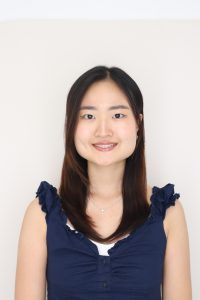
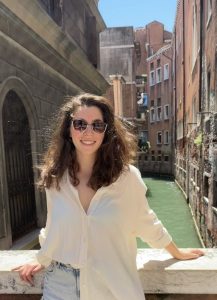
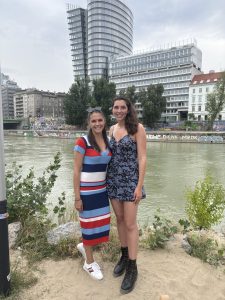 This summer I had the opportunity to intern at Health Hub Vienna. This organization works as a hub for startups, a place to share ideas for products to be integrated into the international healthcare market. As an intern, I was given tasks to research specific products and individuals important to this process, who are part of the up-and-coming startups. Throughout my internship I was also able to network with the founders of these startups, and to hear their pitches describing the initial product details. Overall, there was a great emphasis placed on learning more about the international healthcare system from a broader view, and to know how healthcare products transition from basic ideas to becoming fully integrated into the market.
 I am extremely passionate about the healthcare system, and I want to pursue a career within healthcare in the future. On the other hand, I have always wanted to experience living internationally, however being a current premedical student, I do not have space in my undergraduate years to complete a semester abroad. Spending a summer abroad studying something related to the healthcare system perfectly balanced these two passions, while not taking space from my busy semester schedules. As I researched possible options, the IES Psychology Program in Vienna related the most to my interests, and so I made it happen. I ended up having the most amazing experience during my eight weeks abroad, and I would suggest that everyone pursue something similar during their undergraduate years.
 My favorite part of this internship was the incredible work-life balance present in the Vienna culture, and the ability to travel easily on any given weekend. From the first day of my internship, my colleagues mentioned how after the end of work hours, nobody does work for the remainder of the day. This gave me an opportunity to explore the city after the end of a work day, using the convenient public transportation. Then, on the weekends I would travel with some friends to a nearby city or even country, to spend some time exploring places I had never previously visited.