Investigating Marsh Farts and Global Change Ecology with Jack Carlson ’27


Name:
Jack Carlson
Class Year: 2027
Major: Environmental Studies

Internship Organization: Smithsonian Environmental Research Center
Internship Title: Global Change Ecology Intern
Location: Edgewater, MD

What’s happening at your internship? We would love to hear what kind of work you are doing!

For the past 10 weeks, I have been working with Genevieve Noyce in SERC’s global change ecology lab to investigate porewater methane concentrations in a wetland warming experiment at the Global Change Research Wetland. Porewater is what we call the water that permeates the marsh surface. In oxygen-poor environments, microbes can produce a lot of methane, which is a very potent greenhouse gas. That methane is stored in the water of the marsh and then bubbles up into the air causing emissions.

The experiment that I am working on consists of 12 chambers that are heated to simulate future warming conditions. Emissions from each chamber have been measured for 5 years, but this is the first time that anyone has really looked at what is going on in the water and connected that to emissions. This work is super important for building accurate carbon budgets and forecasting emission rates under climate change. As part of this project, I have gotten a taste of every aspect of research, from project planning to fieldwork, sample processing and data analysis, so every day at work was a little different.

Why did you apply for this internship?

Two years ago I was able to visit GCREW with the Mozdzer lab at Bryn Mawr to help work on the Phragmites experiments. After that summer I knew I wanted to try to intern at SERC. I was drawn to a research environment outside of the traditional college REU-type program and was really interested in the long-term experiments that SERC is able to do. I was particularly interested in working with Genevieve on global change ecology because I am interested in science that informs real world decisions. Coastal environments and communities are very high-risk areas under climate change so I was excited by the opportunity to contribute to data that might help improve those conditions.

What has been the biggest challenge you have faced at your internship?

There was a really big learning curve to a lot of what I did in this internship. Before this summer I did not have a whole lot of experience with gas chromatography or doing data analysis in R. My biggest challenge throughout this experience has been being patient with myself and being brave enough to try new things that might be a little outside of my comfort zone. There were some days where I spent a lot of time struggling with lab instruments or staring at R code, but every day I came away having learned something new. Despite all the struggle, I am really proud of the skills that I was able to pick up during this experience and am extremely grateful to everyone who helped me along the way.

What is most rewarding about your internship?

I think the most important thing to have come out of this experience for me is the sense of surety that comes from seeing the realities of the job and knowing that this type of research is something that I continue to find joy and purpose in and am still interested in pursuing.

Catherine McCarthy ’27 Interns with Eastern Connecticut Center for History, Art, and Performance


Name:
Catherine McCarthy
Class Year: 2027
Major: History of Art
Minor: Environmental Studies

Internship Organization: Eastern Connecticut Center for History, Art, and Performance
Internship Title: Dye & Bleach House Community Gallery Director
Location:  Willington, CT

What’s happening at your internship? We would love to hear what kind of work you are doing!

During the first week of July, the gallery opened a new show that will stay on through the end of August. For most of June, my work was focused on preparing for this new exhibition. This meant collaborating with the artist to design a poster, distributing the poster at local businesses, getting the word out through social media and mailing lists, installing the art, and hosting an opening reception. The opening was wonderful, and it was very rewarding to hear from community members that our poster design grabbed their attention! Recently, I have been preparing for two shows that will be at the gallery in the fall, as well as working on a creative direction and marketing guide that I will be presenting to the Board of Directors of the non-profit organization the art gallery falls under.

Why did you apply for this internship?

I applied for this internship because I am interested in working at art galleries or museums post-graduation, and I wanted a truly hands-on experience to prepare for that future work. I knew that because the gallery is small, and mostly volunteer-run, I would be learning by doing rather than watching, and involved in every process of running a community art gallery.

What has been your favorite part of this internship?

My favorite part of the internship has been installing and designing the layout of our current show. It was incredibly informative to work with the artist to understand what pieces worked next to each other in order to deliver the right experience and story. Installation day started with every piece leaning against the walls, a blank canvas. It was so fun to put the puzzle together, to find the “just right”, where the message and emotion of the show really emerge.

What is something you have learned from your internship that you didn’t expect?

I have been improving my graphic design skills since part of my job is preparing announcement cards, posters, and programs for upcoming exhibitions. For our current show, I made about 5 different poster designs that I presented to the artist. We then collaborated to choose a favorite and turn it from a draft into a final design, and we got them printed at our local print shop.

My Farming Internship at the Garten Coop by Cece Albright ‘28


Name:
Cece Albright
Class Year: 2028
Major: Environmental Studies
Minor: Biology

Internship Organization: Garten Coop Freiburg
Internship Title: Gardener
Location: Freiburg, Germany

What’s happening at your internship? We would love to hear what kind of work you are doing!

At the Garten Coop, I am a member of the Anbau (farming) team! Our farm property in Tunsel, which is a community-supported agricultural initiative, grows over 70 varieties of local vegetables using organic and sustainable practices. We work on our farm Tuesdays – Thursdays from 7:30 am to 5:30 pm, and do everything from planting, weeding, and pruning to harvesting for the weekly share of vegetables delivered to families across Freiburg. Every week, over 300 shares of vegetables are harvested at the farm and then transported using an electric van to our transportation hub in the sustainable city district of Vauban.

From there, members can volunteer to bike the vegetable crates out to our many distribution points, where families will then pick up their weekly share. The Garten Coop is a food justice initiative centered around collective knowledge and ownership. I have already built so many deep and meaningful relationships both with other members of the farming team and with community members.

Why did you apply for this internship?

I applied for this internship because I am incredibly interested in food justice and the community-supported agriculture (CSA) model. As an environmental studies student, I believe that food lies at the nexus of so many important social justice issues, political, and economic struggles. When I applied for this internship, I was very intrigued by the combination of physical labor with organizational and community-based labor with regards to securing collective land for the farm and ensuring equitable access to our services across the city.

What has been your favorite part of this internship?

My favorite part of this internship has been planning the Garten Coop’s presence at the local Agrikultur Festival in mid-July, which was a celebration of all of the local food initiatives and had a wide variety of rich cultural events, informational sessions, food, and children’s activities. The Garten Coop had a large tent at the festival with foods from our farm, informational presentations about our collaboration with land solidarity organization Ackersyndikat, and interactive activities for children, which I helped coordinate.

We had a painting table with Earth paints we made from different colored soils on our farm, and postcards designed by a local artist to color in. We also harvested wildflowers from the farm property and set up a bouquet-making station. Overall, it was an incredible experience where I got to witness so many beautiful connections being made between community members and our team.

Can you talk about the skills you are learning and why they are important to you?

I am developing physical farming skills first and foremost, with new ecological knowledge gained on specific crops and practices in small-scale organic vegetable farming. I have found so much value and dignity in physical labor, especially knowing that the food is going to so many community members throughout the city and is helping in providing organic alternatives to local families. It has been an incredible experience to have knowledge from my coworkers and role models on the farming team be passed down through repetition, constructive feedback, and immense attention to detail.

I have developed conversational skills through interacting with my coworkers and members of the Coop who visit the farm during the week, as well as some elementary German language skills. In terms of the intellectual and logistical side, I’ve gained incredible organizational and advocacy skills through the opportunity to observe and assist the planning team for the Agrikultur festival, which I feel have better prepared me for community organizing within Philadelphia and my hometown.

Rachel Dopico ’26 Advances Health Equity at the American College of Physicians 


Name
: Rachel Dopico
Class Year: 2026
Major:    History
Minor: Health Studies, Environmental Studies
 
Internship Organization:  American College of Physicians
Internship Title:   Ryan Mire, MD Summer Internship Program
Location:  Philadelphia, PA
 
What’s happening at your internship? We would love to hear what kind of work you are doing!  

Dinner with ACP’S Board of Regents

During my internship, I worked in the Strategy & Innovation department within the American College of Physicians (ACP). This placement enabled me to interact with many departments and projects and gain a comprehensive understanding of ACP’s work. I worked primarily on a new project, helping to increase the visibility of ACP’s initiative making obesity care more equitable through regional action grants. I was able to closely familiarize myself with the work of the 12 grantees, who are doctors from ACP chapters across the country. Their projects are novel and improve the experiences of patients and providers in the field of obesity medicine through outreach in areas like medical education, nutrition, and more. I wrote short and long summaries for each of the twelve projects, helped to conduct outreach to grant applicants, and assisted with planning for a marketing video to promote the project. The best part of my work throughout the summer, though, was getting to interview some of the grantees, and learn about their backgrounds and work in underserved communities. I also worked with members of our team in Philanthropy and helped draft a newsletter and letter to donors. Generally, I got the opportunity to learn what exactly the work of a strategy department entails, and how they serve to further the work of organizations like ACP.
 
Why did you apply for this internship?  

Site Visit to Johns Hopkins

I applied for this internship because I felt drawn to the mission of ACP and appreciated their prioritization of health equity through initiatives like the internship program. The American College of Physicians serves its member base of 161,000 doctors but also is involved in lots of patient advocacy. I also wanted the chance to supplement my undergraduate and other internship experiences with exposure to the healthcare ecosystem at large and learn about other possible career paths within public health. I more than accomplished that this summer, and throughout programming visited health systems like Johns Hopkins, medical schools, regulatory agencies, and more. We also had the chance to speak with a range of physicians one-on-one through subject matter expert talks. I have learned to see the world in terms of health systems and understand how, beyond hospitals, clinics, pharmacies, outpatient care centers, imaging centers, and many other entities overlap. One moment that stuck out to me was hearing one doctor we spoke with reference how medicine is a social science, and politics is medicine on a larger scale.
 
Was there anything special about how you found this internship?

Visit from Dr. Ryan Mire

This is Bryn Mawr’s first ever summer partnering with the American College of Physicians to fund a student to participate in the internship program, and I am so grateful I found this opportunity through the career center! 

What has been your favorite part of this internship? 

My favorite part of the internship was getting to meet people, both my peers and members of the organization. I was in a cohort with 9 other interns, and it was really rewarding to learn alongside them and even work together on some projects. We met weekly as a cohort, and attended site visits and talks with subject matter experts, where we met leaders in diverse careers across internal medicine. While I do not want to be a physician, I am excited to work alongside doctors in my public health career.

What is most rewarding about your internship? 

The most rewarding part of the internship was getting a glimpse into the world of passionate, energetic, smart, and above all hopeful people in the healthcare world fighting for health equity. Amidst drastic cuts to healthcare access from the federal government right now, restricting Medicare, Medicaid, and Affordable Care Act coverage and generally gutting public health, it was incredibly rewarding to meet so many people who are leaders in the field and who are making a difference on a micro and macro level. As someone who wants to work in public health, and is interested in health policy, this experience infused me with a lot of hope.

Chaewon Lee ’27 Interns with Nationalities Service Center  


Name: Chaewon Lee
Class Year: 2027
Major: Geology, History
Minor: Environmental Studies
 
Internship Organization: Nationalities Service Center
Internship Title:  RUI Program Intern
Location:  Philadelphia, PA
 
What’s happening at your internship? We would love to hear what kind of work you are doing! 

The Nationalities Service Center is a non-profit organization that hosts a variety of programs to support Philadelphia’s immigrant and refugee community. During my summer, I was part of the Refuge Upskilling Initiative (RUI) program, which is part of the Employment department, where I assisted my supervisors in crafting individualized skill planning documents for our clients. These individualized skill plannings outlined the goals and desired career goals of our clients, and we as a team would support them in achieving these goals. Many of our employment programs seek to provide our clients with the necessary skills to succeed in the United States, such as learning how to find jobs, take ESL courses, write resumes, and essentially build your career. The RUI program calls for employer partnerships (employers in the Philadelphia region who would like to enroll their immigrant and refugee employees with our program), thus I also worked on calling many companies to advocate for our program and for potential partnerships. Additionally, this summer, I was able to call and meet clients and hear their success stories with our training plans.

Why did you apply for this internship?  

I applied to intern for the Nationalities Service Center because of our current political environment and hostility towards immigrant and refugee communities. As an immigrant myself, I experienced first-hand the hardships of moving to a new country; the fear of blindly facing every step of life in a foreign place. With the already difficult circumstance of moving to a new country added on to the pressure of the political hostility towards immigrants, I wanted to do whatever was possible within my ability to be a help to these communities. I wanted this summer to be one where I can be a service to others and truly be a light of hope during our challenging times. Moreover, as a political science major with interest in policy, I wanted to gain hands-on experience on how much federal policies affect the people in our community.
 
What has been your favorite part of this internship? 

My favorite part about my internship was the people I got to meet and work with. I will be honest, there were many challenging days where almost so many of us felt hopeless do to so many of our coworkers getting laid off and our programs shutting down because of massive budget cuts. Despite all the valid reasons to feel hopeless, dreadful, and disheartened, I was shocked by the resilience of my supervisors and other staff members. Everyone around me would always come to work with a smile, and a bright attitude that would help not only all of us feel a little more hopeful, but also our clients. Seeing everyone still hold onto the strand of hope that was all fabricated through each and every one of our efforts to be a reason for our clients’ smile was an amazing experience. NSC’s staff members’ resilience, strength, kindness, and dedication was inspiring and I hope to be like them one day.

What has been the biggest challenge you have faced at your internship? 

The biggest challenge I faced at my internship has been trying to convince companies and employers to partner with our organization. To support the RUI program, we need companies and employers to become partners and provide us with employees or we provide them with our clients that way both parties go through the program together. However, this is easier said than done. The majority of my calls with employers would always end with “we are not interested” or most will not even hear about the program as soon as I mention immigrants and refugees. This was incredibly disheartening and oftentimes left me feeling stuck and powerless in society. I went to intern for this organization to be a source of help, but I felt as if everything I was doing did not matter because society was rather neglectful towards our cause and also afraid of supporting us due to the overall political environment. Thus, there were many days where I simply did not know how to tackle this greater obstacle: society’s perception towards immigrants and refugees. I am still in the process of figuring this challenge out, but I have learned through my experience with NSC that there is hope as long as we keep trying, which was proven to be true when I was finally able to receive an answer from an employer saying they were interested!

Fatma Ayad ’28 Engages in a Summer of Digital Technologies 


Name: Fatma Ayad
Class Year: 2028
Major: Geology, History
Minor: Environmental Studies
 
Internship Organization:  Bryn Mawr College Library and Information Technology Services
Internship Title: Digital Technology Internship
Location:  Bryn Mawr, PA
 
What’s happening at your internship? We would love to hear what kind of work you are doing!  

Showing visualizations to participant at Swarthmore’s Tri-Co Digital Scholarship Conference

Over the past summer, I had the pleasure of collaborating with four wonderful teammates on three different projects. From data visualization to conference management, each project was different from the other, teaching us a diverse set of skills. The Digital Technology Internship, aptly named, emphasized digital competencies like Critical Making and Data Analysis and how to apply these skills on hands-on projects. More specifically, we applied these skills on three projects:  

  1. Data Visualization of Bryn Mawr’s Factbooks: The Data Visualization project involved working with the Institutional Research department to visualize Bryn Mawr’s Factbooks and showcase them on the college’s website. We did so by converting static data to accessible and interactive graphs using Tableau, which is a data visualization tool. 
  2. Creation of Lab Safety Videos: In collaboration with the Environmental and Health Safety department, we worked on creating educational lab safety videos for Bryn Mawr’s faculty and students, focusing on graphical presentation, video production, and accessibility. 
  3. Management of Institute of Liberal Arts Digital Scholarship (ILiADS) Conference: As part of the Local Arrangements team of the ILiADS Conference, which was held at Bryn Mawr this year, we worked on pre-conference logistics and on-site coordination. Our responsibilities included shooting a tour guide video around Bryn Mawr, preparing welcome packets, and producing promotional material.

Why did you apply for this internship?  

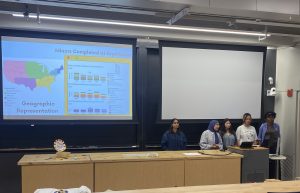
Presenting at LITS Summer Internship Showcase

I applied for the Digital Technology Internship because I wanted to explore how digital tools can be thoughtfully integrated into academic, administrative, and community settings. As a Computer Science major, I’m very interested in the application of technology in real-life problems, and through this internship, I wanted to explore a more critical approach to technology. I was especially drawn to the program’s emphasis on collaboration, accessibility, and critical digital literacy. In the lens of critical thinking, this internship allowed me to approach technology in a more ethical and human-centered way. Looking back at my internship experience, I feel like it successfully helped me achieve all these objectives that I hoped for.
 
What has been your favorite part of this internship?  

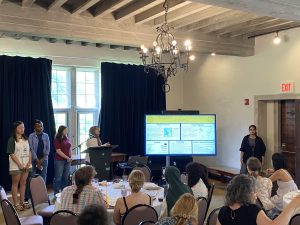
Presenting at ILiADS Conference

I was blessed to have a beautiful connection with my teammates, who each had their own unique input on the projects. We had a very dynamic and collaborative relationship, which facilitated communication and made the projects run very smoothly and productively. In addition, we all shared three awesome supervisors that led these projects with wisdom, insight, and understanding. Despite all the cool tech I got to learn throughout, all these meaningful connections were my favorite part of this internship. What started as professional relationships grew to be wonderful friendships! I also got to build connections outside of our office, and that is with different departments across Bryn Mawr, like the Institutional Research department and Environmental and Health Safety department, and with different Liberal Arts colleges through ILiADS, like Grinnell College and Carleton College. That helped me expand my professional network within Bryn Mawr and beyond! 

Can you talk about the skills you are learning and why they are important to you? 

Firstly, as a Computer Science major, technical skills matter a lot to me as I am in the process of preparing myself for the technical field. Through this internship, I learned how to use Tableau proficiently and how to apply it in data analysis and visualization. In addition, I learned HTML in order to learn how to embed these graphical visualizations to the college’s website and ensure it’s accessible to all Bryn Mawr website visitors. We also learned video production using WeVideo and video content management using Panopto. Outside of technical skills, we learned about Data Management and Preservation when working with Bryn Mawr’s statistical data, by cleaning and organizing multiple Excel sheets of information. In addition, critical design was also an important aspect to the internship as it made me realize that good design isn’t just functional, but it’s inclusive, intentional, and aware of its social context. As someone who wants to work in tech, I now see ethical reflection as just as essential as technical skill. Additionally, one of the most important skills that I focused on was communication. While it’s often emphasized in workplaces, it can be the hardest to apply as it is skill that involves other individuals. It is the backbone of project management and can determine the success of a project. Whether I was working with stakeholders, project clients, supervisors, or teammates, thoughtful communication helped me understand expectations, stay aligned, and move projects forward. It wasn’t just about talking, it was also about listening, asking the right questions, and making sure everyone was on the same page. Finally, I’m beyond grateful to Bryn Mawr, the LITS Department, and the Digital Technology Internship for supporting my personal and professional growth this summer. As an upcoming sophomore and international student, I truly appreciate the opportunity to be part of a program that has helped shape my journey and opened the door to future opportunities. 


The Importance of Sustainable Seafood Education with One Fish Foundation by Emma Loller ‘27


Name: Emma Loller
Class Year: 2027
Major: Environmental Studies
Minor: Italian
 
Internship Organization: One Fish Foundation
Internship Title:   Communications Intern
Location:  Remote
 
What’s happening at your internship? We would love to hear what kind of work you are doing!  

 I started out just creating social media posts for the One Fish instagram about three times a week. As I got farther into the internship I started getting more responsibilities such as creating content for the monthly newsletter. I also fill in spreadsheets and am helping put together the first edition of a newsletter from a partner organization, Slow Fish North America.

Why did you apply for this internship?  

I didn’t technically apply for this internship. In the spring semester, I took a Praxis course with Dr. Talia Young at Haverford, and through this class we were assigned an internship for the semester as part of our coursework. I ended up enjoying the internship so much that I talked to my supervisors about continuing into the summer. They said they would love to continue to work with me, and this allowed them to give me more responsibilities.

Was there anything special about how you found this internship?

I found this internship through Dr. Talia Young at Haverford, as she is friends with my supervisor, Colles Stowell. Through my course Fish & Community: A Local Praxis, Dr. Young assigned us to an internship for the spring semester. I was paired with One Fish based on my interests. I enjoyed the internship so much throughout the semester that I continued to work with them in the summer too.

What has been your favorite part of this internship?  

My favorite part has been learning about sustainable seafood. One Fish Foundation offers education about sustainable seafood to schools from elementary to undergraduate. My supervisor, Colles, is the one who does this. Because he is an educator, any time he is explaining a post, I get the full lesson on it. This has been my favorite part, learning about seafood from Colles and through my research for my work.    

What is something you have learned from your internship that you didn’t expect? 

I should have expected this, so I’m not sure why it caught me by surprise, but I’ve loved learning about how a small organization works and how so many small organizations are connected. There is a huge network of organizations that advocate for the ocean and it’s been fascinating to learn about them, their missions, and how they work. 

Working remotely for the first time? What has that experience been like for you? 

This was my first time working remotely and there was definitely a bit of a learning curve. I didn’t do well during COVID when school was online so I expected this to be the same. However, it turned out to be completely fine. My supervisors are usually good about communicating, which was my main concern, so once I realized that wouldn’t be an issue, I was able to have a better time with the internship being remote. 

Can you talk about the skills you learned and why they are important to you? 

The main skill I’ve learned is how to communicate information to a broader audience. A lot of the information I work with might be confusing to a general reader, but it is still important nonetheless, so I need to rewrite it in a communicable way. I think this is very valuable, not just for the contents of my internship, but for all information that needs to be communicated.  

What has been the biggest challenge you have faced at your internship? 

While working remotely has been generally fine, it took time to get used to it, so in the beginning, that was the biggest challenge. My supervisors didn’t always communicate exactly what they wanted from a post, so it was difficult at times to execute their vision. However, at the end of the spring semester I was able to talk to them and ask that they communicate with me more. This helped stop any confusion on my end. 

Can you give us three adjectives and three nouns that describe your internship experience?  

Exciting, busy, educational. 

Teacher, audience, fish.

What is most rewarding about your internship?  

The most rewarding part is getting to see my posts or content for newsletters get to be published to social media. Especially when my supervisors don’t make any edits. It tells me that I did a good job and I was able to communicate what my supervisors asked of me, and that is very rewarding.

Was this internship what you expected it to be? 

It was at first. I expected to have minimal work, just doing a couple social media posts. But as the spring turned into summer I got more and more responsibilities and the internship turned into more than I ever expected it to be. 

Immersion in Environmental Education at Bosque Santiago with Miya Matsumune ‘26 


Name: Miya Matsumune
Class Year: 2026
Major: Geology, History
Minor: Environmental Studies
 
Internship Organization:  Bosque Santiago
Internship Title:   Intern
Location:  Santiago, Chile
 
What’s happening at your internship? We would love to hear what kind of work you are doing!  

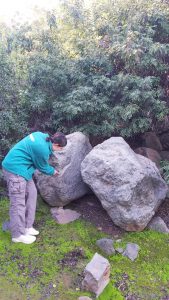
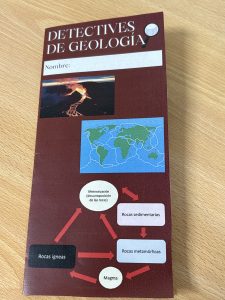
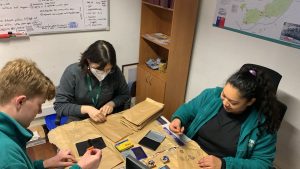
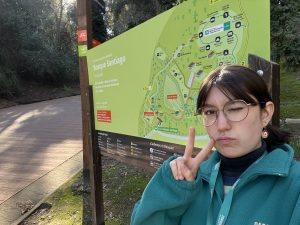
Bosque Santiago is a center for environmental education within Santiago’s Parque Metropolitano. As an intern, I planned a geology workshop for kids as my personal project, and helped out with other workshops, tours, and events.
Why did you apply for this internship?  

Environmental education is my dream field of work. I love to teach others, invent games and activities, and I am passionate about sustainability and community outreach.
 
What has been your favorite part of this internship?    

Bosque Santiago is operated entirely in Spanish, and I am not a native Spanish speaker. It was difficult to adjust at first, because I wanted to speak professionally with my supervisor and I was worried about coming across as not intelligent or capable because of my limited Spanish abilities. However, as I became more comfortable with everyone, I began to relax and formed strong relationships with my supervisor and co-workers.

Was this internship what you expected it to be?   

I did not expect there to be so much freedom in this internship, however I ended up enjoying how much autonomy I had in the position. I was able to choose my own personal project and work on it at my own pace. Because of this, I was able to improve my proactivity and advocate for myself. 


Natalie Schliekelman ’26: Summer of Advocacy with PennEnvironment!


Name: Natalie Schliekelman
Class Year: 2026
Major: Environmental Studies, Growth and Structure of Cities
Minor: English
 
Internship Organization:  PennEnvironment
Internship Title:   Advocacy Intern
Location:   Philadelphia, PA
 
What’s happening at your internship? We would love to hear what kind of work you are doing!  

PennEnvironment Deputy Director Flora Cardoni and I meeting with Rep. Tim Briggs and constituents (not shown)

I’ve been working with the team at PennEnvironment, an environmental nonprofit that does a variety of work to make Pennsylvania greener, including conservation, clean water, zero waste, and climate change-focused campaigns. Depending on the week, I work with different projects and campaigns, so depending on the day I might be coalition-building with local elected officials and community leaders, doing communications work with projects such as threatened and endangered insects in PA, phonebanking constituents, or writing letters to the editor. I’ve also helped with more administrative (but still interesting!) projects like combing over our media contact list, or updating our legislative social media database. Some highlights include testifying at a PA Department of Environmental Protections hearing in support of stricter methane protections, and running logistics for lobby meetings with six Pennsylvania legislators and 40+ constituents, including Bryn Mawr’s own state representative, Rep. Tim Briggs!

Why did you apply for this internship? 

PennEnvironment affiliates testifying at the DEP methane protections hearing

The Bryn Mawr College Environmental Program is very versatile – there’s so many different paths you could take with it, from environmental science research to environmental advocacy. Internships are a great opportunity to learn more about a specific section of the field and potentially narrow down your focus within the department. I’m very interested in environmental advocacy, and PennEnvironment does really cool advocacy work, so working with them is a great opportunity! They do a wide variety of different environmental campaigns, so I have been able to try out a lot of different projects and see what I like best. As a Growth & Structure of Cities major, I have also been intrigued by seeing how larger-scale political contexts play out on a local/state-level scale in Pennsylvania, from more sustainability-focused cities like Philadelphia to rural towns with fracking as a huge economic sector.
 
Was there anything special about how you found this internship? 

PennEnvironment is a branch of the national environmental group Environment America, which has 30 state branches, including one in my home state of Georgia. Last summer, I did a part-time internship with Environment Georgia. During my time with Environment Georgia, I met with a PennEnvironment staff member to learn more about PennEnvironment’s work with plastic bag bans. My time at Bryn Mawr has taught me the importance of networking, so I followed-up in the spring about interviewing for a summer internship! Environment America offers a lot of resources for its members, such as weekly trainings for the interns, so it’s been a great opportunity to get to work within the Environment America network twice, and PennEnvironment is one of the oldest branches so it’s great to see their work in action. 

What has been your favorite part of this internship?  

I’ve really loved the people aspect! Thanks to my summer funding from Bryn Mawr, I’ve been able to stay in Philly for part of the summer and work in the office. I enjoy getting to chat with my supervisors and other interns while I work, and I feel like I’m able to learn so much more from hearing tidbits and stories from my supervisors about their work. I also find connecting with people through advocacy work to be really rewarding – I found it intimidating at first to cold-call elected officials and constituents, but it’s a great feeling when I convince someone to take political action, like signing a petition or reaching out to their representatives. I’ve had some fascinating conversations and it can really test my knowledge of the policies I’m campaigning for when someone challenges me or asks me specific questions about different bills.

Natasha Ring ’26 Explores Environmental Education in South Philadelphia 


Name: Natasha Ring
Class Year: 2026
Major: Geology, History
Minor: Environmental Studies
 
Internship Organization:  Discovery Pathways
Internship Title:   Intern
Location:  South Philadelphia, PA
 
What’s happening at your internship? We would love to hear what kind of work you are doing!  

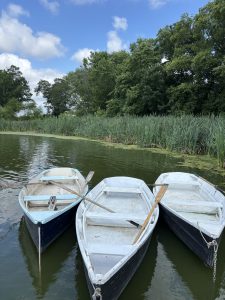
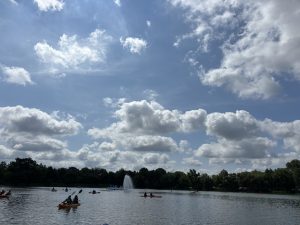
I have gotten to be involved with so many different programs at Discovery Pathways this summer! Early on, while the school year was wrapping up for local K-12 schools, much of my work involved preparing for the start of our Youth Environmental Leaders Program, assisting on field trip visits, and working at the community boating and family fishing events. I also got to watch my first dragon boat race, since the Discovery Pathways team had a regatta in Philadelphia which was really exciting. For the last month, I have primarily been assisting with the Youth Environmental Leaders Program. This program targets BIPOC, immigrant, and refugee youth and gives them opportunities to learn about leadership, public speaking, fishing, boating, water testing, and sustainability. For the leaders, returning students who are now serving as mentors to the new students, the program also aims to assist them with job readiness skills such as practicing interviews and creating a resume. I have also been busy with visits from local rec centers and community groups who visit us at FDR Park where we take them on nature walks, kayaking on Edgewood lake, or fishing. I have also been assisting at the free community boating and free family fishing programs which target the local Southeast Philadelphia community. These programs can serve hundreds of visitors on any given day, and are an excellent opportunity for me to learn more about the local communities and practice my public speaking skills.
 
Why did you apply for this internship? 

My concentration within Environmental Studies is Environmental Education, so I was looking for a summer internship that focused on Environmental Education. I learned about Discovery Pathways last fall after talking to one of my lab partners who had interned there last summer. I loved that Discovery Pathways was local to the area and had a focus on making environmental education accessible to the local community through practices like empowering students to translate instructions at our community boating events and free events.
 
Was there anything special about how you found this internship? 

I initially learned about Discovery Pathways through my lab partner, who had interned there last summer. Some students from Dr. Young’s Fish and Community Praxis Class, which I took this spring, were also placed at Discovery Pathways which gave me another opportunity to connect with Adam and the organization.  

What has been your favorite part of this internship?
 
My favorite part has definitely been working with the teenagers in our Youth Leaders Program, and learning from them. They have taught me so much on topics ranging from rowing and racing a dragon boat to what vendors to go to at the Southeast Asian Market to how I can communicate more clearly on our busy boating days. I have also tried many new foods based on their recommendations, including green papaya salad and lychee.