
Name: Charlotte Kimmerling
Class Year: 2028
Major: History of Art
Minor: Museum Studies
Internship Organization: MACOM European Semiconductor Center
Internship Title: Global Trade Compliance Intern
Location: Paris, France
What’s happening at your internship? We would love to hear what kind of work you are doing!
I am working on a variety of projects centered around global trade compliance. This includes reviewing classification records, customs recordkeeping, performing deny party screening, and creating communications both for Global Trade Compliance and in collaboration with the Information Technology team. The Trade Compliance Team at MACOM is relatively new, so they were working on fixing the older customs and classification records in preparation for an audit.
 I helped them go back and find misplaced files, or contact DHL and Fedex for the missing records. In addition to this, I worked on three communications projects which are being shared and displayed globally. Each was done in both English and French and centered around education. I worked with Information Technology and Information Security on the content for one, and I worked with Engineers and the other people in Trade Compliance for the other.
Why did you apply for this internship?
I applied to this internship for the opportunity to experience a corporate environment and improve my French. After studying French for six years now, I really wanted to expand my French vocabulary and conversational skills while living in Paris and experiencing French culture. I had done a month abroad in Southern France before my Junior year of High School, and I knew this would be very different. Not only is Paris very culturally different from the south, I would be learning French in a business setting. I also knew that getting some experience working on customs projects and gaining familiarity with export and import law and processes as a History of Art major would be useful for my future career in the art world.
What has been the biggest challenge you have faced at your internship?
 It has been interesting getting used to a corporate environment. Every communication I created had to go through several people before it was ready to be put on the screens around the office, meaning I had to get used to constructive criticism quickly. I was always proud of the end result, and I am glad for the input I received because it ensured the right message got across. By the end, I felt my communication skills improved immensely.
Can you talk about the skills you are learning and why they are important to you?
I have had to do a lot of my own research and I’ve had to figure a lot of things out on my own and through that, I have gained a lot of confidence in my own problem-solving skills. I also feel I have improved upon and developed some practical skills. I have gotten better at writing emails, Microsoft Powerpoint and Excel, and using industry-specific programs like SAP and Agile to perform denied party screening. Working on these different programs for the various projects has shown me the value in being easily adaptable. Before this internship writing emails was very difficult for me, so I am very grateful that I was able to use this opportunity to improve my email skills.


 During the first week of July, the gallery opened a new show that will stay on through the end of August. For most of June, my work was focused on preparing for this new exhibition. This meant collaborating with the artist to design a poster, distributing the poster at local businesses, getting the word out through social media and mailing lists, installing the art, and hosting an opening reception. The opening was wonderful, and it was very rewarding to hear from community members that our poster design grabbed their attention! Recently, I have been preparing for two shows that will be at the gallery in the fall, as well as working on a creative direction and marketing guide that I will be presenting to the Board of Directors of the non-profit organization the art gallery falls under.
 I applied for this internship because I am interested in working at art galleries or museums post-graduation, and I wanted a truly hands-on experience to prepare for that future work. I knew that because the gallery is small, and mostly volunteer-run, I would be learning by doing rather than watching, and involved in every process of running a community art gallery.
 I have been improving my graphic design skills since part of my job is preparing announcement cards, posters, and programs for upcoming exhibitions. For our current show, I made about 5 different poster designs that I presented to the artist. We then collaborated to choose a favorite and turn it from a draft into a final design, and we got them printed at our local print shop.
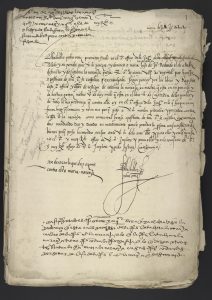
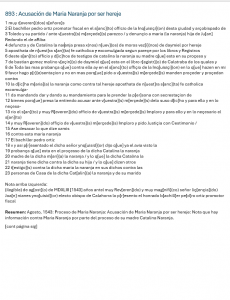
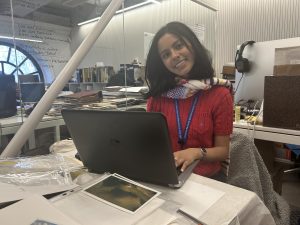
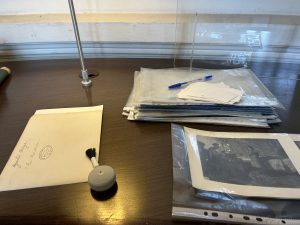 For the last few months, I have been doing work in the archives at the Museo Nacional de Bellas Artes (MNBA). The tasks I completed for the Centro de Documentación (CEDOC) Angélica Pérez Germain varied but all the work had a focus on preserving and promoting Chile’s contributions to the art world. Within the work one transferable skill I learned were the procedures to follow when handling documents and photos.
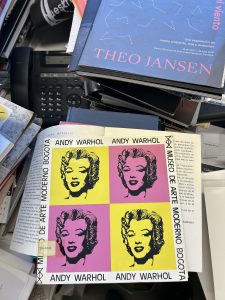 I discovered my internship opportunity through the partnership Bryn Mawr has with IES abroad. I was thrilled once I received my placement in Santiago because I had studied abroad the previous fall in Latin America through the study abroad office. I felt this was the right choice for me since I could continue to build upon skills and IES matches students to internships that aligns with their career interests which was an important deciding factor for my junior summer.
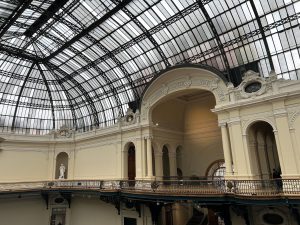 The most rewarding part of my summer internship was contributing to the archive. Due to the fact that the museum is the oldest in the Americas, the archive is vast and is in need of constant organizing. Throughout the summer the archive received various donations from Chilean artists who left their documents and personal archives to the museum. It was exciting and impactful to uncover history through the stories of artists, collectors, and institutions in connection to the museum. The team I worked with including students from local universities and departments in conjunction with the archive helped me understand the importance of Chilean history. One experience that was particularly valuable was the opening of the Sala Chile (Gallery) focused on the life and art of Chilean artist, Roberto Matta. The archive helped organize the exhibition and provided historic context to establish the permanent exhibition titled Historias de una Colección. I was able to attend the opening and hear from the various groups who collaborated on this project including the ministry of culture.