Name: Esma Yagmur Bilgi
Class Year: 2028
Majors: Computer Science & Neuroscience
Minor: Data Science
Internship Organization: University of Freiburg
Internship Title: livMatS Research Intern
Location: Freiburg, Germany
What’s happening at your internship? We would love to hear what kind of work you are doing!

Me and my friend Aila (Columbia’28) enjoying Freiburger Bächlepicknick, while listening to a jazz concert in the city center
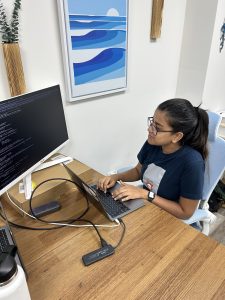
This summer I am interning at livMatS, a cluster of the University of Freiburg, focusing on developing autonomous life-like material systems. I work closely with my PhD student supervisor, Yizheng Liu, from the CPI group, under the supervision of Prof. Dr. Jürgen Rühe. As a research intern, I spend my days preparing substrates and glass slides, observing polymer synthesis, brainstorming on problems we encounter, and most excitingly, using a two-photon printer to develop micro actuators which will eventually be used to hold and stretch a single, living cell.
Most of my days are spent working in the lab and doing literature review, and attending weekly group meetings, which have been the greatest opportunities to get to know other PhD students’ ongoing research projects! Other than being fully immersed in a highly scientific, research-oriented environment, I have also become a part of a very international workplace, learning about other cultures and drinking various types of tea, even cold brewed for the hottest days of the year!
Why did you apply for this internship?

First hike in France! Picture showing me on top of Château de Saint-Ulrich after a 90-minute-long hike
After doing my summer internship remotely at a data science company last year, I wanted to apply for this internship to learn more about research in international universities and the European culture. As someone considering pursuing a Master’s degree in Europe, this opportunity was very appealing for me because I got to meet many Master’s students and learn more about what pursuing a PhD would be like. Moreover, I was interested in getting exposed to biocompatible, autonomous technologies that are being developed at the University of Freiburg, an institution that is older than the foundation of the United States!
Thus, when I was looking at opportunities Bryn Mawr College offered for the summer, I got intrigued by this specific position as it promised a work experience abroad and glimpse into a different field than mine. Searching more about the area and the university, I fell in love with Freiburg’s sustainable and extremely green environment, including the Black Forest, and the university’s previous projects, such as its snakeskin-inspired molting materials that can shed damaged layers in water to self-repair, and the Biomimetic Shell, an innovative research pavilion modeled after the structural biology of sea urchins and pine cones. And after all the searching, I am here now, contributing to sustainable research thanks to BMC!
What has been your favorite part of this internship?

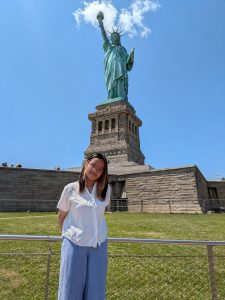
Me having bubble tea (yum!!) in front of Limmat River and the Fraumünster Curch clock tower in Zürich, Switzerland
I have to admit that the best part of my internship is the endless possibilities to explore neighboring European countries and cities. As an international student already studying in the United States, this experience has felt like a second study abroad opportunity. I am deeply grateful to Bryn Mawr College for providing this amazing internship opportunity that helps me grow as a scientist as well as a multi-cultural person. Other than its cultural exchange perspective, I have enjoyed learning material sciences from different aspects, especially with hands-on research. Even though it was a fully new topic to me, I have been very enthusiastic about learning about polymers, micro actuators, and their applications in various fields, especially biomedical research and environmental studies.
The city I do my research in, Freiburg, and the actual work I do in the lab helped me better grasp material sciences’ real-life applications and importance for our future. This experience has given me a new perspective as a future scientist and inspired me to think about how polymers could be applied in neuroscience. For example, I have already started brainstorming ideas such as using two-photon printing to fabricate an actuatable micro-platform for a single fly brain using biocompatible hybrid material systems that combine rigid structural polymers with smart hydrogels.
Can you talk about the skills you are learning and why they are important to you?
I am learning how to handle temperature and light-sensitive materials while improving my microscopy skills by observing microstructures approximately 10–60 µm in size. In addition, I have gained experience with laboratory techniques that were new to me, including doctor blading, spin coating, and two-photon printing. Developing these practical laboratory skills is important to me because I want to become a scientist with hands-on experience across different disciplines and familiarity with equipment based on a variety of scientific principles. These experiences contribute to my growth as a future scientist and broaden my perspective on what is possible today – and what is not, at least not yet.
Beyond the technical aspects of my internship, I have also been developing my interpersonal communication skills while working in a new country with colleagues from diverse cultural backgrounds. This has been one of the most valuable aspects of my experience, as effective communication is essential for successful collaboration and professional growth.
Strengthening my ability to communicate in an international environment will benefit me throughout my career as both a scientist and a professional!
What has been the biggest challenge you have faced at your internship?
Research is full of barriers to overcome, problems to solve, and dead ends to navigate. I have faced some challenges doing experiments at BMC Shoenhard Lab, but always found a way to navigate them. At livMatS, the biggest challenge I have faced is again related to our project. In theory, everything was supposed to work fine until we put different polymers together on a glass slide. After several attempts, we figured out that solvent used for the middle polymer layer penetrates through the polymer beneath, causing it to become uneven and distorted. My supervisor and I have been trying to solve this issue by using different solvents and coating extra protection layers between the two polymers.
Even though we changed the solvent many times, we have not been able to solve this problem; thus, we resynthesized our bottom layer polymer and will try it once again using it. Because of this issue, we have not been able to fabricate a uniform batch of micro structures. However, I am optimistic that the newly synthesized polymer, together with a mixed-solvent approach that I suggested, will help us overcome this issue. At the end, it is a challenge I love to overcome, and this is how research works.


 This summer I’m working as a research assistant at a psychology lab in Freiburg, Germany, on a project that sits right at the crossroads of computer science and psychology. The goal is to understand how German-language news media covers the United Nations’ 17 Sustainable Development Goals, things like gender equality, clean water, climate action, and poverty reduction, and whether there are goals that barely get covered at all.
 I’ve always wanted to find a version of computer science that felt connected to something bigger than just the code itself. I’m drawn to questions about people; how they think, what they pay attention to, what shapes their understanding of the world. When I came across this opportunity to combine NLP with psychology research on something as meaningful as global sustainability goals, it felt like exactly the kind of interdisciplinary work I’d been hoping to find. I also wanted real research experience like something where the decisions I made actually affected the findings. This internship gave me both.


 I remember talking to my family and friends after my LTT internship in Ghana last year and really loving the impact of a great internship. We were brainstorming about the next summer and, since I loved CS and Math so much, maybe my next internship should combine the two at a big company—naturally, Google came up in the conversation. Then, in early fall 2024, my school arranged a trip to Google’s New York offices where we met a couple of TriCo alums working there in different roles. It was an eye-opening experience: the culture felt exciting, the work everyone was doing sounded fascinating, and yes—the lots of mini kitchens didn’t hurt either. (I’m not saying I applied just for the snacks… but the snacks didn’t hurt.) After those conversations with alums, I knew an internship at Google would throw me in the deep end—with mentors to guide me, teammates to brainstorm with, and projects that would stretch me far beyond what I’d experienced before. And honestly? I also wanted to prove to myself that a kid from Nairobi could find her place, contribute, and learn in a space as massive and inspiring as Google.
 Not really—I didn’t stumble on a secret portal or have an insider tip. There are countless GitHub repos and forums that mention Google’s internship, so as soon as applications opened, I just threw my hat in the ring. Was I expecting to hear back? Honestly, no. With the thousands of applications Google must get, I assumed mine would quietly disappear into the void. But then, on my birthday, I got the email inviting me to interview. It felt less like perfect timing and more like the universe giving me a little wink: “Yep, this one’s for you.”
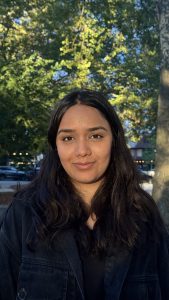

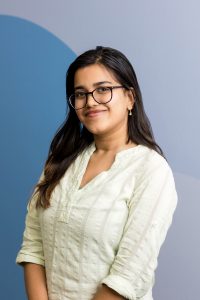
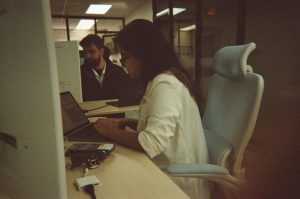 Looking back at my time at FSH Tech, I am incredibly grateful for the experience, knowledge and interpersonal skills that I have been able to acquire. Speaking of work, I’ve been part of a huge project with Pittsburgh Public Schools, where I interact directly with clients from Food Services to understand the challenges they face with their current software. My team and I have been dealing with them to develop tailored software solutions that are used by 52 schools and impact over 22,000 students’ nutrition and health. Beyond this, I contribute to technical responses for RFPs (Requests for Proposals) issued by government agencies which are real-world technical documents that outline solutions to public sector challenges. What I most enjoy is being part of a team that believes that software has to be for people before anything else.
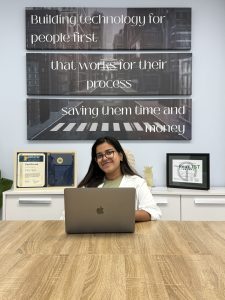 My goal was to break into Technical Product Management by solving meaningful, real-world problems that have an impact upon people’s lives.I am drawn to this internship opportunity as there are values within this company that consider people and sentiment seriously. It also offered me a chance to work at engineering-product-client boundary and learn how to build something that’s functional and technically proficient. I understood that this internship would allow me to grow along different axes and that’s why I came to this opportunity.