Madeleine Piersol ’27: A Summer of Discovery


Name:
Madeleine Piersol
Class Year: 2027
Major: History
Minor:
Peace, Conflict, and Social Justice Studies

Internship Organization: Bryn Mawr College, Department of Sociology
Internship Title: Summer Research Assistant
Location: Bryn Mawr, PA

What’s happening at your internship? We would love to hear what kind of work you are doing!

I am a summer research assistant for Nora Taplin-Kaguru, a Bryn Mawr Sociology professor, and we are working on a literature review exploring the paradox of housing as a human right and housing as an asset. My days are largely filled with research! My responsibilities include conducting literature searches, reading and taking-notes on relevant books and articles, writing short memos on key topics, and drafting sections of the paper. Even though this internship is remote, it is highly collaborative. I meet with Professor Taplin-Kaguru and my co-research assistant everyday to discuss our progress, make decisions about next steps, and engage in group writing sessions. Before starting this internship, I was unsure what the process of writing an academic paper for publication looked like, so being able to not only see a researcher’s methods in action but also participate in writing the paper has been very insightful.

Why did you apply for this internship?

I applied for this internship because I have always enjoyed the research and writing process as a college student and was interested in the opportunity to learn from a professional in the field and hone my skills. I was also deeply interested in Professor Taplin-Kaguru’s research question: What are the contradictions of housing as an investment and housing as a right? I am passionate about social justice and human rights and was excited by the opportunity to conduct research on a related topic and learn more about the social justice issues underlying housing access and affordability, or more accurately the lack thereof.

Can you talk about the skills you are learning and why they are important to you?

I have been able to gain valuable skills throughout my internship experience that will prepare me for future academic and professional work. The key skills I am gaining are: research, writing, editorial, and analytical skills; organizational skills; and collaborative skills. First, I see my experience throughout this internship helping me conduct stronger research and write clearer, better organized, and more insightful papers throughout the rest of my time in college. I don’t think research tasks will feel as daunting or academic literate as intimidating because I will have gained so much experience conducting research and reading academic papers/books throughout the summer. Moreover, the project management and organizational skills I have learned throughout my internship will be applicable for both my academic work and my future professional endeavors. I will be better prepared to tackle complex projects (such as my senior project for the History department), adapt to challenges or changes, and remain dedicated and focused on my goal. Finally, as I move throughout the rest of my time at Bryn Mawr and into grad school or the professional field, I am certain I will encounter group work or collaborative projects, and I believe I will be able to navigate these experiences with a more open-mind, greater confidence, and clearer communication.

An unexpected impact of this internship is that it reshaped the way that I go to museums. There is even more for me to see now that I have learned about the many components that go into making an exhibition. The selection of paint colors, the readability of object labels, loans from other institutions, and more offer insight into the subject itself and how the exhibition was put together.

It was especially interesting to see the celebration of the country’s semi-quincentennial across the city and how different institutions interpreted and presented it. Thinking about, for instance, the APS’s exhibition about the reproduction of the Declaration of Independence alongside the Philadelphia Academy of the Fine Arts’ thematic overview of both historic and contemporary art brought up questions about how ideas of freedom have been understood and carried on. This was a useful exercise in how to get the most out of museum visits.

Can you give us three adjectives and three nouns that describe your internship experience?

Three adjectives to describe my experience are: Pertinent, Insightful, and Rigorous.

Three nouns to describe my experience are: Growth, Perseverance, and Discovery.

Exploring Dizziness Through History, Medicine, and Society by Theresah Tawiah ‘27


Name:
Theresah Tawiah
Class Year: 2027
Major: History
Minor:
Biology, Health Studies

Internship Organization: Bryn Mawr College, Department of Anthropology

Internship Title: Summer Research Assistant
Location: Bryn Mawr, PA

What’s happening at your internship? We would love to hear what kind of work you are doing!

This summer, I have been working with Professor Melissa Pashigian on interdisciplinary research about dizziness. I explore biomedical, historical, and social science literature, organize research findings, and help develop interview and survey questions. My research also examines how dizziness affects people’s everyday lives and how individuals with symptoms that are not always visible seek understanding and legitimacy.

Why did you apply for this internship?

I applied because I wanted to strengthen my research and analytical skills while exploring the relationship between medicine, history, and society. As a History major interested in medical history and public health, this internship allows me to examine a health experience from several perspectives rather than viewing it only as a medical condition. 

Was there anything special about how you found this internship?

I found this internship through Professor Melissa Pashigian after taking her classes on illness narratives. Those courses deepened my interest in how people understand and communicate their health experiences, which made this research opportunity especially meaningful to me.

What has been your favorite part of this internship?

My favorite part has been discovering how interdisciplinary research can reveal different sides of the same health experience. I began by examining the medical and historical dimensions of dizziness, but I have especially enjoyed exploring questions about invisible illness, identity, and how people communicate experiences that others may not easily understand.

What is something you have learned from your internship that you didn’t expect?

I did not expect to learn how deeply dizziness can affect a person’s identity, relationships, and everyday life. The internship showed me that dizziness is not only a medical symptom; it can also be an invisible experience that shapes whether people feel heard, understood, and believed.

Working remotely for the first time? What has that experience been like for you?

My internship was hybrid, and on the days I worked remotely, I learned to manage my time, stay organized, and work independently. Regular meetings with Professor Pashigian also gave me opportunities to discuss my findings, ask questions, and receive helpful guidance.

Can you talk about the skills you are learning and why they are important to you?

I am strengthening my literature-search, critical-analysis, and qualitative-research skills. I have learned to use databases such as PubMed, Web of Science, Google Scholar, and Tripod, while organizing sources and findings through Zotero and research databases. I am also learning how to develop thoughtful interview and survey questions that help people describe their experiences in their own words. These skills are important to my future interest in public health because they will help me understand health experiences through both research evidence and patients’ perspectives.

What has been the biggest challenge you have faced at your internship?

The biggest challenge has been finding reliable and accessible sources, especially because research on dizziness spans many disciplines. This taught me to refine my search terms, explore different databases, and make thoughtful decisions about which sources were most relevant.

Can you give us three adjectives and three nouns that describe your internship experience?

Adjectives – Interdisciplinary, Insightful, Rewarding

Nouns – Discovery, Growth, Research

What is most rewarding about your internship?

The most rewarding part has been contributing to research that may help others better understand the experiences of people living with dizziness. I have also enjoyed creating interview and survey questions that allow people to describe their experiences in their own words.

Was this internship what you expected it to be?

The internship went beyond what I expected. I initially expected to focus mainly on the medical and historical aspects of dizziness, but I also explored its social dimensions, including invisible illness, identity and legitimacy.

Audrey Hollenbeck ’28: Summering in the Arctic Archives


Name:
Audrey Hollenbeck
Class Year: 2028
Major: History

Internship Organization: American Philosophical Society
Internship Title: Exhibitions Curatorial Intern
Location:
Philadelphia, PA

What’s happening at your internship? We would love to hear what kind of work you are doing!

My internship was at the American Philosophical Society (APS), America’s oldest scholarly organization. I primary completed research for the APS Museum’s 2028 exhibition on the Arctic and supported supplemental research for their upcoming 2027 exhibition on Indigenous use of APS collections. I spent most of my time finding, reading, and taking notes on collections, books, resources, and information from APS and over forty other institutions.

Box from the Geographical Society of Philadelphia Records collection

I grew particularly interested in Josephine Diebitsch Peary, who was one of the first white women to go to the Arctic with an expedition. She gained national prominence at the turn of the century, writing books about her and her daughter Marie’s experiences traveling around the Arctic to support her husband, Robert E. Peary. Josephine’s impact on Arctic exploration has only recently begun to be fully recognized by scholars, and women’s participation in polar expeditions remains under-researched. It was important to me to highlight in my research Inuit people and women in the Arctic, and my supervisor supported and encouraged me in this endeavor.

Why did you apply for this internship?

I have always loved museums, research, and history, and an internship where I had the opportunity to do historical research in a museum seemed absolutely perfect. The American Philosophical Society’s Museum is particularly exciting for me because it is located within a larger institution that contains a vast research library and focuses on community outreach through conferences and workshops. The interdisciplinary nature of both the Museum and the Society as a whole was a major draw for me because I was able to talk to and learn from people with diverse career paths, fields, and goals every single day. This internship was firmly rooted in an environment that I already loved while also guaranteeing that I would be introduced to new paths, experiences, and skills.

What has been your favorite part of this internship?
My favorite part of my internship was the variety of pacing, topics, and collaboration I experienced on any given day. Somedays, I sat quietly at my desk or in the Library’s Reading Room immersed in the worlds of academic articles, books, or archival materials for my own research project on the Arctic. Other times, I would participate in energetic meetings where the museum staff discussed updates and goals for the whole group.

Brochure and correspondence from Hjordis Kittle Parker to Mrs. Rosser of Geographical Society of Philadelphia

At any time, my supervisor might urgently ask me to find and summarize additional information on a niche topic, such as modern cedar bark weaving techniques or a list of Nuu-Chah-Nulth art galleries, which would immediately become part of the larger project of interviews, interpretation, and acquisitions for the 2027 exhibition. It was invigorating to sit down every morning at my desk not knowing exactly what rabbit hole I might fall down, but confident that I would end up on a fascinating adventure leaving me more curious about the world as I headed back to Bryn Mawr on the 5:36 pm train.

What is most rewarding about your internship?

I spent a lot of time in APS Library’s Reading Room studying the Geographical Society of Philadelphia’s Records. Well-known historical figures like Amelia Earhart appeared, but even more thrilling was the slow burn of piecing together the lives of individuals where my only information on them was a trail of mundane business correspondence. While I only had a part of the picture, I saw the stories of women like Hjordis Kittel Parker, a woman who traveled the geographical film-lecture circuit. She was mainly advertised as a housewife who went on adventures, yet she was extremely knowledgeable about Scandinavia and skilled at making the films that accompanied her lectures.

Through reading two decades of correspondence of Parker scheduling her Philadelphia lectures with the society’s executive secretary, Mrs. Emily Rosser, I began to see how Parker understood herself as a filmmaker who was able to show audiences a side of the world they would likely never get to see otherwise. Through the small anecdotes slipped into the letters coordinating her event appearances, the loving respect Parker had for herself, her work, and Mrs. Rosser taught me that the battle to be seen as serious professional woman in mid-century America was buttressed through women collaborating to elevate one another.

Everything is Public Health: Exploring the Many Ways to Better a Community by Quin Gerber ‘27


Name: 
Quin Gerber
Class Year: 2027
Majors: History, Public Health (Independent Major)
 
Internship Organization:  Allen County Department of Health
Internship Title:   Department of Health Intern
Location:  Fort Wayne, Allen County, IN
 
What’s happening at your internship? We would love to hear what kind of work you are doing!  

My internship at the Department of Health focused on exploring the countless different ways public health is performed at a local government level. In my time there, I was able to connect with the directors of each division, which encapsulate everything from Vital Records to Vector Control, and learn more about the work they do in the community. I shadowed DoH officials in the field, including a visit to the county jail for STI testing and conducting a pool inspection. I also completed projects such as creating and sending a postcard to families in need of school vaccinations, creating informational pamphlets for Vector Control, suicide legal literature review, and death record data entry and analysis.
 
Why did you apply for this internship? 

I loved that this internship gave me the opportunity to explore the many different careers that fall within public health. Until this internship, I did not have much knowledge of the everyday duties of health departments. As a Public Health independent major planning to go to graduate school and eventually work in public health, I wanted to learn more about my future career, gain mentors, and hone in on what specific roles I would be interested in.
 
What is the most rewarding part about your internship? 

The most rewarding aspect of my internship is getting to see the direct impact of the work done at the Allen County DoH. Allen County is home to over 400,000 residents, meaning that many of the issues I learned about and worked on impacted only a few hundred or even a few dozen people. This population size allows for robust public health efforts to be closely individualized based on our community’s needs. Instead of blanket outreach that may or may not help millions of people, the work I did could be targeted and carried out on a personal level. For example, I was able to contact families directly to inform them about their vaccine needs instead of sending generic emails, which likely led to higher vaccination rates. 

Was this internship what you expected it to be? 

In some ways, yes. I went into this internship most interested in working in infectious disease control or epidemiology, and my experiences learning about and shadowing the different divisions confirmed this to me. However, I did not expect to find a love for working in local government. I was mainly interested in doing public health on a state or national level before this internship. In many ways, local governments have less power with legislation and policy, but much more power in terms of influence. Instead of working with numbers and statistics, I worked with names and families. I’m not sure what the future will hold for me, but if it is anything like this internship, I will have a profound and rewarding career bettering my own community. 

Maritime Mysteries: Finding the Forgotten Sailors of 18th and 19th century Philadelphia by Sam Ritter ‘27 


Name
: Sam Ritter
Class Year: 2027
Major: History
Minors: English, Philosophy
 
Internship Organization: Girard College
Internship Title:   Founder’s Hall Curatorial Intern
Location: Philadelphia, PA
 
What’s happening at your internship? We would love to hear what kind of work you are doing! 

My internship involved combing through the ship records of Mr. Stephen Girard, one of Philadelphia’s wealthiest merchants during and since the Revolutionary Era. After his death, all of Girard’s papers were packed up and preserved through the centuries, nearly exactly as they were in life. As such, many more records of individual sailors and craftsmen are preserved here, primarily in ship’s logs and wage records. My work extracted information on individual sailors on Girard’s ships Liberty and Superb, his Brigs Sally I, Sally II, and Polly, and various smaller ships he partially owned or worked with. Together with my fellow intern, Vivian Bloom, and two previous interns in 2023 and 2024, our work now grants a full statistical picture of those working on Girard’s ships, people who have disappeared from the historical record in every other case.

Why did you apply for this internship?  

One of the many reasons I applied to and chose to come to Bryn Mawr was its proximity to Philadelphia, one of the most historically rich cities in America. This internship granted me an opportunity to take advantage of that proximity and engage first-hand with Philly history and with the city’s museum scene. I hope to continue research and archive work after graduation; This was an opportunity to add directly to the general historical database and shed light on individuals who do not appear anywhere else in the historical record but who built the Philly economy with their labor.     

What is something you have learned from your internship that you didn’t expect? 

Before this internship, I did not have a particularly clear understanding of the structure of the historical maritime world, nor did I know exactly who featured within it. This internship taught me quite a bit about historical record keeping, the positions on historical sailing ships, and the kinds of people who did sailing work. One thing that surprised me was just how many countries sailing individuals came from. One particular voyage, courtesy of Brig Modest, had only 4 American sailors. The rest came from Portugal, Scotland, England, France, and Germany, among others. My work on this internship in particular also paves the way to analyze statistics on sailors of color working for Mr. Girard. We only have records of 73 sailors of color (physical description was recorded less than other information), but they served in a wide variety of positions – Seamen, Carpenters, Apprentices, Cooks, even as First Mate. It was a unique experience to uncover these facets of the lives of individuals.  

Can you give us three adjectives and three nouns that describe your internship experience? 

Unique: There is very little like the environment of working in a small museum, and nothing like working with the Girard collection. The passion everyone has toward the work they are doing and the effort everyone puts in to make things happen is something I have yet to see anywhere else. 

 Museum: While my internship itself was based in the Girard Archives, my place of work also hosted the Girard College Museum. Over the course of my internship, I got a glimpse into its workings, including helping set up a new exhibit!  

Engaging: You would think that going through literally thousands of papers looking for names and dates would become quite dreary after a while. And while it did become monotonous at times, there is something about uncovering the stories of individuals – the first person to do so in centuries – that never stopped feeling special.  

Opportunity: Outside of my internship itself, I also had incredible opportunities to meet other museum and historical leaders around the Philly area. From meeting the woman who led the work to have Philly listed as a UNESCO World Heritage City to listening to presentations at the American Philosophical Society on the impact of nuclear testing on Indigenous Peoples of the Pacific, I had a plethora of unique and unexpected opportunities to engage with the work others were doing parallel to mine.  

Demanding: Trying to finish going through Mr. Girard’s records by the end of the summer was an ambitious goal from the beginning. We managed to do it, but we had to be disciplined to get it done. Furthermore, Girard College is an hour to an hour and a half from Bryn Mawr by public transit. I loved the internship I did, but it really took all of my time and energy to commit to it.  

Career: More than anything else, this internship absolutely fulfilled the promise of career connections and opportunities. Though I don’t know where I will go after college, working at Girard meant I made some invaluable connections in museums, archives, and non-profit work in Philadelphia. Those connections will be beneficial no matter where I go, and could help kick-start a career in museum or archival work. 

Madhavi Tiruchelvam ’28 Spends Summer at the American Philosophical Society 


Name: Madhavi Tiruchelvam
Class Year: 2028
Major:  Intended History         
 
Internship Organization:  American Philosophical Society Library and Museum
Internship Title:   Summer Curatorial Intern
Location:  Philadelphia, PA
 
What’s happening at your internship? We would love to hear what kind of work you are doing!  

Me at my desk

At my internship, I have spent the summer conducting historical research to assist the museum’s curatorial research team in preparing our upcoming exhibits. Museum exhibits tend to be planned several years in advance, so I primarily conducted research for an exhibit in 2027 on the Center for Native American and Indigenous Research (CNAIR) collections at the American Philosophical Society (APS). Throughout the summer, I spent hours in the APS reading room working with archival materials. I also got to participate in weekly curatorial planning meetings for an exhibit in 2026 celebrating the 250th anniversary of the Declaration of Independence, which was particularly exciting since Thomas Jefferson’s draft is part of the APS collection. I ended my internship by conducting an independent research project into the papers of Indigenous anthropologist Ella Deloria, a project which culminated in a twenty minute presentation and a forthcoming publication for the APS blog.

Why did you apply for this internship?  

Museum guide field trip to the Historical Society of Pennsylvania

I applied for this internship because I wanted the chance to develop my historical research skills beyond an academic environment. This internship appealed to me particularly because it gave me the opportunity to conduct physical archival research, and learn proper archival conservation practices.
 
What has been your favorite part of this internship? 

The best part of my time at the American Philosophical Society (APS) was undoubtedly my colleagues. Everyone I met at the museum was kind, welcoming, and helpful. From the very first day, they strived to make me feel like part of the APS community, and I always felt comfortable asking questions. In addition, my colleagues consistently encouraged me to participate in exhibition planning meetings and offer my own suggestions, which always made me feel included. It was such a pleasure to work with such a wonderful group of people, and to get to learn about all different aspects of museum work. 

Can you talk about the skills you are learning and why they are important to you? 

Through this internship, I have learned a great deal of archival research skills. These skills include learning how to efficiently search through finding aids, how to handle sensitive archival materials including photographs and manuscripts, and determining what information is relevant when researching and writing biographies of historical individuals. These skills are important to me because they will be useful in future academic research for my intended history major. I have also learned about the necessary skills for museum exhibition design, which include analysing exhibits from outside institutions, conducting a variety of curatorial planning meetings, and moving museum objects. I also got the opportunity to practice interacting with museum visitors as a museum guide, which was important to me because of my future career goal of working in some form of public history output.  


Maddie Raymond ’26: Research, Summer 2025 (Oil on Canvas) 


Name
: Maddie Raymond
Class Year: 2026
Major: English, History
 
Internship Organization:  Bryn Mawr College Humanities and Social Science Research Program
Internship Title:   Research Assistant
Location:  Bryn Mawr, PA
 
What’s happening at your internship? We would love to hear what kind of work you are doing!  

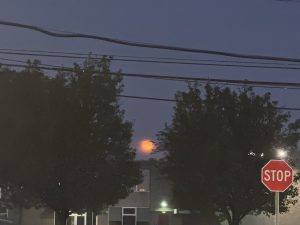
The strawberry moon rising after finishing remote work one night

My internship had two main components: editing Professor McKee’s manuscript ahead of publication this fall and fleshing out the bibliography for that manuscript. I also got the chance at the beginning of the summer to conduct archival research in the collection of Pierre Eugene du Simitiere at the Philadelphia Library Company

Why did you apply for this internship?  

I applied for this internship because I have a longstanding interest in the Atlantic World, around which Professor McKee’s research focuses. When I saw the job listing, I sent Professor McKee a paper I wrote for Professor Ignacio Gallup-Diaz’s pirates seminar about why a pirate can’t be a journalist and the rest is history.
 
Working remotely for the first time? What has that experience been like for you? 

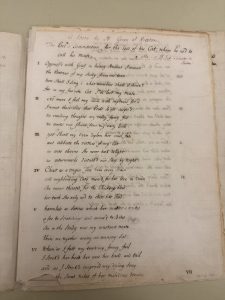
The Poet’s Lamentation for the loss of his Cat, whom he used to call his mate: a poem by Jo Green of Boston from the 1700s found in the papers of Pierre Eugene du Simitiere, page 1

My research this summer was largely remote, making it the first time I had ever worked a remote job. The experience was great for me, as I was able to create my own flexible schedule built around goals I set for myself. Alongside careful guidance from Professor McKee, I was able to complete my work in the environment and manner that worked best for me, and produced some great work because of it. 

Can you talk about the skills you are learning and why they are important to you?  

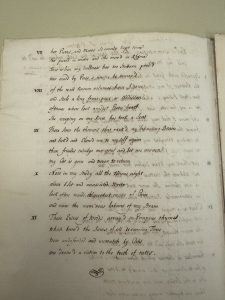
The Poet’s Lamentation for the loss of his Cat, whom he used to call his mate: a poem by Jo Green of Boston from the 1700s found in the papers of Pierre Eugene du Simitiere, page 2

Over the summer, I got to hone my copyediting skills via copyediting Professor McKee’s upcoming monograph ahead of its publication this fall. Copyediting has been a skill I have practiced for a while, and is important to me because it is one of the chief ways I support my peers in the humanities as well as my staffers in the news department at the Bi-College Newspaper. Getting to spend my summer editing an academic manuscript written by an established scholar was great practice for me, and I now feel more confident than ever to tackle both my friends’ papers and my staffers’ articles this fall. 

Rachel Dopico ’26 Advances Health Equity at the American College of Physicians 


Name
: Rachel Dopico
Class Year: 2026
Major:    History
Minor: Health Studies, Environmental Studies
 
Internship Organization:  American College of Physicians
Internship Title:   Ryan Mire, MD Summer Internship Program
Location:  Philadelphia, PA
 
What’s happening at your internship? We would love to hear what kind of work you are doing!  

Dinner with ACP’S Board of Regents

During my internship, I worked in the Strategy & Innovation department within the American College of Physicians (ACP). This placement enabled me to interact with many departments and projects and gain a comprehensive understanding of ACP’s work. I worked primarily on a new project, helping to increase the visibility of ACP’s initiative making obesity care more equitable through regional action grants. I was able to closely familiarize myself with the work of the 12 grantees, who are doctors from ACP chapters across the country. Their projects are novel and improve the experiences of patients and providers in the field of obesity medicine through outreach in areas like medical education, nutrition, and more. I wrote short and long summaries for each of the twelve projects, helped to conduct outreach to grant applicants, and assisted with planning for a marketing video to promote the project. The best part of my work throughout the summer, though, was getting to interview some of the grantees, and learn about their backgrounds and work in underserved communities. I also worked with members of our team in Philanthropy and helped draft a newsletter and letter to donors. Generally, I got the opportunity to learn what exactly the work of a strategy department entails, and how they serve to further the work of organizations like ACP.
 
Why did you apply for this internship?  

Site Visit to Johns Hopkins

I applied for this internship because I felt drawn to the mission of ACP and appreciated their prioritization of health equity through initiatives like the internship program. The American College of Physicians serves its member base of 161,000 doctors but also is involved in lots of patient advocacy. I also wanted the chance to supplement my undergraduate and other internship experiences with exposure to the healthcare ecosystem at large and learn about other possible career paths within public health. I more than accomplished that this summer, and throughout programming visited health systems like Johns Hopkins, medical schools, regulatory agencies, and more. We also had the chance to speak with a range of physicians one-on-one through subject matter expert talks. I have learned to see the world in terms of health systems and understand how, beyond hospitals, clinics, pharmacies, outpatient care centers, imaging centers, and many other entities overlap. One moment that stuck out to me was hearing one doctor we spoke with reference how medicine is a social science, and politics is medicine on a larger scale.
 
Was there anything special about how you found this internship?

Visit from Dr. Ryan Mire

This is Bryn Mawr’s first ever summer partnering with the American College of Physicians to fund a student to participate in the internship program, and I am so grateful I found this opportunity through the career center! 

What has been your favorite part of this internship? 

My favorite part of the internship was getting to meet people, both my peers and members of the organization. I was in a cohort with 9 other interns, and it was really rewarding to learn alongside them and even work together on some projects. We met weekly as a cohort, and attended site visits and talks with subject matter experts, where we met leaders in diverse careers across internal medicine. While I do not want to be a physician, I am excited to work alongside doctors in my public health career.

What is most rewarding about your internship? 

The most rewarding part of the internship was getting a glimpse into the world of passionate, energetic, smart, and above all hopeful people in the healthcare world fighting for health equity. Amidst drastic cuts to healthcare access from the federal government right now, restricting Medicare, Medicaid, and Affordable Care Act coverage and generally gutting public health, it was incredibly rewarding to meet so many people who are leaders in the field and who are making a difference on a micro and macro level. As someone who wants to work in public health, and is interested in health policy, this experience infused me with a lot of hope.

Chaewon Lee ’27 Interns with Nationalities Service Center  


Name: Chaewon Lee
Class Year: 2027
Major: Geology, History
Minor: Environmental Studies
 
Internship Organization: Nationalities Service Center
Internship Title:  RUI Program Intern
Location:  Philadelphia, PA
 
What’s happening at your internship? We would love to hear what kind of work you are doing! 

The Nationalities Service Center is a non-profit organization that hosts a variety of programs to support Philadelphia’s immigrant and refugee community. During my summer, I was part of the Refuge Upskilling Initiative (RUI) program, which is part of the Employment department, where I assisted my supervisors in crafting individualized skill planning documents for our clients. These individualized skill plannings outlined the goals and desired career goals of our clients, and we as a team would support them in achieving these goals. Many of our employment programs seek to provide our clients with the necessary skills to succeed in the United States, such as learning how to find jobs, take ESL courses, write resumes, and essentially build your career. The RUI program calls for employer partnerships (employers in the Philadelphia region who would like to enroll their immigrant and refugee employees with our program), thus I also worked on calling many companies to advocate for our program and for potential partnerships. Additionally, this summer, I was able to call and meet clients and hear their success stories with our training plans.

Why did you apply for this internship?  

I applied to intern for the Nationalities Service Center because of our current political environment and hostility towards immigrant and refugee communities. As an immigrant myself, I experienced first-hand the hardships of moving to a new country; the fear of blindly facing every step of life in a foreign place. With the already difficult circumstance of moving to a new country added on to the pressure of the political hostility towards immigrants, I wanted to do whatever was possible within my ability to be a help to these communities. I wanted this summer to be one where I can be a service to others and truly be a light of hope during our challenging times. Moreover, as a political science major with interest in policy, I wanted to gain hands-on experience on how much federal policies affect the people in our community.
 
What has been your favorite part of this internship? 

My favorite part about my internship was the people I got to meet and work with. I will be honest, there were many challenging days where almost so many of us felt hopeless do to so many of our coworkers getting laid off and our programs shutting down because of massive budget cuts. Despite all the valid reasons to feel hopeless, dreadful, and disheartened, I was shocked by the resilience of my supervisors and other staff members. Everyone around me would always come to work with a smile, and a bright attitude that would help not only all of us feel a little more hopeful, but also our clients. Seeing everyone still hold onto the strand of hope that was all fabricated through each and every one of our efforts to be a reason for our clients’ smile was an amazing experience. NSC’s staff members’ resilience, strength, kindness, and dedication was inspiring and I hope to be like them one day.

What has been the biggest challenge you have faced at your internship? 

The biggest challenge I faced at my internship has been trying to convince companies and employers to partner with our organization. To support the RUI program, we need companies and employers to become partners and provide us with employees or we provide them with our clients that way both parties go through the program together. However, this is easier said than done. The majority of my calls with employers would always end with “we are not interested” or most will not even hear about the program as soon as I mention immigrants and refugees. This was incredibly disheartening and oftentimes left me feeling stuck and powerless in society. I went to intern for this organization to be a source of help, but I felt as if everything I was doing did not matter because society was rather neglectful towards our cause and also afraid of supporting us due to the overall political environment. Thus, there were many days where I simply did not know how to tackle this greater obstacle: society’s perception towards immigrants and refugees. I am still in the process of figuring this challenge out, but I have learned through my experience with NSC that there is hope as long as we keep trying, which was proven to be true when I was finally able to receive an answer from an employer saying they were interested!

Fatma Ayad ’28 Engages in a Summer of Digital Technologies 


Name: Fatma Ayad
Class Year: 2028
Major: Geology, History
Minor: Environmental Studies
 
Internship Organization:  Bryn Mawr College Library and Information Technology Services
Internship Title: Digital Technology Internship
Location:  Bryn Mawr, PA
 
What’s happening at your internship? We would love to hear what kind of work you are doing!  

Showing visualizations to participant at Swarthmore’s Tri-Co Digital Scholarship Conference

Over the past summer, I had the pleasure of collaborating with four wonderful teammates on three different projects. From data visualization to conference management, each project was different from the other, teaching us a diverse set of skills. The Digital Technology Internship, aptly named, emphasized digital competencies like Critical Making and Data Analysis and how to apply these skills on hands-on projects. More specifically, we applied these skills on three projects:  

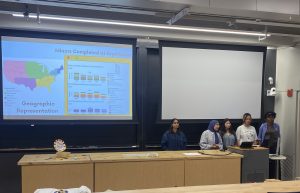
  1. Data Visualization of Bryn Mawr’s Factbooks: The Data Visualization project involved working with the Institutional Research department to visualize Bryn Mawr’s Factbooks and showcase them on the college’s website. We did so by converting static data to accessible and interactive graphs using Tableau, which is a data visualization tool. 
  2. Creation of Lab Safety Videos: In collaboration with the Environmental and Health Safety department, we worked on creating educational lab safety videos for Bryn Mawr’s faculty and students, focusing on graphical presentation, video production, and accessibility. 
  3. Management of Institute of Liberal Arts Digital Scholarship (ILiADS) Conference: As part of the Local Arrangements team of the ILiADS Conference, which was held at Bryn Mawr this year, we worked on pre-conference logistics and on-site coordination. Our responsibilities included shooting a tour guide video around Bryn Mawr, preparing welcome packets, and producing promotional material.

Why did you apply for this internship?  

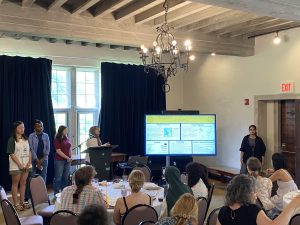
Presenting at LITS Summer Internship Showcase

I applied for the Digital Technology Internship because I wanted to explore how digital tools can be thoughtfully integrated into academic, administrative, and community settings. As a Computer Science major, I’m very interested in the application of technology in real-life problems, and through this internship, I wanted to explore a more critical approach to technology. I was especially drawn to the program’s emphasis on collaboration, accessibility, and critical digital literacy. In the lens of critical thinking, this internship allowed me to approach technology in a more ethical and human-centered way. Looking back at my internship experience, I feel like it successfully helped me achieve all these objectives that I hoped for.
 
What has been your favorite part of this internship?  

Presenting at ILiADS Conference

I was blessed to have a beautiful connection with my teammates, who each had their own unique input on the projects. We had a very dynamic and collaborative relationship, which facilitated communication and made the projects run very smoothly and productively. In addition, we all shared three awesome supervisors that led these projects with wisdom, insight, and understanding. Despite all the cool tech I got to learn throughout, all these meaningful connections were my favorite part of this internship. What started as professional relationships grew to be wonderful friendships! I also got to build connections outside of our office, and that is with different departments across Bryn Mawr, like the Institutional Research department and Environmental and Health Safety department, and with different Liberal Arts colleges through ILiADS, like Grinnell College and Carleton College. That helped me expand my professional network within Bryn Mawr and beyond! 

Can you talk about the skills you are learning and why they are important to you? 

Firstly, as a Computer Science major, technical skills matter a lot to me as I am in the process of preparing myself for the technical field. Through this internship, I learned how to use Tableau proficiently and how to apply it in data analysis and visualization. In addition, I learned HTML in order to learn how to embed these graphical visualizations to the college’s website and ensure it’s accessible to all Bryn Mawr website visitors. We also learned video production using WeVideo and video content management using Panopto. Outside of technical skills, we learned about Data Management and Preservation when working with Bryn Mawr’s statistical data, by cleaning and organizing multiple Excel sheets of information. In addition, critical design was also an important aspect to the internship as it made me realize that good design isn’t just functional, but it’s inclusive, intentional, and aware of its social context. As someone who wants to work in tech, I now see ethical reflection as just as essential as technical skill. Additionally, one of the most important skills that I focused on was communication. While it’s often emphasized in workplaces, it can be the hardest to apply as it is skill that involves other individuals. It is the backbone of project management and can determine the success of a project. Whether I was working with stakeholders, project clients, supervisors, or teammates, thoughtful communication helped me understand expectations, stay aligned, and move projects forward. It wasn’t just about talking, it was also about listening, asking the right questions, and making sure everyone was on the same page. Finally, I’m beyond grateful to Bryn Mawr, the LITS Department, and the Digital Technology Internship for supporting my personal and professional growth this summer. As an upcoming sophomore and international student, I truly appreciate the opportunity to be part of a program that has helped shape my journey and opened the door to future opportunities.