Chaewon Lee ’27 Interns with Nationalities Service Center  


Name: Chaewon Lee
Class Year: 2027
Major: Geology, History
Minor: Environmental Studies
 
Internship Organization: Nationalities Service Center
Internship Title:  RUI Program Intern
Location:  Philadelphia, PA
 
What’s happening at your internship? We would love to hear what kind of work you are doing! 

The Nationalities Service Center is a non-profit organization that hosts a variety of programs to support Philadelphia’s immigrant and refugee community. During my summer, I was part of the Refuge Upskilling Initiative (RUI) program, which is part of the Employment department, where I assisted my supervisors in crafting individualized skill planning documents for our clients. These individualized skill plannings outlined the goals and desired career goals of our clients, and we as a team would support them in achieving these goals. Many of our employment programs seek to provide our clients with the necessary skills to succeed in the United States, such as learning how to find jobs, take ESL courses, write resumes, and essentially build your career. The RUI program calls for employer partnerships (employers in the Philadelphia region who would like to enroll their immigrant and refugee employees with our program), thus I also worked on calling many companies to advocate for our program and for potential partnerships. Additionally, this summer, I was able to call and meet clients and hear their success stories with our training plans.

Why did you apply for this internship?  

I applied to intern for the Nationalities Service Center because of our current political environment and hostility towards immigrant and refugee communities. As an immigrant myself, I experienced first-hand the hardships of moving to a new country; the fear of blindly facing every step of life in a foreign place. With the already difficult circumstance of moving to a new country added on to the pressure of the political hostility towards immigrants, I wanted to do whatever was possible within my ability to be a help to these communities. I wanted this summer to be one where I can be a service to others and truly be a light of hope during our challenging times. Moreover, as a political science major with interest in policy, I wanted to gain hands-on experience on how much federal policies affect the people in our community.
 
What has been your favorite part of this internship? 

My favorite part about my internship was the people I got to meet and work with. I will be honest, there were many challenging days where almost so many of us felt hopeless do to so many of our coworkers getting laid off and our programs shutting down because of massive budget cuts. Despite all the valid reasons to feel hopeless, dreadful, and disheartened, I was shocked by the resilience of my supervisors and other staff members. Everyone around me would always come to work with a smile, and a bright attitude that would help not only all of us feel a little more hopeful, but also our clients. Seeing everyone still hold onto the strand of hope that was all fabricated through each and every one of our efforts to be a reason for our clients’ smile was an amazing experience. NSC’s staff members’ resilience, strength, kindness, and dedication was inspiring and I hope to be like them one day.

What has been the biggest challenge you have faced at your internship? 

The biggest challenge I faced at my internship has been trying to convince companies and employers to partner with our organization. To support the RUI program, we need companies and employers to become partners and provide us with employees or we provide them with our clients that way both parties go through the program together. However, this is easier said than done. The majority of my calls with employers would always end with “we are not interested” or most will not even hear about the program as soon as I mention immigrants and refugees. This was incredibly disheartening and oftentimes left me feeling stuck and powerless in society. I went to intern for this organization to be a source of help, but I felt as if everything I was doing did not matter because society was rather neglectful towards our cause and also afraid of supporting us due to the overall political environment. Thus, there were many days where I simply did not know how to tackle this greater obstacle: society’s perception towards immigrants and refugees. I am still in the process of figuring this challenge out, but I have learned through my experience with NSC that there is hope as long as we keep trying, which was proven to be true when I was finally able to receive an answer from an employer saying they were interested!
Fatma Ayad ’28 Engages in a Summer of Digital Technologies 


Name: Fatma Ayad
Class Year: 2028
Major: Geology, History
Minor: Environmental Studies
 
Internship Organization:  Bryn Mawr College Library and Information Technology Services
Internship Title: Digital Technology Internship
Location:  Bryn Mawr, PA
 
What’s happening at your internship? We would love to hear what kind of work you are doing!  

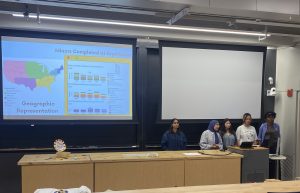
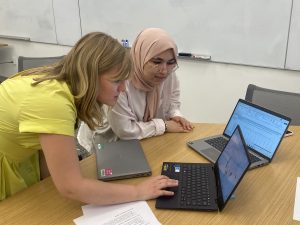
Showing visualizations to participant at Swarthmore’s Tri-Co Digital Scholarship Conference

Over the past summer, I had the pleasure of collaborating with four wonderful teammates on three different projects. From data visualization to conference management, each project was different from the other, teaching us a diverse set of skills. The Digital Technology Internship, aptly named, emphasized digital competencies like Critical Making and Data Analysis and how to apply these skills on hands-on projects. More specifically, we applied these skills on three projects:  

  1. Data Visualization of Bryn Mawr’s Factbooks: The Data Visualization project involved working with the Institutional Research department to visualize Bryn Mawr’s Factbooks and showcase them on the college’s website. We did so by converting static data to accessible and interactive graphs using Tableau, which is a data visualization tool. 
  2. Creation of Lab Safety Videos: In collaboration with the Environmental and Health Safety department, we worked on creating educational lab safety videos for Bryn Mawr’s faculty and students, focusing on graphical presentation, video production, and accessibility. 
  3. Management of Institute of Liberal Arts Digital Scholarship (ILiADS) Conference: As part of the Local Arrangements team of the ILiADS Conference, which was held at Bryn Mawr this year, we worked on pre-conference logistics and on-site coordination. Our responsibilities included shooting a tour guide video around Bryn Mawr, preparing welcome packets, and producing promotional material.

Why did you apply for this internship?  

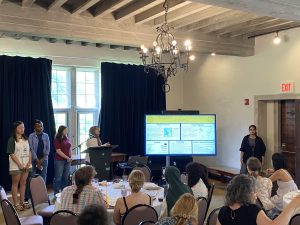
Presenting at LITS Summer Internship Showcase

I applied for the Digital Technology Internship because I wanted to explore how digital tools can be thoughtfully integrated into academic, administrative, and community settings. As a Computer Science major, I’m very interested in the application of technology in real-life problems, and through this internship, I wanted to explore a more critical approach to technology. I was especially drawn to the program’s emphasis on collaboration, accessibility, and critical digital literacy. In the lens of critical thinking, this internship allowed me to approach technology in a more ethical and human-centered way. Looking back at my internship experience, I feel like it successfully helped me achieve all these objectives that I hoped for.
 
What has been your favorite part of this internship?  

Presenting at ILiADS Conference

I was blessed to have a beautiful connection with my teammates, who each had their own unique input on the projects. We had a very dynamic and collaborative relationship, which facilitated communication and made the projects run very smoothly and productively. In addition, we all shared three awesome supervisors that led these projects with wisdom, insight, and understanding. Despite all the cool tech I got to learn throughout, all these meaningful connections were my favorite part of this internship. What started as professional relationships grew to be wonderful friendships! I also got to build connections outside of our office, and that is with different departments across Bryn Mawr, like the Institutional Research department and Environmental and Health Safety department, and with different Liberal Arts colleges through ILiADS, like Grinnell College and Carleton College. That helped me expand my professional network within Bryn Mawr and beyond! 

Can you talk about the skills you are learning and why they are important to you? 

Firstly, as a Computer Science major, technical skills matter a lot to me as I am in the process of preparing myself for the technical field. Through this internship, I learned how to use Tableau proficiently and how to apply it in data analysis and visualization. In addition, I learned HTML in order to learn how to embed these graphical visualizations to the college’s website and ensure it’s accessible to all Bryn Mawr website visitors. We also learned video production using WeVideo and video content management using Panopto. Outside of technical skills, we learned about Data Management and Preservation when working with Bryn Mawr’s statistical data, by cleaning and organizing multiple Excel sheets of information. In addition, critical design was also an important aspect to the internship as it made me realize that good design isn’t just functional, but it’s inclusive, intentional, and aware of its social context. As someone who wants to work in tech, I now see ethical reflection as just as essential as technical skill. Additionally, one of the most important skills that I focused on was communication. While it’s often emphasized in workplaces, it can be the hardest to apply as it is skill that involves other individuals. It is the backbone of project management and can determine the success of a project. Whether I was working with stakeholders, project clients, supervisors, or teammates, thoughtful communication helped me understand expectations, stay aligned, and move projects forward. It wasn’t just about talking, it was also about listening, asking the right questions, and making sure everyone was on the same page. Finally, I’m beyond grateful to Bryn Mawr, the LITS Department, and the Digital Technology Internship for supporting my personal and professional growth this summer. As an upcoming sophomore and international student, I truly appreciate the opportunity to be part of a program that has helped shape my journey and opened the door to future opportunities. 


Sophonisba Franecki ’26 Makes Music History in Vienna

Name: Sophonisba Franecki
Class Year: 2026
Major: Comparative Literature, Geology 

Internship Organization: Exilarte Center for Banned Music
Internship Title:  Archive Intern, “Haus- und Hoflektor”
Location: Vienna, Austria 

What’s happening at your internship? We would love to hear what kind of work you are doing!  

The Wellesz piano, with whom I and my coworker Nobuko shared an office. Photographed by Iby Jolande Varga, who lays out and prints all of Exilarte’s publications, including the history I wrote during my internship

I’m working for Exilarte Center for Banned Music, an archive within the MDW (University of Music and Performing Arts Vienna) dedicated to composers and musicians who were persecuted by the Nazi regime. It started two decades ago as a nonprofit pet project of Prof. Gerold Gruber. Since then, Exilarte has transformed into an archive where performers and researchers can study the estates of artists like the composer Erich Wolfgang Korngold,  the violinist Fritz Kreisler and the world-renowed tenor-soprano pair, Jan Kiepura and Marta Eggerth. The center also curates exhibits, publishes books and hosts concerts, so that the composers whose careers were cut short by a hostile regime can recover their place in the world of classical music. 

Since the Exilarte’s birthday is coming up in 2026, I was tasked with writing a history of Exilarte Center. To prepare, I visited the archives, combed through the massive database of all events held by Exilarte since 2006 – the first one was a concert dedicated to the violinist Alma Rosé and conducted interviews with Exilarte Center’s major professional collaborators. That’s how I’ve met Ulrike Anton, flautist and head of Vienna’s Schoenberg Center, soprano Josipa Bainac Hausknecht, and documentarian Stefan Herzog. The fruit of the summer is an 84-page booklet that chronicles not only the story of the center itself, but the century of people who created it.  

Why did you apply for this internship?  

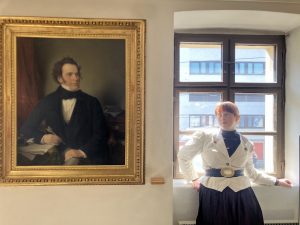
Reconnecting with Schubert

I found out about Exilarte through Bryn Mawr’s IES Abroad International Internship Fund, which also provided me with a stipend for my time in Vienna. What drew me in, though, was the opportunity to conduct archival research and explore my ongoing interests in narrative history and the so-called classical “canon.” In a creative writing class my freshman year at Bryn Mawr, I’d written a play about the Congress of Vienna and a fictionalized meeting between the teenage Franz Schubert and his idol, Ludwig van Beethoven. Even before then, I’d been interested in questions like: who decides what events and narratives are recorded as history? What role does art, especially temporally-bound forms of art like music, have to with that process? And how do you even begin to explain the interactions between a human being, the work they create and the world that creates them? 

It’s a very interdisciplinary question. I’ve joked before that I don’t have the discipline to be a historian, but even with my double major I find myself drawn again and again to projects that combine scholarly approaches, and that mediate between real or imagined pasts and the present upon which they ineluctably bear. Working for Exilarte gave me the opportunity to develop that practice, as well as to utilize the other professional competencies necessary in the modern world. 

What is something you have learned that you didn’t expect? 

I didn’t expect to fall in love with the dramaturg Marcel Prawy (1911-2003). While I was researching Eggerth and Kiepura, I happened upon the biography of Kiepura’s personal secretary, who traveled with the couple to New York in 1938 and came back with the US Army in 1946. He’s a figure known much more widely in Austria today than in the United States, but in his life time he was a cultural mediator between his home and adopted countries. He was a friend of Leonard Bernstein, and while he’s a very avid self-promoter, his claim that he brought the American musical form to the Viennese theater scene has turned out to hold water. He translated Kiss Me, Kate and West Side Story and, as the dramaturg of the Wiener Volksoper, oversaw their Vienna premieres. It’s a legacy that continues to facilitate cultural exchange; this fall, there will be a performance of Prawy’s translation at the Volksoper led by choreographer Bryan Arias. 

The international reach of Exilarte’s projects is both deliberate and unfortunate: unfortunate, because it’s the mortal threat of a hostile state that forces artists to flee, but deliberate because the new surroundings they find themselves in often transform their music, and lead to cultural exchange. Prawy’s case is that of a passionate amateur’s recently-barred lawyer with an irrepressible passion for opera – who, in American exile, turns his passion into a profession and facilitates a revolution in theater practices. Discovering his story, and being able to present it to an international readership, has been especially rewarding, because it mirrors the work I’m doing today and hope to continue with in the future.  

What is most rewarding about your internship? 

The combination of Austrian workplace culture and the genuine passion everyone in the team has for the Center’s mission. Mandatory PTO and sick days have normalized a deeper respect for work-life balance than is prevalent in the United States, and because Exilarte’s team is – six people, not counting any professionals visiting the archive that day – everything is planned in a very respectful, consensus-driven manner. One of my interviewees said that we were “Feuer und Flamme” for these composers and their stories, and that’s more or less true. We all care about music, we care about preserving human life against the dehumanizing vicissitudes of history, and we show we care about that project by respecting each other’s humanity and the dignity of our shared working environment. That is, in the words of the composer Erich Wolfgang Korngold, “Glück, das mir verblieb”; a (good) fortune that’s remained with me. 

Immersion in Environmental Education at Bosque Santiago with Miya Matsumune ‘26 


Name: Miya Matsumune
Class Year: 2026
Major: Geology, History
Minor: Environmental Studies
 
Internship Organization:  Bosque Santiago
Internship Title:   Intern
Location:  Santiago, Chile
 
What’s happening at your internship? We would love to hear what kind of work you are doing!  

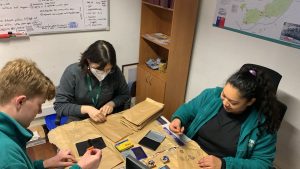
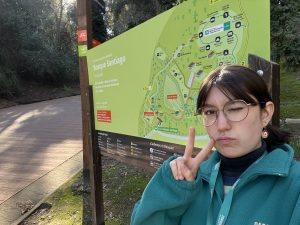
Bosque Santiago is a center for environmental education within Santiago’s Parque Metropolitano. As an intern, I planned a geology workshop for kids as my personal project, and helped out with other workshops, tours, and events.
Why did you apply for this internship?  

Environmental education is my dream field of work. I love to teach others, invent games and activities, and I am passionate about sustainability and community outreach.
 
What has been your favorite part of this internship?    

Bosque Santiago is operated entirely in Spanish, and I am not a native Spanish speaker. It was difficult to adjust at first, because I wanted to speak professionally with my supervisor and I was worried about coming across as not intelligent or capable because of my limited Spanish abilities. However, as I became more comfortable with everyone, I began to relax and formed strong relationships with my supervisor and co-workers.

Was this internship what you expected it to be?   

I did not expect there to be so much freedom in this internship, however I ended up enjoying how much autonomy I had in the position. I was able to choose my own personal project and work on it at my own pace. Because of this, I was able to improve my proactivity and advocate for myself. 
 

Natasha Ring ’26 Explores Environmental Education in South Philadelphia 


Name: Natasha Ring
Class Year: 2026
Major: Geology, History
Minor: Environmental Studies
 
Internship Organization:  Discovery Pathways
Internship Title:   Intern
Location:  South Philadelphia, PA
 
What’s happening at your internship? We would love to hear what kind of work you are doing!  

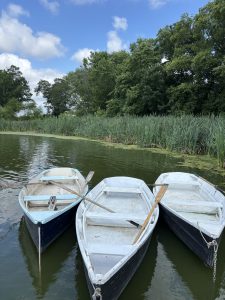
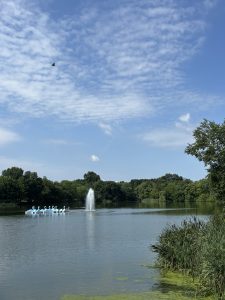
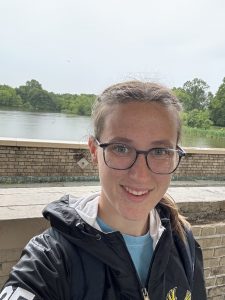
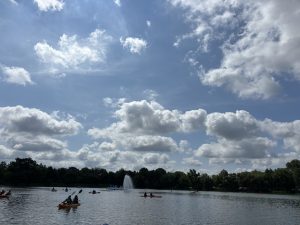
I have gotten to be involved with so many different programs at Discovery Pathways this summer! Early on, while the school year was wrapping up for local K-12 schools, much of my work involved preparing for the start of our Youth Environmental Leaders Program, assisting on field trip visits, and working at the community boating and family fishing events. I also got to watch my first dragon boat race, since the Discovery Pathways team had a regatta in Philadelphia which was really exciting. For the last month, I have primarily been assisting with the Youth Environmental Leaders Program. This program targets BIPOC, immigrant, and refugee youth and gives them opportunities to learn about leadership, public speaking, fishing, boating, water testing, and sustainability. For the leaders, returning students who are now serving as mentors to the new students, the program also aims to assist them with job readiness skills such as practicing interviews and creating a resume. I have also been busy with visits from local rec centers and community groups who visit us at FDR Park where we take them on nature walks, kayaking on Edgewood lake, or fishing. I have also been assisting at the free community boating and free family fishing programs which target the local Southeast Philadelphia community. These programs can serve hundreds of visitors on any given day, and are an excellent opportunity for me to learn more about the local communities and practice my public speaking skills.
 
Why did you apply for this internship? 

My concentration within Environmental Studies is Environmental Education, so I was looking for a summer internship that focused on Environmental Education. I learned about Discovery Pathways last fall after talking to one of my lab partners who had interned there last summer. I loved that Discovery Pathways was local to the area and had a focus on making environmental education accessible to the local community through practices like empowering students to translate instructions at our community boating events and free events.
 
Was there anything special about how you found this internship? 

I initially learned about Discovery Pathways through my lab partner, who had interned there last summer. Some students from Dr. Young’s Fish and Community Praxis Class, which I took this spring, were also placed at Discovery Pathways which gave me another opportunity to connect with Adam and the organization.  
What has been your favorite part of this internship?
 
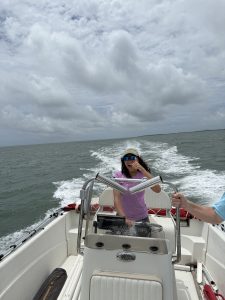
My favorite part has definitely been working with the teenagers in our Youth Leaders Program, and learning from them. They have taught me so much on topics ranging from rowing and racing a dragon boat to what vendors to go to at the Southeast Asian Market to how I can communicate more clearly on our busy boating days. I have also tried many new foods based on their recommendations, including green papaya salad and lychee. 

Geology Lab and Fieldwork by Charlize Hoeun ‘27 


Name
: Charlize Hoeun
Class Year: 2027
Major: Geology 

Internship Organization: Department of Geology, Bryn Mawr College
Internship Title: Student Researcher
Location: Bryn Mawr, PA

What’s happening at your internship? We would love to hear what kind of work you are doing!  

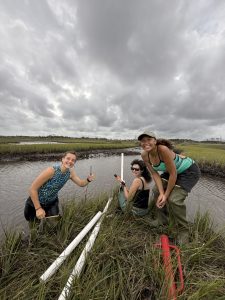
Two lab mates and I installing a water conductivity meter in a NC marsh

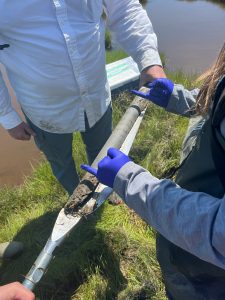
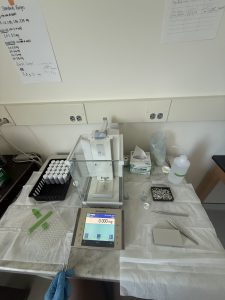
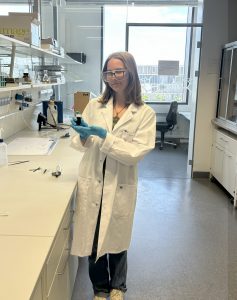
This summer I was able to work in a Sedimentology lab under my recent professor, Don Barber. Our main focus was to answer the question of whether or not the salinity levels of soil have any effect on carbon sequestration in salt marshes along the East Coast. While I’ve spent the majority of the summer inside of the lab here at Bryn Mawr, I’ve traveled to New Jersey and spent a couple of weeks in North Carolina with my professor and lab group. In New Jersey, we learned how to collect core samples from the ground and properly preserve them in order to be analyzed later on. In North Carolina, we collected more core samples from coastal wetlands but also installed multiple water level monitors that would constantly feed live data about the water conductivity back to us. Salt marshes are large recipients of atmospheric carbon due to the abundance of organic matter contained within marshes that accumulates and traps CO2. We made this data available to the public via a short infographic that could be accessed through a QR code. The QR codes are pasted onto the water monitors in the small coastal town we studied in North Carolina, whose population consists of a tight-knit community that has generally been uninformed of the seriousness of sea-level rise and how directly they will be affected in the near future. Inside of the lab, we analyze our core data through a series of procedures that tell us things like the mass of the organic matter and carbon concentration per centimeter. The mix of both scientific and social work has allowed me to adopt an array of new skills in the enriching environments I never would have been exposed to had I not been given this opportunity.

Why did you apply for this internship?  

Visual analysis of a core sample out in the field

I have worked with environmental organizations before, and I loved the learning experience it provided me with. I think it’s extremely important to begin sharing information and developing solutions for the inevitable effects of climate change; it’s much too late to reverse it, so keeping people safe and informed is the next best priority. Much like my professor, Don Barber, my hometown and surrounding areas are at high risk of being impacted by the heating of our oceans. His passion for research and getting through to residents in coastal cities reminded me of my own interests, and I was elated to be offered a position to work under him this summer. 


What has been your favorite part of this internship?
 

My favorite part of this internship has definitely been the fieldwork. Although it’s proven extremely challenging to dig meters down into the ground on hot days in full coverage clothes and high rubber boots, the fun of it outweighs the struggle. When we would hit sand and clay material during the coring processes, we would use the full body weight of everyone in the field to penetrate through the sticky, dense layers. The contrast between the strenuous labor we did outside together and the tedious analyses that took place in the laboratory made for a very engaging workload; it was never boring because we were always tasked with something different and cool. I also happen to enjoy road trips, and my lab has had our fair share of them this summer to get to the sites we’d mapped in multiple states.  

Lab balance for weighing milligrams of samples to be analyzed for their carbon

Can you give us three adjectives and three nouns that describe your internship experience?  

The adjectives I would give this internship are exciting, thought-provoking, and relevant. Some nouns I’d use to describe it would be nature, team and mud.  

Bioinspired Polymer Research in the Sustainable City of Freiburg: Emma Blersch ‘27 


Name: Emma Blersch
Class Year: 2027
Major: Geology
Minor: Environmental Studies
 
Internship Organization: University of Freiburg
Internship Title: FIT Research Intern
Location: Freiburg, Germany

What’s happening at your internship? We would love to hear what kind of work you are doing!  

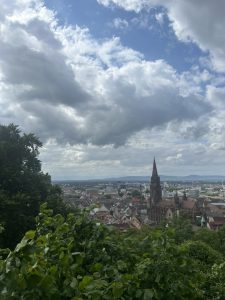
The beautiful city of Freiburg!

FIT is a lab group at the University of Freiburg made up of many professors and post-bac students doing bio-inspired tech research. I was placed with two PhD student advisors doing active research, who have been guiding my personal research project. The main focus of the research is bio-inspired polymer-based actuators, specifically testing the thermo responsiveness and the effect of different materials on the actuation. My days are mostly spent in the lab, carrying out tests and collecting data!

Why did you apply for this internship?  

I applied for this specific internship because I’m interested in sustainability research and what that looks like in an international university. I found this internship through Bryn Mawr’s connection with Innovation Academy. There were multiple sustainability-based internships offered, but I want to go into research, and so working with a lab at the University of Freiburg appealed to me the most. It’s an incredible opportunity to work with such an active and international lab abroad! 

What has been the biggest challenge you have faced at your internship? 

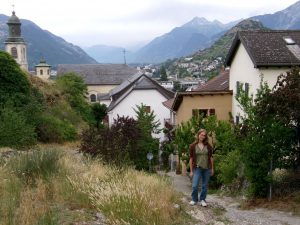
Travel opportunities; took the train to Sion, Switzerland

This is my first research-based internship and it’s a bit challenging to figure everything out, especially in a lab abroad! The German university and research system works a bit differently and it was very confusing to get settled and understand what I was supposed to be doing in the beginning. It was also my first time being outside the US on my own, so getting my bearings in a new job and a new country at the same time was very challenging at first. But once I overcame that initial newness, I’ve come to love my internship and the city I’m doing it in! It’s a challenge I’ve been happy to face! 

What has been your favorite part of this internship? 

The people and the place! FIT is a very international lab with people from all over the world doing so many different kinds of research projects. It’s a wonderful community to learn about science and about others’ experiences. I also love the University and the city of Freiburg so much! It’s such a beautiful place to spend the summer, surrounded by the Black Forest, and with a great public transportation system and sustainability initiatives.