My Time in Austria by Susan Robinson ‘27 


Name: 
Susan Robinson
Class Year:  2027
Major: Anthropology, Minor: Museum Studies
 
Internship Organization: Technisches Museum Wien
Internship Title:  Archival Internship 
Location: Vienna, Austria

What’s happening at your internship? We would love to hear what kind of work you are doing!

This summer, I had the opportunity to intern in the Archives and Conservation Department at the Museum of Science and Technology in Vienna, Austria. It also gave me a behind-the-scenes look at the work that makes museums more than just places to view history, they are places where history is actively preserved. Most of my work focused on protecting historical collections for future generations. I digitized archival documents, photographs, and other historical materials to improve accessibility while reducing the need to handle fragile originals.

I also assisted with preventive conservation by carefully removing metal fasteners, such as staples and paper clips, that can rust over time and damage important records. Although these tasks may seem small, I quickly learned that every detail matters when working with irreplaceable historical materials. Accuracy, patience, and careful documentation are essential parts of ensuring that collections remain available for future researchers.
   
Why did you apply for this internship?

I applied for this internship to gain a global perspective in museum work.

What is something you have learned from your internship that you didn’t expect?

One of the biggest surprises during this internship has been how much care, precision, and documentation are required for every task, even something as simple as removing metal fasteners from historical documents. I also did not realize how much planning goes into preserving both physical and digital collections, including video game materials. I have handled these challenges by paying close attention to detail, asking questions whenever I need clarification, and taking the time to learn the reasoning behind each conservation practice so I can perform my work accurately.

Working alongside archivists and conservation staff has helped me recognize that I enjoy collaborating with professionals who are passionate about preserving history. I have learned that I communicate well, accept constructive feedback, and work carefully as part of a team. Observing experienced staff has also shown me the importance of patience, organization, and shared responsibility when working with fragile and historically significant materials. These relationships have strengthened my confidence and reinforced that I work well in professional museum environments.

Can you talk about the skills you are learning and why they are important to you?

During my internship, I have developed valuable archival and conservation skills, including digitizing historical documents, photographs, and ephemera, handling fragile artifacts using professional preservation standards, and assisting with preventive conservation by removing metal fasteners that could damage materials over time. I have also gained experience maintaining accurate documentation, organizing collections for future research, and learning strategies for preserving digital media.

In addition to these technical skills, I have strengthened my attention to detail, organization, and ability to work responsibly with irreplaceable historical collections. I am making the most of my internship by taking every opportunity to learn from the archivists and conservation staff, asking questions about their techniques, and gaining experience with as many different preservation tasks as possible. Because this is the department I have wanted to work in, I have been fully engaged in every assignment. 

Summer Internship Experience: Rose Sunderland-McKay, ’27


Name: Rose Sunderland-McKay
Class Year:  2027
Major:   Anthropology
Minor:  Dance
 
Internship Organization:  Bryn Mawr College Social Science/Humanities Summer Research Program
Internship Title:  Student Research Assistant
Location:  Bryn Mawr, PA
 
What’s happening at your internship? We would love to hear what kind of work you are doing!  
I am assisting Professor Melissa Pashigian with her pre-fieldwork research through the department of Anthropology at Bryn Mawr. Professor Pashigian’s research is centered around the topics of migraine and dizziness, exploring the lived experiences of various different populations with these conditions through an anthropological lens. At this point in the evolution of her project, my contribution to this work consists primarily of gathering informational materials for her to use as informants for her research process. Through performing searches in various scientific databases, social science journals, and social media platforms, my co-worker and I provide relevant articles and information to her, as well as document important patterns in the literature by observing the quantity and content of our search results. We do this work both individually and collaboratively, having daily meetings to discuss each of our findings and progress, and guide the independent work we do for the rest of our day.
 
Why did you apply for this internship?  

Going into this summer, I was very motivated to engage in an opportunity that gave me experience that I could apply to my future academic and personal goals – this position seemed to align wonderfully with my motivations. As an anthropology major, I am grateful to take lots of coursework that greatly interests me. However, I have yet to be able to engage in the development of an anthropological research project out in the world. I hoped that this experience would give me valuable experience in this area, and increase my skillset and preparedness for doing my own research in the future. Alongside this, I also hoped that it would give me insight into how much I enjoy doing anthropological research! I knew that I was interested in the topic, and thought it would be a great opportunity to explore both cultural and medical anthropology in a tangible way, and acquire more information about myself and what I want my future career goals to look like.
 
Was there anything special about how you found this internship? 

At the time that the application for this internship opened, I happened to be taking an Anthropology of Global Public Health with Professor Pashigian at the time. My Professor informed our class about the internship. I also saw the internship posted on Handshake, because I had been avidly looking on the site for potential summer opportunities at that time. 

What has been your favorite part of this internship?

I have so enjoyed my time working with my co-worker and Professor! Most mornings, the three of us have a meeting to discuss what we did the day before; findings, progress we made, questions, what we’ll do today, etc. During this time, I have learned that I can develop professional relationships that are also very fulfilling. In other words, I’ve learned that a professional relationship doesn’t have to be boring, but rather it can be about sharing ideas that each of us are passionate about and having fruitful discussions about the material we are working with, and how it connects to the world. I have also learned, through working in this consistent, smaller group of people, that I can share my ideas – even if I am not sure about them – and have them be valid. I am more capable of intellectual collaboration than I thought I was! 

What is something you have learned from your internship that you didn’t expect? 

Throughout the process of discussing my independent work on the project with my professor and co-worker, I have learned that I am more capable of engaging in scientific research than I thought I was. Although I knew from the time that I applied that I was interested in the topic of the research, I was somewhat unsure about what it would be like to engage in the more tedious tasks of documenting searches, and reporting on my specific findings. I remember the first time that my Professor told us to “come ready to discuss what we had found” I was quite intimidated – what if I didn’t find anything? What if the information I did find wasn’t helpful? However, through being encouraged every day to converse about what I had found while researching, I learned that I was not only making valuable contributions, but also able to talk about them! This increased my academic confidence, and taught me that my brain actually enjoys thinking critically about issues in both cultural and medical anthropology. 

What has been the biggest challenge you have faced at your internship? 

A challenging part of my research has been the lack of available scholarship on certain important aspects of the project. This means that oftentimes, when performing searches, it’s hard to get relevant results – or sometimes any results at all – to come up. This is challenging because it requires me to get very creative about the specific combinations and types of search terms I am using, and also because at times, it has been difficult for me not to view these “unsuccessful searches” as personal failures. As time has gone on, however, my Professor has helped me understand that a search that returns no results is just as “successful” as one that returns a lot of results, because it’s still telling us something important about the literature. Sometimes, for example, about a gap in the literature that could exist because of relevant systemic and structural circumstances. Asking yourself “why?” when a search doesn’t produce results can lead to important realizations about the very reason why the research is important in the first place! 

Can you talk about the skills you are learning and why they are important to you? 

As an Anthropology major, the research experience I’m gaining through this internship is sure to be extremely helpful for me as I continue to pursue my coursework – whether it be for essays, projects, or presentations in Anthropology, or even in other subjects as well. I have received training not only from my Professor, but also from Bryn Mawr’s research librarians. Through this, I have gained many tangible research skills, such as navigating databases like Proquest, Web of Science, Pub Med, Tripod and Google Scholar. I am also improving in my ability to read quickly and scan articles for relevance, as this is something that my supervisor is challenging my co-worker and I to do. Alongside this, I completed the CITI (Collaborative Institutional Training Initiative) Training about ethical research, and received hands-on instruction in transcript coding from my professor. All of these skills – as well as the fundamental experience of actively contributing to an anthropological research project and its development – will aid and inform the upcoming planning of my thesis on logistical and conceptual levels. Engaging in this process has taught me not only about how research can be developed, but also that I enjoy doing this type of research! In this, I am so grateful for the insight that this experience has given me, and will be sure to carry my new skills and knowledge with me in my near and distant academic endeavors. 

What is most rewarding about your internship? 

The collaborative relationship between my professor, my co-worker and myself has been especially rewarding because we truly all benefit from each other’s contributions, and learn from each other every day. This is because we all have unique strengths that we bring to the project, and unique perspectives that we are able to provide when discussing relevant concepts. With this, my professor has made a point of embracing our unique qualities, which has allowed us to explore in ways that most interest and suit us. In this way, there is some gratifying freedom within the structure of our contributions to the project. For instance, as a double major in dance and anthropology, I have a long-term passion for the body, and interest in somatic research. Although this project is not directly related to somatics, my professor was interested in the connections between the scholarship on migraines and dizziness, and more somatic, artistic scholarship about the body. Upon hearing about my curiosity in these areas, she encouraged me to perform some searches that might help bridge the gap between these different research areas, or contribute applicable – even if not directly related – information.  

Can you give us three adjectives and three nouns that describe your internship experience? 

Adjectives: Creative, consistent, collaborative  

Nouns: Expansion, Confidence, Transformation 
Daniella Jacob ’26: My Time in Chile, the Shapeshifting Country 


Name
: Daniella Jacob
Class Year: 2026
Major: Religion, Anthropology
 
Internship Organization:  Watgen SpA
Internship Title:   Acquisitions Intern
Location:  Santiago, Chile
 
What’s happening at your internship? We would love to hear what kind of work you are doing!  

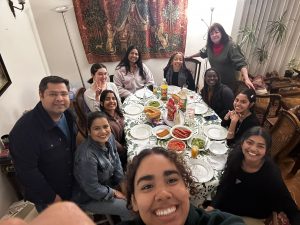
Goodbye dinner including my friends, host mom, family friends, and a Chilean traditional dish (completos)

As my internship, I have been working at WatGen Solar Energy. Watgen is part of a government initiative called StartUp Chile. StartUp Chile is an organization that gave funding to a handful of Chilean startups that are traillazing the technology sphere. WatGen was one of the special startups that were selected. My responsibilities included reaching out to clients and aquiring new investors. This was a new muscle that this internship helped me develop, since I had never done anything in the technology industry before. To inform potential clients of what they were buying into, I had to fully understand the industry and the economic state of Chile in comparison to other countries. Also, as part of my job, I got to work with local tribal leaders and municipalities to help them understand how our services could be of use to them as well. My favorite part of the internship overall was the work environment. We worked in a building that was in the heart of Santiago. All of the startups sponsored by StartUp Chile worked on one floor. It was incredible to literally work at the same table as the most intelligent, creative, generative minds in the country. Young professionals around me would be working hard for eight hours, refilling their yerba mate cups (a cultural caffeine drink) over and over. I learned a lot from their work ethic and developed close relationships with two of my coworkers just from working alongside each other.
 
Why did you apply for this internship? 

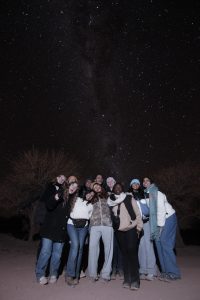
Stargazing trip in the desert with a full view of the Milky Way

When I applied to IES Abroad Santiago, I had felt that my resume was pretty cushioned. I had interned the past two summers and had worked all throughout my three years of college as well. One huge gap I was noticing in my resume is that I lacked any experience abroad. I had witnessed many friends coming back from their time abroad mentioning how it was truly “life-changing.” I had heard that word over and over. So, I decided my last summer in college that I really wanted to go abroad and experience that perspective-shift that others had. There were other locations available for IES but I wanted to prioritize going to a place that was vastly different from the life I was used to. Europe and the global West has cultural differences but share more similarities to the U.S. than differences, arguably. I also wanted to challenge myself to be immersed in a different language, with no option to cop-out and use English. That certainly made my experience more difficult but I left the city having my taxi driver shocked that I knew so much Spanish as an American.
 
What has been the biggest challenge you have faced at your internship? 

One challenge I had with my internship in Santiago is that I felt like I was not very useful. WatGen was not actually the internship I had agreed upon when I first came to Santiago. I worked at a nonprofit my first two weeks in Santiago and was working on children’s rights and marketing. I grew dissatisfied in the internship because it resembled work I had done years ago. I felt like it was not helping me make professional progress and wouldn’t offer me new skills. So, I met with the IES staff and discussed new options. That is when I interviewed for WatGen and got chosen as an intern. It was difficult to advocate for myself in this case, knowing that it was late in the recruiting cycle and that my options were limited. It was also difficult to communicate clearly why I was so adamant on getting a switch, especially because the workplace culture in Santiago is not as cut-throat and intense as I was used to in the States. But, once I became insistent on what I knew was right for my professional progress, I was given an opportunity to work in a place that taught me new skills and developed my resume in a field that is increasingly relevant.

Was this internship what you expected it to be? 

My internship took a learning curve to be fully comfortable. The workplace culture in Santiago, as I mentioned before, feels radically different than what I am used to (especially if you are familiar with corporate America). For example, many of the students’ bosses in the program would sometimes not come in office although we were expecting them. Also, bosses may assign tasks with low-context behind the assignment. This was especially a problem I faced: me and my co-worker would be given complex assignments but not quite know the why, how, or who behind our tasks. This taught me to be very direct and assertive in communicating. Instead of wallowing in confusion, I learned to immediately contact my boss with my questions in curiosities so I don’t waste the company’s time or stress myself out. This internship is really what I made of it! Advocating for myself more than usual definitely was a learning curve but it taught me unexpected communication skills that were honestly lacking before this internship. I am grateful for that.  

Archaeology in Austria: My work with the Vienna Institute of Archaeological Science by Carey Klopfenstein ‘26 


Name: Carey Klopfenstein
Class Year: 2026
Major: Anthropology
Minor: Museum Studies, Classical and Near Eastern Archaeology
 
Internship Organization: Vienna Institute of Archaeological Science
Internship Title:   Intern
Location:  Vienna, Austria
 
What’s happening at your internship? We would love to hear what kind of work you are doing!  

How I set up bones for taking morphometric analysis photos

I’ve been very lucky to do a variety of things at my internship. With one of my supervisors, Dr. Magdalena Blanz, I mainly worked with goose bones from the site of Mühlacker near the ancient Roman city of Carnuntum. I looked through boxes full of bones from the site and identified the tarsometatarsi and humeri of greylag geese. I then took photos of the tarsometatarsi for morphometric analysis. I also worked on cleaning and preparing samples of bone from people from Bronze Age Austria for isotope analysis. During the second part of my work week, I worked with Dr. Birgit Bühler. We worked with metal artifacts from the Avar culture, an early Medieval culture originally from eastern Central Asia that settled in parts of Central Europe. I was privileged enough to be able to see artifacts from the excavations at Zillingtal which have not yet been published. I started out by presorting the artifacts based on the illustrations done at the excavation in the 1980s and learning more about early Medieval metalworking techniques, and then we looked through some of the most promising boxes to check their preservation and which were most promising for analysis.
 
Why did you apply for this internship?  

The site of Carnuntum including reconstructed Roman buildings

Honestly, a big part of the appeal for me was that I would find out whether or not I got in before the deadlines for other summer internship applications, so I wouldn’t have to go through the exhausting process of applying for all the places I was interested in at the same time. I had applied for the IES Vienna Internship funding last summer and didn’t get in, so I wasn’t very hopeful, but I figured if I didn’t apply again I would always regret it and wonder what if. I chose to apply for Vienna specifically because I’m pursuing Museum Studies and there are so many different museums in the city (over 100!) My focus within my major is Archaeological Anthropology, so when I found out that VIAS was willing to interview me I was thrilled.

Was there anything special about how you found this internship?  

The little goose figurine given to me by my supervisor Magdalena Blanz

Because I was doing an IES internship program, I worked with Nika Protic at IES to find an internship to do with the program. Nika was incredibly kind and helpful every step of the way. I wasn’t aware of VIAS before she mentioned them to me.

What has been your favorite part of this internship?  

There were so many parts of my internship that I loved that it’s hard to choose, but I have to say my favorite part has been the people. I’ve tried to take every opportunity I could to meet people in Vienna’s community of archaeological scholars and everyone has been so warm and welcoming. All of my coworkers were such interesting people. Magdalena’s office is filled with a lush forest of plants and she collects little animal figurines. She’s also part of a brass quintet. Birgit does horseback archery, learned to read Ogham, the ancient Irish script, and travels to watch Orcas. I had so many wonderful conversations both about archaeology and about people’s lives. On my last day, Magdalena gave me a little goose figurine to commemorate my work on the goose bones and I was really touched.     

What is something you have learned from your internship that you didn’t expect?  

I wasn’t expecting just how long Austria has been a diverse place and the role of cultural identity. Even before the Roman conquest, Iron Age Austrians had access to far reaching trade routes. Roman sites such as Carnuntum and Vindobona (where Vienna now stands) were places of interactions between Romans and Celtic peoples. Under Avar rule, genetic evidence suggests that groups of people of various European groups adopted Avar cultural practices. On the other end the remains of a woman have been found which genetic analysis indicates that her ancestry was from modern day Mongolia, but her dress and burial indicate that presented, and perhaps identified, herself, with the culture of the Roman province of Pannonia. I didn’t know that much about ancient and Medieval Austria before this summer, and I was fascinated by the rich history of different cultures and their interactions here. Also, there is a type of Avar earring called a Bommel, a German word for the pompoms on top of winter hats, which I thought was very cute. 

Can you talk about the skills you are learning and why they are important to you? 

I wasn’t expecting just how long Austria has been a diverse place and the role of cultural identity. Even before the Roman conquest, Iron Age Austrians had access to far reaching trade routes. Roman sites such as Carnuntum and Vindobona (where Vienna now stands) were places of interactions between Romans and Celtic peoples. Under Avar rule, genetic evidence suggests that groups of people of various European groups adopted Avar cultural practices. On the other end the remains of a woman have been found which genetic analysis indicates that her ancestry was from modern day Mongolia, but her dress and burial indicate that presented, and perhaps identified, herself, with the culture of the Roman province of Pannonia. I didn’t know that much about ancient and Medieval Austria before this summer, and I was fascinated by the rich history of different cultures and their interactions here. Also, there is a type of Avar earring called a Bommel, a German word for the pompoms on top of winter hats, which I thought was very cute. 

Can you give us three adjectives and three nouns that describe your internship experience? 

Enriching, welcoming, enlightening  

Practice, gecrets (geese secrets),  bommels  

What is most rewarding about your internship?  

My supervisors talked a lot about how much the stuff I was doing was helping them, and I was really happy to be helping them out. I also found it incredibly cool to be face to face and handling artifacts. Unfortunately, because they’re unpublished, I can’t include images of the Avar metal artifacts, but some of them were incredibly beautiful and well preserved, and I could hardly believe that I was right there holding them. 

Was the internship what you expected it to be? 

I would say that this internship exceeded my expectations. I was excited going into it, but my expectations were vague and I was really happy with how it turned out. 

Learning Through Service: My Internship at Philabundance by Sophie Podolin ‘27 


Name: Sophie Podolin
Class Year: 2027
Major: Anthropology
 
Internship Organization: Philabundance
Internship Title:   Community Food Access Intern
Location: Philadelphia, PA

What’s happening at your internship? We would love to hear what kind of work you are doing!  

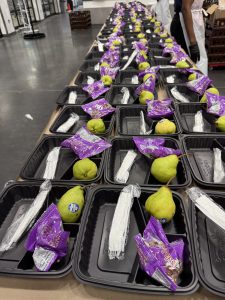
Philabundance is a large-scale nonprofit organization that operates a variety of programs, all dedicated to a central mission: driving hunger from our communities. During my internship, I have primarily worked with the LunchBox program, which provides 40,000 meals to children across the nine counties serviced by Philabundance. When the school year ends and summer begins, many children lose access to the free breakfast and lunch meals they would typically receive at school. The LunchBox program addresses this critical gap by delivering fresh, nutritious meals to families throughout the summer months. I have supported this effort by working closely with the executive chefs at the Philabundance Community Kitchen to help ensure smooth day-to-day operations, while also organizing and assisting the volunteers who contribute to the program’s success. 
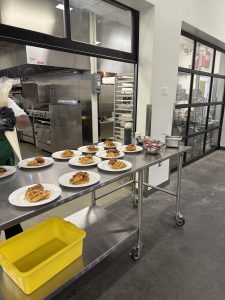
In addition to my work with the LunchBox program, I have also collaborated with the Community Food Access team on the development of the Mobile Market initiative, a new program designed to bring free fresh produce to directly to underserved neighborhood across the Philabundance service area. My role has involved collecting and analyzing data from ZIP codes across the region to help identify underserved areas and inform internal logistics to ensure an effective implementation of the program. Through this experience, I have gained valuable insight into nonprofit program design, data-driven decision making, and the broader challenges of ensuring equitable food access.

Why did you apply for this internship?   

I applied for an internship at Philabundance after completing a 360 course cluster at Bryn Mawr titled, Taste. One main focus of this interdisciplinary program was understanding how food systems reflect broader issues of equity, access, and identity. In particular, I was drawn to our discussions about how food aid programs must be culturally responsive in order to be truly effective. These conversations challenged me to think critically about what it means to meet communities where they are, not only in terms of providing food, but in respecting the foodways and traditions that are meaningful to them.  

Influenced by this academic experience, I knew I wanted to spend the summer working with a local organization that engages directly with food insecurity in a way that centers community needs. Philabundance stood out in this space, not only for it’s wide range of programs, but also for its commitment to community centered programming. Applying what I learned in the classroom to real-world service felt like a natural next step, and Philabundance offered the ideal setting for that learning to continue. 

What has been your favorite part of this internship? 

One of the most personally rewarding aspects of my internship at Philabundance has been the relationships I’ve formed with my coworkers. As this was my first formal internship, I initially felt nervous about adapting to a new professional environment, particularly within the limited timeframe of a ten week program. However, from my very first day, I was met with warmth, encouragement, and a genuine sense of inclusion. The staff at Philabundance have not only been welcoming, but also generous with their time and guidance, which has allowed me to feel supported and valued as a member of the team. These relationships have significantly enhanced my internship experience and provided me with a strong sense of community within the organization. Working alongside such dedicated individuals has been both motivating and inspiring and will leave a lasting impact on my personal and professional growth. 

Can you give us three adjectives and three nouns that describe your internship experience? 

The three nouns I would use to describe my time at Philabundance are: Excel spreadsheets, walk-in freezers, and food.  

Throughout my internship, I’ve worked on a wide range of data spreadsheets, something I had some experience in the past, but not in a professional setting. Learning to navigate and analyze data in a new way was initially challenging, but over time I’ve grown much more comfortable with the process. I now find myself able to engage with data sets more confidently (and without so much frustration)! 

Working out of the Philabundance Community Kitchen (PCK) has also been one of the highlights of my experience. The building houses three operational kitchens and many walk-in freezers and coolers. With the intense Philly summer heat, I’ve found myself extremely grateful for those cool spaces, and I’ve definitely become well-acquainted with them. 

Another meaningful aspect of being based at PCK has been getting to know the students enrolled in Philabundance’s free culinary training program. Each day, the students prepare a delicious lunch for everyone in the building. Sharing meals with them and witnessing their progress first-hand has been a memorable part of my time at PCK, and I will certainly miss it when my internship ends.  

The three adjectives I would associate with my time at Philabundance are sweaty, goofy, and occasionally chaotic.  

Helping to run the LunchBox program has been one of the most rewarding parts of my internship, and it involves a significant amount of physical labor. Whether I’m moving boxes of fresh meals or helping volunteers navigate the facility, the work has definitely kept me active, often leaving me breaking a sweat by mid-morning.  

I would also describe my time as goofy because of the lighthearted, fun dynamic I’ve shared with my coworkers at the Philabundance Community Kitchen. Despite the demanding nature of the work, there is always room for laughter, inside jokes, and spontaneous moments of silliness. That sense of joy and team spirit has made the experience incredibly enjoyable and memorable.  

Finally, I would describe my time as occasionally chaotic. Shifts in public policy, including changes to SNAP funding under the current administration, have had real and immediate effects on the organization’s programs and operations. But what has stood out to me most is how resilient and adaptable the Philabundance staff are. No matter what challenges arise, they meet them with creativity, determination, and a deep commitment to community. Being a part of that kind of environment has been inspiring.