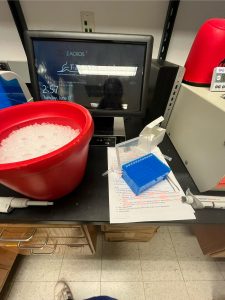
Exploring Dizziness Through History, Medicine, and Society by Theresah Tawiah ‘27


Name:
Theresah Tawiah
Class Year: 2027
Major: History
Minor:
Biology, Health Studies

Internship Organization: Bryn Mawr College, Department of Anthropology

Internship Title: Summer Research Assistant
Location: Bryn Mawr, PA

What’s happening at your internship? We would love to hear what kind of work you are doing!

This summer, I have been working with Professor Melissa Pashigian on interdisciplinary research about dizziness. I explore biomedical, historical, and social science literature, organize research findings, and help develop interview and survey questions. My research also examines how dizziness affects people’s everyday lives and how individuals with symptoms that are not always visible seek understanding and legitimacy.

Why did you apply for this internship?

I applied because I wanted to strengthen my research and analytical skills while exploring the relationship between medicine, history, and society. As a History major interested in medical history and public health, this internship allows me to examine a health experience from several perspectives rather than viewing it only as a medical condition. 

Was there anything special about how you found this internship?

I found this internship through Professor Melissa Pashigian after taking her classes on illness narratives. Those courses deepened my interest in how people understand and communicate their health experiences, which made this research opportunity especially meaningful to me.

What has been your favorite part of this internship?

My favorite part has been discovering how interdisciplinary research can reveal different sides of the same health experience. I began by examining the medical and historical dimensions of dizziness, but I have especially enjoyed exploring questions about invisible illness, identity, and how people communicate experiences that others may not easily understand.

What is something you have learned from your internship that you didn’t expect?

I did not expect to learn how deeply dizziness can affect a person’s identity, relationships, and everyday life. The internship showed me that dizziness is not only a medical symptom; it can also be an invisible experience that shapes whether people feel heard, understood, and believed.

Working remotely for the first time? What has that experience been like for you?

My internship was hybrid, and on the days I worked remotely, I learned to manage my time, stay organized, and work independently. Regular meetings with Professor Pashigian also gave me opportunities to discuss my findings, ask questions, and receive helpful guidance.

Can you talk about the skills you are learning and why they are important to you?

I am strengthening my literature-search, critical-analysis, and qualitative-research skills. I have learned to use databases such as PubMed, Web of Science, Google Scholar, and Tripod, while organizing sources and findings through Zotero and research databases. I am also learning how to develop thoughtful interview and survey questions that help people describe their experiences in their own words. These skills are important to my future interest in public health because they will help me understand health experiences through both research evidence and patients’ perspectives.

What has been the biggest challenge you have faced at your internship?

The biggest challenge has been finding reliable and accessible sources, especially because research on dizziness spans many disciplines. This taught me to refine my search terms, explore different databases, and make thoughtful decisions about which sources were most relevant.

Can you give us three adjectives and three nouns that describe your internship experience?

Adjectives – Interdisciplinary, Insightful, Rewarding

Nouns – Discovery, Growth, Research

What is most rewarding about your internship?

The most rewarding part has been contributing to research that may help others better understand the experiences of people living with dizziness. I have also enjoyed creating interview and survey questions that allow people to describe their experiences in their own words.

Was this internship what you expected it to be?

The internship went beyond what I expected. I initially expected to focus mainly on the medical and historical aspects of dizziness, but I also explored its social dimensions, including invisible illness, identity and legitimacy.

Meet Coco’27: A Neuroscience Research Intern at The University of Vienna


Name:
Coco Pannell
Class Year: 2027
Major: Neuroscience
Minor: Health Studies

Internship Organization: SCAN Unit – Universität Wien
Internship Title: Neuroscience Research Intern
Location: Vienna, Austria

What’s happening at your internship? We would love to hear what kind of work you are doing!

This summer, I’ve been interning with the SCAN Unit at the University of Vienna through IES Abroad, where every week has brought something new. Rather than focusing on just one project, I’ve had the opportunity to contribute to many different aspects of research, giving me a behind-the-scenes look at how a neuroscience lab operates. Dr. Ekaterina Pronizius is my main supervisor; however, I work as an intern for the entire lab. It is an international lab, so I’ve been able to get involved in research projects for world-renowned scientists from many different countries.

Some of my projects have included testing and troubleshooting online experiments built in PsychoPy, reviewing educational materials, editing research documents, creating presentations on scientific literature, and assisting in collaborations between the SCAN Unit and the Medical University of Vienna. One week I was responsible for delivering blood samples to the Medical Universities Labs. I will never forget carrying the blood-filled vials through the busy streets of center city Vienna, while trying to decipher what incredibly exciting results were encoded into the participants lab results. I’ve also had the chance to proctor university exams and assist with a variety of ongoing lab projects. As an intern for IES abroad, I am also enrolled in an experiential learning seminar course on global workplace culture specifically in the sciences. We got to visit a new lab every week and learn about their research. One week we even got a special visit to the United Nations Headquarters!

One of my favorite parts of the internship has been learning about affective neuroscience and social cognition. Seeing how behavioral experiments and neuroimaging studies are designed, refined, and carried out has given me a completely new appreciation for the research process. The field of Neuroscience is so much more expansive than I previously thought. The SCAN-Unit alone does experiments that range from fNIRS to canine labs to blood work.

The variety of work has made every week different, and I’ve learned not only about neuroscience but also about collaboration, organization, and the many moving pieces required to keep research projects running smoothly. I did not only gain work experience, but the SCAN Unit also introduced me to new research questions about how people perceive, understand, and respond to the emotions and experiences of others. It’s been an incredibly rewarding experience, and I’m excited to bring these new skills and perspectives back with me to Bryn Mawr.

Why did you apply for this internship?

Applying for this internship was certainly not a linear path. As the daughter of a flight attendant, I was fortunate enough to travel extensively from a young age. Those experiences gave me a deep appreciation for different cultures and the ways in which history, values, and lived experiences shape communities. They also sparked my desire to one day work in an international environment where diverse perspectives are not only welcomed but actively shape decisions and innovation.

One experience that reinforced this passion came from an Innovation Design course I took at the University of Pennsylvania. We discussed an engineering competition with a million-dollar prize to design a sustainable, low-cost toilet for rural communities. Hundreds of talented engineers and scientists proposed remarkably sophisticated solutions. Yet, many overlooked the most valuable source of knowledge: the people who would actually use the technology. The communities themselves had developed practical, effective solutions over generations, but few competitors had taken the time to ask for their input. That lesson has stayed with me. It taught me that meaningful innovation begins with listening and that the best solutions are often created with communities rather than simply for them.

As someone who hopes to pursue a career in medicine, I believe the same principle applies to healthcare and scientific research. Addressing complex global challenges requires interdisciplinary and internationally diverse teams that value different perspectives and experiences. I wanted an internship that would allow me to experience this kind of collaborative environment firsthand while learning how research is conducted across cultures.

The SCAN Unit at the University of Vienna was the perfect blend. Its international team and research in affective neuroscience offered the opportunity to explore not only the biological foundations of empathy, emotion, and social cognition but also how collaboration itself strengthens scientific discovery. The SCAN Unit studies how our social experiences are shaped by the brain, which was particularly fascinating because much of my previous thinking had centered on how our environments shape who we are. This internship showed me that our biology and our unique environment work together to influence human behavior.

Vienna was the perfect city for my first international work experience, it was a very unique type of work environment and a city of unique social rules that pushed me enough out of my comfort zone to broaden my perspective and feel more confident to take on more intellectually lucrative challenges in the future

What has been your favorite part of this internship?

My favorite part of this internship was the opportunity to constantly challenge myself by trying new things. Every week brought a different project, and I found myself learning far more than I had expected, not only academically but in research skills. I’ve gained a lot of confidence in the different phases of a research project.

By the end of the summer, I had gained confidence in many stages of a research project, from reviewing scientific literature and testing experiments to communicating ideas and contributing to collaborative projects.

One of the highlights of my internship was the opportunity to speak with neuroscientists from a wide range of backgrounds. Each scientist had their own unique educational pathway and worked through a unique organizational environment. However, they all share a commitment to collaboration, curiosity, and improving our understanding of the human condition. Seeing all these different scientists encouraged me to remain open to unexpected opportunities and that there is no correct path into your future career.

Working in the SCAN Unit also gave me a much deeper appreciation for affective neuroscience and its impact. I came to understand how studying empathy, social cognition, and human behavior can improve our understanding of mental health, relationships, and society as a whole. It showed me that neuroscience extends far beyond the laboratory. It has the potential to make a meaningful difference in people’s everyday lives.

Most importantly, this internship gave me confidence in myself. My supervisor consistently trusted me with new challenges, allowing me to take on projects that initially felt outside my comfort zone. It gave me lots of insight into how capable of a changemaker I can be. Looking back, I realize how much I have grown as both a student and an aspiring researcher. I leave Vienna more confident in my ability to tackle ambitious projects, embrace unfamiliar opportunities, be a leader, and pursue a career driven by curiosity and passion head on.

What has been the biggest challenge you have faced at your internship?

One of the biggest challenges of my internship was becoming part of an active research team in a field that was entirely new to me. Before arriving in Vienna, I had a strong background in neuroscience coursework, but affective neuroscience and social cognition were unfamiliar areas. I quickly realized that contributing meaningful feedback or participating in discussions required much more than simply completing assigned tasks, it required understanding the literature, learning the terminology, and appreciating the broader questions the researchers were trying to answer. Learning a new field while simultaneously contributing to ongoing projects was challenging, but it also taught me how to identify key ideas, recognize important research trends, and become a more efficient scientific learner.

Another challenge was adapting to a new academic and professional culture. Working in Austria introduced me to different expectations surrounding communication, organization, and workflow. I had to become much more intentional about managing my time, prioritizing tasks, and keeping track of multiple projects. As the internship progressed, I found myself becoming more organized and proactive, skills that will continue to benefit me throughout my academic and professional career.

Finally, stepping into an international research environment was initially intimidating. I was surrounded by accomplished researchers from different countries, many of whom had years of experience and shared cultural backgrounds that I was only beginning to understand. At first, I worried about whether I had enough knowledge or experience to contribute. Over time, however, those feelings gave way to confidence. Through daily interactions, I became much more comfortable asking questions, sharing ideas, and collaborating with people from a wide range of backgrounds. By the end of the internship, what had once felt intimidating became one of the most rewarding aspects of the experience.

Looking back, these challenges became some of the internship’s greatest lessons. They pushed me to become a more adaptable learner, a more organized researcher, and a more confident collaborator in an international scientific community.
Lourdes Sankar ’27: Exposing injustices: An international and immersive experience


Name: Lourdes Sankar
Class Year: 2027
Major:  Political Science
Minor: Spanish, Health Studies
 
Internship Organization:  Bryn Mawr College Political Science Department and University of Toronto, Canadian Government
Internship Title:   Research Assistant
Location:  Remote and Mexico City, Mexico
 
What’s happening at your internship? We would love to hear what kind of work you are doing!  

This summer I have been interning for Dr. Elizabeth Corredor, Professor of Political Science at Bryn Mawr. In the beginning of June we went to Mexico City for a Women’s Peace and Security conference where I acted as the note taker and translator for Professor Corredor. I then have been tasked with writing the policy report that will later be sent to the Canadian military to help promote an anti femicide agenda. Traveling with Professor Corredor and spending time in Mexico City allowed me to immerse myself within the culture and work on my Spanish while I was there. Meeting such incredible women who are passionate about the extreme amounts of femicide in Mexico was so inspiring. I am able to take my newfound research and policy report skills back to Bryn Mawr with a new global view.
 
Why did you apply for this internship?  

I applied for this internship because I have taken two classes with Professor Corredor and loved her passion about Women and International Politics. I wanted to research under her support and learn from a professional perspective.

Was there anything special about how you found this internship? 

The community of people that I met: the amazing women in Mexico, my felllow research assistants, and Professor Corredor. 

What has been your favorite part of this internship?

Getting to work along side such a passionate group of people and getting to experience a new city. 

What is something you have learned from your internship that you didn’t expect? 

I learned how to code in excel for political science research!

Working remotely for the first time? What has that experience been like for you? 

I have had to be dedicated to creating my own schedule and making sure I meet my deadlines.  

What has been the biggest challenge you have faced at your internship? 

Not having a set schedule and learning to create that for myself when I always have had a set schedule made for me. 

Can you give us three adjectives that describe your internship experience? 

Immersive, transformative, collaborative 

What is most rewarding about your internship?

Creating fantastic connections with other students and my professor.

Was this internship what you expected it to be? 

It was everything and more. 

Rachel Dopico ’26 Advances Health Equity at the American College of Physicians 


Name
: Rachel Dopico
Class Year: 2026
Major:    History
Minor: Health Studies, Environmental Studies
 
Internship Organization:  American College of Physicians
Internship Title:   Ryan Mire, MD Summer Internship Program
Location:  Philadelphia, PA
 
What’s happening at your internship? We would love to hear what kind of work you are doing!  

Dinner with ACP’S Board of Regents

During my internship, I worked in the Strategy & Innovation department within the American College of Physicians (ACP). This placement enabled me to interact with many departments and projects and gain a comprehensive understanding of ACP’s work. I worked primarily on a new project, helping to increase the visibility of ACP’s initiative making obesity care more equitable through regional action grants. I was able to closely familiarize myself with the work of the 12 grantees, who are doctors from ACP chapters across the country. Their projects are novel and improve the experiences of patients and providers in the field of obesity medicine through outreach in areas like medical education, nutrition, and more. I wrote short and long summaries for each of the twelve projects, helped to conduct outreach to grant applicants, and assisted with planning for a marketing video to promote the project. The best part of my work throughout the summer, though, was getting to interview some of the grantees, and learn about their backgrounds and work in underserved communities. I also worked with members of our team in Philanthropy and helped draft a newsletter and letter to donors. Generally, I got the opportunity to learn what exactly the work of a strategy department entails, and how they serve to further the work of organizations like ACP.
 
Why did you apply for this internship?  

Site Visit to Johns Hopkins

I applied for this internship because I felt drawn to the mission of ACP and appreciated their prioritization of health equity through initiatives like the internship program. The American College of Physicians serves its member base of 161,000 doctors but also is involved in lots of patient advocacy. I also wanted the chance to supplement my undergraduate and other internship experiences with exposure to the healthcare ecosystem at large and learn about other possible career paths within public health. I more than accomplished that this summer, and throughout programming visited health systems like Johns Hopkins, medical schools, regulatory agencies, and more. We also had the chance to speak with a range of physicians one-on-one through subject matter expert talks. I have learned to see the world in terms of health systems and understand how, beyond hospitals, clinics, pharmacies, outpatient care centers, imaging centers, and many other entities overlap. One moment that stuck out to me was hearing one doctor we spoke with reference how medicine is a social science, and politics is medicine on a larger scale.
 
Was there anything special about how you found this internship?

Visit from Dr. Ryan Mire

This is Bryn Mawr’s first ever summer partnering with the American College of Physicians to fund a student to participate in the internship program, and I am so grateful I found this opportunity through the career center! 

What has been your favorite part of this internship? 

My favorite part of the internship was getting to meet people, both my peers and members of the organization. I was in a cohort with 9 other interns, and it was really rewarding to learn alongside them and even work together on some projects. We met weekly as a cohort, and attended site visits and talks with subject matter experts, where we met leaders in diverse careers across internal medicine. While I do not want to be a physician, I am excited to work alongside doctors in my public health career.

What is most rewarding about your internship? 

The most rewarding part of the internship was getting a glimpse into the world of passionate, energetic, smart, and above all hopeful people in the healthcare world fighting for health equity. Amidst drastic cuts to healthcare access from the federal government right now, restricting Medicare, Medicaid, and Affordable Care Act coverage and generally gutting public health, it was incredibly rewarding to meet so many people who are leaders in the field and who are making a difference on a micro and macro level. As someone who wants to work in public health, and is interested in health policy, this experience infused me with a lot of hope.

A Summer of Growth: My Internship at the Municipality of Quinta Normal by Jacqueline Espinoza ‘26


Name: Jacqueline Espinoza
Class Year: 2026
Major: Sociology
Minor: Health Studies
 
Internship Organization: Municipalidad de Quinta Normal SECPLAN
Internship Title:  Projects Team Intern
Location:  Santiago, Chile
 
What’s happening at your internship? We would love to hear what kind of work you are doing!  

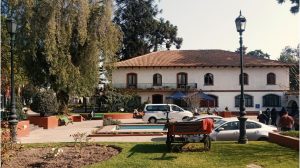
This summer, I was fortunate enough to complete an internship at the Municipalidad de Quinta Normal, a local government office that works closely with the mayor and city council to address the evolving needs of the community and guide the municipality’s development. The office plays a vital role in planning, budgeting, and executing public projects aimed at improving the quality of life for residents. My specific placement was within the urban development team, where I gained hands-on experience working on a variety of initiatives that focused on the physical and social growth of local neighborhoods. Throughout the summer, I collaborated closely with the projects team on several community-based initiatives. Our work involved engaging directly with residents to better understand their concerns, priorities, and hopes for the future of their neighborhoods. We were responsible for drafting detailed proposals aimed at securing government or external funding, ensuring that these proposals accurately reflected community voices and had the necessary public support to move forward. I personally contributed by designing visual aids such as graphs and charts, writing key proposal sections, and participating and holding public forums and neighborhood meetings to collect meaningful input from residents of the community.
 
Why did you apply for this internship?  

I applied for this internship because I wanted to explore the different career paths that sociologists can take beyond academia. I was especially interested in seeing how sociology can be applied in real-world settings to make an impact. I was drawn to positions that work directly with the community, roles where you’re not just studying people from a distance, but actually engaging with them, listening to their experiences, and understanding their needs firsthand. I wanted to be part of a team that collaborates with communities to identify meaningful solutions, rather than simply analyzing data from afar. This internship felt like the perfect opportunity to connect my academic interests with practical, community-focused work.
 
What has been your favorite part of this internship? 

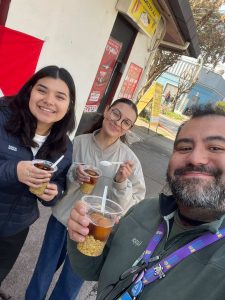
One of the most meaningful parts of my internship was the people, both my coworkers and the community members I worked with. Every day when I arrived at the office, I was greeted with warmth and friendliness by my coworkers. From the very beginning, they made me feel welcome and helped me integrate into Chilean culture in a way that felt natural and genuine. They patiently taught me about the language, shared insights into Chilean society, and introduced me to local customs. We went out to eat traditional Chilean dishes, and they shared their favorite music, films, and stories with me, which deepened my appreciation for the culture and made me feel more connected to the place I was living in. But beyond the office, the most powerful moments came from engaging with the community. Meeting people face-to-face, listening to their experiences, and understanding their needs reminded me why I chose to study sociology in the first place. These conversations made it clear to me that I want a career centered on helping others, not in a distant way, but by being present, listening deeply, and working alongside people to create real change. Seeing their smiles, hearing their stories, and knowing they felt heard and valued was incredibly rewarding. Those interactions weren’t just the highlight of my internship, they reaffirmed my purpose.
What is most rewarding about your internship? 

The most rewarding part of my internship came toward the end, when I was finally able to step back and see all the pieces come together, the planning, the conversations, the proposals, and realize that we had contributed to real, tangible change in the community. In the beginning, it all seemed so simple. Someone would walk into our office with a request, maybe to rebuild a park or renovate a plaza that had fallen into disrepair. At first glance, it might seem like a small ask, but what I came to understand is that these spaces hold deep meaning for people. They’re places where families gather, children play, and neighbors connect. When those spaces aren’t accessible or safe, it affects daily life more than most people realize. Once a request was made, the process would begin. My team and I would meet with residents, listen to their concerns and ideas, and begin crafting a proposal that reflected the community’s vision. There were moments of uncertainty, slow progress, and lots of coordination, but each step brought us closer to a shared goal. Being part of that journey, from the very first conversation to the finalized project, taught me so much about how lasting change really happens. It’s collaborative, it’s slow at times, but it’s deeply meaningful. By the end of the internship, when I saw a space transformed and the community’s joy at having something built with them rather than for them, it hit me just how impactful this kind of work can be. It wasn’t just about construction or urban design, it was about trust, voice, and inclusion. Watching people use and enjoy a space they had a hand in shaping reminded me why I’m passionate about community-centered work. That sense of fulfillment, of knowing I played a small part in something bigger, is something I’ll carry with me for a long time. 

Jessica Silver ’26 Looks Behind the Scenes – View on the International Healthcare System


Name: Jessica Silver
Class Year: 2026
Major: Neuroscience
Minor: Health Studies
 
Internship Organization:  Health Hub Vienna
Internship Title:   IES Abroad Psychology
Location:  Vienna, Austria
 
What’s happening at your internship? We would love to hear what kind of work you are doing!  

This summer I had the opportunity to intern at Health Hub Vienna. This organization works as a hub for startups, a place to share ideas for products to be integrated into the international healthcare market. As an intern, I was given tasks to research specific products and individuals important to this process, who are part of the up-and-coming startups. Throughout my internship I was also able to network with the founders of these startups, and to hear their pitches describing the initial product details. Overall, there was a great emphasis placed on learning more about the international healthcare system from a broader view, and to know how healthcare products transition from basic ideas to becoming fully integrated into the market.
Why did you apply for this internship? 

I am extremely passionate about the healthcare system, and I want to pursue a career within healthcare in the future. On the other hand, I have always wanted to experience living internationally, however being a current premedical student, I do not have space in my undergraduate years to complete a semester abroad. Spending a summer abroad studying something related to the healthcare system perfectly balanced these two passions, while not taking space from my busy semester schedules. As I researched possible options, the IES Psychology Program in Vienna related the most to my interests, and so I made it happen. I ended up having the most amazing experience during my eight weeks abroad, and I would suggest that everyone pursue something similar during their undergraduate years.
Was there anything special about how you found this internship?  

I found this internship after attending a study abroad informational fair on Bryn Mawr’s campus, and looking specifically for summer opportunities.
 
What has been your favorite part of this internship?  

My favorite part of this internship was the incredible work-life balance present in the Vienna culture, and the ability to travel easily on any given weekend. From the first day of my internship, my colleagues mentioned how after the end of work hours, nobody does work for the remainder of the day. This gave me an opportunity to explore the city after the end of a work day, using the convenient public transportation. Then, on the weekends I would travel with some friends to a nearby city or even country, to spend some time exploring places I had never previously visited.     
What is something you have learned from your internship that you didn’t expect? 

This summer, I learned how to utilize AI technology in a variety of contexts, which was unexpected. The company that I interned with uses AI for all preliminary research, and so I was introduced to a new platform and utilized it for my tasks throughout the summer. While the platform organized all the information in a very easy-to-understand format, it felt strange to use it so casually when completing my tasks. 

Working remotely for the first time? What has that experience been like for you? 

My internship was hybrid, and so generally two days of the week were spent in the office, while the other two were remote. While I enjoyed having the flexible freedom of working where I wanted, personal interaction is very important to me, and so I felt as though the remote days impacted my ability to get to know my coworkers during my internship. 

Can you talk about the skills you learned and why they are important to you? 

This summer, I quickly learned how to be very independent, as I was living in a new place, in a completely new country than I had grown up in. This summer was a big learning experience for me, with a variety of learning curves, most of which were good. Learning how to live fully on my own, without parents or a cafeteria to rely on, combined with planning my own trips and adventures, provided me with an incredible experience this summer. More specifically relating to my internship, I learned how to integrate myself into a new culture, with methods of communication and teamwork different than I am used to in the US. I continued learning every day, and felt as though I ended the summer with a better grasp of a new culture and way of living.  

What has been the biggest challenge you have faced at your internship? 

The biggest challenge I had during my internship was the language barrier that was present. Although most of my colleagues spoke some level of English, they were much better at German, and sometimes reverted to it when in a group setting, leading to me being unable to understand what they were saying in meetings. I handled this challenge by continuing to request translations in English when they were finished, or reminding them that I do not know what is being said. When this was requested, they were very responsive and translated to English so that I could understand everything and be a part of the conversation. 

Can you give us three adjectives and three nouns that describe your internship experience?
 
Adjectives: Informative, spectacular, transformative  

Nouns: Friendship, travel, discovery

What is most rewarding about your internship?  

Although the tasks that I was assigned to complete during my internship were not the most interesting to me personally, it was rewarding to notice how much of a difference they made to the progress being made in my company. This applied most clearly to the preparation being done for the big networking event hosted by my company, for which they used my prepared lists to reach out to healthcare organizations personally, and then prepared a keynote speech. In addition to the work being done in my internship, it was rewarding to have been given the chance to visit so many new places, and explore the world in the two months I was living in Vienna.

Was this internship what you expected it to be?

The internship this summer, and living in Vienna, was a better experience than I ever could have dreamed of. Without a second thought I would pursue a similar experience again in the future, and I would encourage everyone else to experience something of this nature at some point in their lives. 

Drug Discovery and Anti-Platelet Therapies: Naomi Oliver ‘27


Name
: Naomi Oliver
Class Year: 2027
Major: Biology
Minor: Health Studies 

Internship Organization: University of Michigan Medical School
Internship Title:  Summer Undergraduate Research Fellowship
Location: Ann Arbor, MI 

What’s happening at your internship? We would love to hear what kind of work you are doing!  

The Holinstat Lab at the University of Michigan focuses on developing novel anti-platelet therapies to combat America’s leading cause of death: heart disease. Currently, I am testing a new drug that was developed in the lab that will hopefully be an efficient treatment for thrombosis. 

Why did you apply for this internship?  

I wanted to be fully immersed in a research program that would help me gain valuable skills to bring back to Bryn Mawr. At the same time, being involved in life-saving medicine was a big deal when deciding on this internship.  

What is something you have learned from your internship that you didn’t expect? 

I didn’t expect to gain such a deep understanding of platelets and inhibition pathways! This program involves so much more than lab technique. Before learning any new assay, I learn exactly what the experiment means and why we are conducting it.  

Can you talk about the skills you are learning and why they are important to you? 

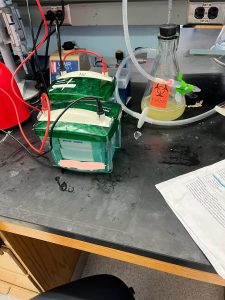
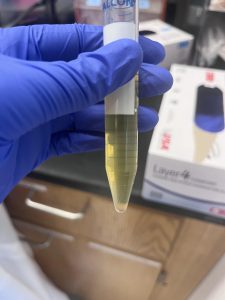
So far, I have learning platelet prep, aggregometry and western blot. Platelet prep converts whole blood from a fresh sample into washed platelets of a certain concentration. This is how we prep the cells for experimentation, and it will be an important foundational skill in any future platelet work. Aggregometry measures platelet function, and can tell us whether a donor’s platelets are fit for experimentation. Western blot is a much broader assay, and is used across several scientific disciplines. It is used to detect and identify specific proteins, and in my project, tells me if the platelet inhibition pathway has been activated.

Returning to Serve: A Public Health Internship at Akropong, Ghana


Name
: Theresah Tawiah
Class Year: 2027
Major: History
Minor: Biology, Health Studies
 
Internship Organization: Akropong Government Polyclinic 
Internship Title:   Public Health and Epidemiology Intern
Location: Ghana

What’s happening at your internship? We would love to hear what kind of work you are doing!  

Community outreach at the Boko Catholic School about menstrual hygiene

 At the Akropong Government Polyclinic, I’m gaining hands-on experience in vaccine distribution, disease control, and health monitoring. I’ve learned how vaccines are sourced globally through the Global Alliance for Vaccines and Immunization (GAVI), stored at controlled temperatures (+2°C to +8°C), and transported through Ghana’s health system, from national to sub-district levels via cold rooms and cold boxes. I’ve also seen how damaged vaccines are carefully disposed of to prevent contamination, with EPA and NDA oversight. 

Using digital tools like DHIMS2, with the help of the team, I track vaccine administration, while immunization monitor charts help me visualize campaign progress. I am working under the guidance of Mr. Marfo, the District Disease Control Officer for Atwima Nwabiagya North. 

In the disease control area, I’ve learned about TPT (Tuberculosis Preventive Therapy), which is used to protect individuals exposed to TB from developing active disease. 

I’ve also begun learning a bit about nutrition, including how accurate assessments play a key role in monitoring child health and avoiding misdiagnoses. 

I had the opportunity to lead a community health outreach about Menstrual hygiene at the Boko Catholic school, where I spoke to about 90 girls and educated them on the menstrual cycle and how to keep themselves healthy and clean during menstruation.

Why did you apply for this internship?  

A picture with the Atwima Nwabiagya North Disease control officer

I chose this internship because it brings together my passion for public health, my academic background, and my personal connection to the Akropong community. Having previously worked at the Akropong Government Polyclinic around the COVID-19 pandemic, I saw firsthand how clear communication and local trust can shape health outcomes. That experience sparked my interest in epidemiology and disease prevention. Returning now as an intern allows me to deepen my practical knowledge of health systems, strengthen my community engagement skills, and contribute meaningfully to the place that first inspired my public health journey.

Was there anything special about how you found this internship? 

 Yes, this internship is special to me because it’s not something I just stumbled upon. After connecting with the Akropong Government Polyclinic during the COVID-19 pandemic and being a volunteer there to support health education and vaccine awareness, gave me experience that has sparked my passion for public health. So coming back now as an intern feels intentional and personal, like continuing a journey that began during a critical time for the community and for me.

What has been your favorite part of this internship?  

A picture of vaccines for the various sub district clinics and hospitals

My favorite part has been working with young girls, children, and the wider community. I’ve especially enjoyed the moments spent interacting with people, listening to their concerns, answering their questions, and helping them understand how to take care of their health. Whether it’s educating mothers about immunizations or encouraging young girls to prioritize their well-being and menstrual hygiene, these one-on-one connections have been the most rewarding part of this experience.     

What is something you have learned from your internship that you didn’t expect? 

One important thing I’ve learned is that effective public health work goes beyond data and policies, it’s about people. Building trust, listening with empathy, and communicating clearly are just as vital as knowing the science. I’ve seen how small actions, like educating someone about vaccine safety or correcting a nutrition misconception, can make a big difference. This experience has taught me that true impact often starts at the community level. 

Can you talk about the skills you learned and why they are important to you? 

I’ve learned practical skills in vaccine handling, cold chain management, and data tracking through systems like DHIMS2. I’ve also become more familiar with how immunization campaigns are organized and monitored. Alongside these technical skills, I’ve grown in health communication and community engagement, especially when educating people on disease prevention and interacting with vulnerable groups. These skills are important to me because they’ve given me real-world insight into how public health systems function and shown me how to connect compassion with action in the field. 

What has been the biggest challenge you have faced at your internship? 

My biggest challenge has been working in environments where there aren’t always enough resources to do the job effectively. At times, the lack of adequate tools, materials, or support systems made it difficult to carry out certain tasks smoothly. I also had to take time to understand how things work within the public health structure, how decisions are made, how data is managed, and how interventions are implemented. These challenges have taught me to be resourceful, to ask questions, and to keep learning even in tough situations. 

Can you give us three adjectives and three nouns that describe your internship experience? 

Eye-opening experience  

Community-centered work 

Impactful

What is most rewarding about your internship?  

The most rewarding part has been engaging directly with the community, especially working with young girls and children. I’ve really enjoyed the opportunity to interact with people, listen to their concerns, and share helpful health information in ways they can relate to. Being part of something that builds trust and awareness at the grassroots level has been incredibly fulfilling and has reminded me why I am choosing public health in the first place.

Was this internship what you expected it to be?  

Not entirely. I came in with an idea of learning about vaccines and public health systems, but being on the ground showed me so much more. I didn’t expect the level of adaptability it would require or how much I’d enjoy connecting with the community. It challenged me in new ways, but it also confirmed that I’m on the right path.