

Name: Akosua Boatemaa Sarpong
Class Year: 2027
Major: Chemistry
Internship Organization: Bryn Mawr College Summer Social Science Research
Internship Title: Undergraduate Research Assistant
Location: Bryn Mawr, PA
What’s happening at your internship? We would love to hear what kind of work you are doing!
This summer, I conducted an extensive literature review on dizziness, vertigo, vestibular migraine, and post-viral syndromes through a historical, medical, and social science lens. I searched databases including PubMed, Web of Science, Google Scholar, and Zotero to identify research gaps and synthesize evidence. I contributed to the development of a dizziness syllabus by researching topics such as the history of dizziness, diagnostic classifications, gender bias in diagnosis, patient experiences, medically unexplained symptoms, and the societal impacts of chronic illness.
I also designed semi-structured interview guides and survey questions to better understand patients’ experiences with dizziness and post-viral conditions. Throughout the summer, I critically evaluated the existing literature, traced historical terminology and disease classifications, identified areas where evidence was lacking, and explored how cultural and social perspectives influence the understanding and treatment of vestibular disorders.
Why did you apply for this internship?
I applied for this internship because I worked on it last summer and I was genuinely interested in continuing this internship further. I’m specifically interested in this research because it’s an opportunity to speak up for people who have lived with contested illnesses in a society that doesn’t bat an eye towards their illness.
What has been your favorite part of this internship?
My favorite part of this internship has been finding answers to questions that was seemingly impossible to find. I enjoyed the struggle and the reward of finding useful information.
Can you give us three adjectives and three nouns that describe your internship experience?
I was curious because I was constantly asking questions and exploring new areas of research, even when there wasn’t much literature available.
I was persistent because many of my searches came up empty or required tracing citations and trying different approaches before finding useful information.
I became more analytical as I learned to critically evaluate the literature, identify research gaps, and connect ideas across medicine, history, and anthropology.
Research – I spent most of my internship conducting literature reviews, searching databases, and synthesizing evidence.
Discovery – I enjoyed uncovering historical perspectives, new terminology, and interdisciplinary connections that I hadn’t encountered before.
Growth – I developed stronger skills in literature searching, critical thinking, and designing interview and survey questions

 The Swei lab studies disease ecology. The project that I am working on in the lab is a CDC-funded collaborative project across the country. We are studying the effect of preemptively treating the animals that ticks feed on to lower the rate of Lyme disease transmission. Our section of the project looks at the spread of Lyme disease around the SF Bay Area. We go out into the field and collect ticks. We then take those samples and identify their genus and species with microscopy. Once we have identified their species, we can take Ixodes Pacificus Nymphs (IPAC N) (genus, species, life stage) and extract their DNA. IPAC N are the ticks that can carry Lyme disease, while the nymphal stage is the most likely to have the infection. The extracted DNA is then processed with nested PCR to test for Borrelia burgdorferi, the bacterium that infects the ticks with lyme.
 This internship closely aligns with my interest in disease management and vaccines. After the pandemic, I found myself interested in researching the science behind disease prevention. I was especially interested in this lab because it studies vector-borne diseases transmitted by ticks to humans. A lot of talk about contagious diseases covers ones that are spread from person to person. Lyme disease, however, is not, yet it still is a large problem across the coasts. This internship would also allow me to be close to home this summer.
 One thing that surprised me during the internship was the field work. I didn’t know that I was going to be helping with field work as well as in the lab. However, it was a valuable experience. I have gained so much more respect than I already had for people who do field work. In order to collect samples for my lab (tick drags/camera work) one must hike up into the mountains. Then hike OFF of the path and onto steep hill sides in order to better collect samples as that is the area that ticks prefer to live in. Not only is it incredibly physically challenging, it is mentally difficult too. Not many people have ever had the goal of getting ticks on them. In the end I learned that although I may not be cut out for field work I am more capable than I thought.



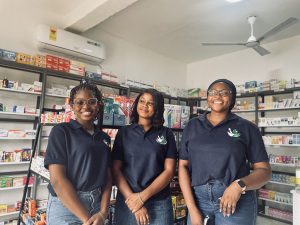
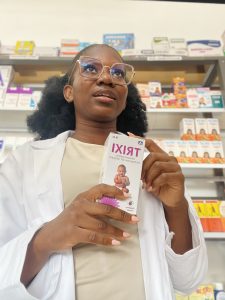 At Family Life Pharmacy, I’ve been getting a real hands-on feel for what goes into patient care. I spend a good part of my day talking with patients who are either picking up prescriptions after a hospital visit or preparing for one. I help make sure they’re getting the right medications for their needs. I also run a few basic tests (like malaria, typhoid, and blood pressure checks), which give more insight into what patients are dealing with based on the symptoms they share.
 I was always very interested in applying for a psychology-related internship. When I found out about the opportunity to intern in Vienna, I was immediately sold. Not only would it be really cool to be able to do an internship in a different country and explore the differences in psychology and therapy between the U.S. and Austria, but, since I am from the Netherlands, it was also a chance for me to be closer to home and family. Additionally, the opportunity to work at the trauma institute in the psychotherapy department aligns well with my interests and academic goals.
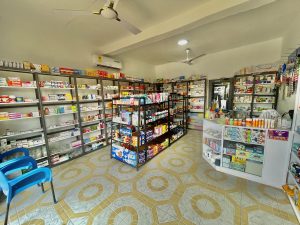 Although I was raised in Ghana, I wasn’t familiar with many local languages due to the country’s ethnic diversity and the dominance of English in schools. At the pharmacy, I was surprised to find that most clients communicated in “Fante” when describing medical conditions or requesting medications. Many drugs – even foreign ones – had local names, which made it challenging to assist them initially. However, with the support of the staff and my willingness to learn, I picked up the frequently used names over time. This experience deepened my appreciation for cultural and linguistic competence in healthcare settings.