Aimee Crozat ’27: Exploring the Nonprofit World in Washington, DC


Name:
Aimee Crozat
Class Year: 2027
Majors: Growth and Structure of Cities, English

Internship Organization: Congress for the New Urbanism
Internship Title: Resources Intern
Location: Washington, DC

What’s happening at your internship? We would love to hear what kind of work you are doing!

This summer I am working as a resources intern with the Congress for the New Urbanism, a nonprofit that is focused on building better towns, neighborhoods, and cities across the United States. Guided by a series of long-standing principles, CNU seeks to create spaces for professionals (engineers, urban planners, architects, etc.) to bring their expertise together and focus on changing the built environment for the better. As a resources intern, I am helping to make sure that there is an abundance of information accessible to the general public about what New Urbanism is and the work that CNU does. This involves developing their online database on the back end (lots of spreadsheets!) in order to gather and manage large quantities of data so that researchers can eventually access and use it. I have also been tasked with reaching out to professionals outside of CNU to update existing information and make sure the data is as accurate as possible.

Why did you apply for this internship?
Last summer I had the privilege to work with Professor Jennifer Hurley on her research surrounding New Urbanism and the nature of activism within professional movements. As part of this internship, I presented the initial findings of our research to the directors of CNU, and was able to meet them that way. So when they realized they had the capacity to take on an intern this summer doing similar work, I jumped at the chance. This way, it was easier to informally apply, since I had already made their acquaintance via Professor Hurley.

What has been your favorite part of this internship?

My favorite part of this internship by far has been the ability to work with the intelligent, dedicated staff at CNU. From the very beginning, they have welcomed me on board and treated me as a valued member of the team. Through weekly Zoom meetings and a dedicated space in the office, I have been able to gain valuable experience working in a hybrid office environment and seeing the inner workings of how a nonprofit functions. Although CNU is virtual, lots of communication is necessary to keep things going, and it’s very interesting to see how that happens online as opposed to in a typical office where people can chat in person. Everyone is so passionate about what they do, and it was such a privilege to be able to join the team and get an inside look at what it takes to run an organization of this scale.

Can you give us three adjectives and three nouns that describe your internship experience?

Hybrid, Adaptable, Collaborative

Experience, Communication, Microsoft Excel


Everyone is a Learner: Char Gillman-Boggs ’27 at DYS Collaborative for Educational Services 


Name: 
Char Gillman-Boggs
Class Year:  2027
Major:  Sociology
Minor:  English
 
Internship Organization:  Collaborative for Educational Services
Internship Title:   CES Summer Intern/Petey Greene Tutor
Location:  Northampton, MA
 
What’s happening at your internship? We would love to hear what kind of work you are doing!  

The Seed-to-plate horticulture training participants learn how to build and use plant towers

My internship at Collaborative for Educational Services has been split into two components: for the first half of the summer, I have been working in the CES Northampton office primarily with administrators helping to prepare for the upcoming school year. I am undertaking multiple projects that seek to improve CES’s Family Engagement and methods of Student Recognition, which also serves to acclimate me to the organization and to the Juvenile Justice system more broadly. I have also been attending a variety of significant events for the organization, ranging from introductions of new teaching frameworks to students’ high school graduations. For the second half of the summer, I will be working as a teaching assistant/Petey Greene tutor in multiple JJ facilities across Central/Western Massachusetts. Two days a week I will be working under the tutelage of a horticulture teacher and helping students learn about outdoor opportunities and larger connections to their daily lives. For an additional day or two from July-August I will be a Petey Greene volunteer tutor. The Petey Greene Program (PGP) is the largest educational/career readiness program for formerly and currently incarcerated people, with bases across the Eastern Seaboard. After my experience this summer, I hope to continue work with PGP during the school year at their Philadelphia location

Why did you apply for this internship?  

CES staff and DYS regional faculty pose at a graduation ceremony

I applied to this internship because I wanted to explore more teaching opportunities and justice-related work. Last summer I worked as a summer camp counselor and found working with youth rewarding and inspiring, and this summer I sought to build on that experience with more explicit ties to system impacted youth. The criminal justice connection is prudent to me as a sociology major, but far more owing to my personal convictions toward the prison industrial complex, the criminal justice system, and importance of rehabilitation as an ethical practice. I am also interested in the possibility of working at a social justice oriented non-profit organization in the future, and I hoped this summer experience would further inform my understanding and enjoyment of that future career option. 
 
What has been your favorite part of this internship? 
My favorite part of this internship thus far has been building relationships with my coworkers. From my first couple days here, I noticed some common denominators between all the adults who work in DYS/CES. They all contain a certain grit, a determination and a passion to do work that is often very difficult. They work here not for exceptional pay, an easy 9-5, or any guaranteed success. Many of the kids who move through the DYS system recidivate after returning home, but many also find that the personalized education and range of opportunities accessible to them through CES change their lives for the better. It has been a delight to work alongside individuals who make this work their lives, and an honor to engage in such meaningful work. I anticipate the challenges and rewards of working with students over the coming month will propel teaching to my list of favorites as well.

Was this internship what you expected it to be?   

This internship wasn’t exactly what I expected it to be because I didn’t have many solid expectations coming in. My supervisor emphasized that he wanted this opportunity to be driven by my specific interests and goals, and so my role this summer strays from the comparative baseline of previous CES interns. However, my experience here is what I hoped to take out of my time at CES, a mix of both policy-driven/administrative and hands-on/teaching work that helps me understand the overall goals and practices of the organization. The experience has demonstrated to me the importance of communicating my objectives and desires in the workplace while also remaining flexible and seeing where the summer takes me! 

Maritime Mysteries: Finding the Forgotten Sailors of 18th and 19th century Philadelphia by Sam Ritter ‘27 


Name
: Sam Ritter
Class Year: 2027
Major: History
Minors: English, Philosophy
 
Internship Organization: Girard College
Internship Title:   Founder’s Hall Curatorial Intern
Location: Philadelphia, PA
 
What’s happening at your internship? We would love to hear what kind of work you are doing! 

My internship involved combing through the ship records of Mr. Stephen Girard, one of Philadelphia’s wealthiest merchants during and since the Revolutionary Era. After his death, all of Girard’s papers were packed up and preserved through the centuries, nearly exactly as they were in life. As such, many more records of individual sailors and craftsmen are preserved here, primarily in ship’s logs and wage records. My work extracted information on individual sailors on Girard’s ships Liberty and Superb, his Brigs Sally I, Sally II, and Polly, and various smaller ships he partially owned or worked with. Together with my fellow intern, Vivian Bloom, and two previous interns in 2023 and 2024, our work now grants a full statistical picture of those working on Girard’s ships, people who have disappeared from the historical record in every other case.

Why did you apply for this internship?  

One of the many reasons I applied to and chose to come to Bryn Mawr was its proximity to Philadelphia, one of the most historically rich cities in America. This internship granted me an opportunity to take advantage of that proximity and engage first-hand with Philly history and with the city’s museum scene. I hope to continue research and archive work after graduation; This was an opportunity to add directly to the general historical database and shed light on individuals who do not appear anywhere else in the historical record but who built the Philly economy with their labor.     

What is something you have learned from your internship that you didn’t expect? 

Before this internship, I did not have a particularly clear understanding of the structure of the historical maritime world, nor did I know exactly who featured within it. This internship taught me quite a bit about historical record keeping, the positions on historical sailing ships, and the kinds of people who did sailing work. One thing that surprised me was just how many countries sailing individuals came from. One particular voyage, courtesy of Brig Modest, had only 4 American sailors. The rest came from Portugal, Scotland, England, France, and Germany, among others. My work on this internship in particular also paves the way to analyze statistics on sailors of color working for Mr. Girard. We only have records of 73 sailors of color (physical description was recorded less than other information), but they served in a wide variety of positions – Seamen, Carpenters, Apprentices, Cooks, even as First Mate. It was a unique experience to uncover these facets of the lives of individuals.  

Can you give us three adjectives and three nouns that describe your internship experience? 

Unique: There is very little like the environment of working in a small museum, and nothing like working with the Girard collection. The passion everyone has toward the work they are doing and the effort everyone puts in to make things happen is something I have yet to see anywhere else. 

 Museum: While my internship itself was based in the Girard Archives, my place of work also hosted the Girard College Museum. Over the course of my internship, I got a glimpse into its workings, including helping set up a new exhibit!  

Engaging: You would think that going through literally thousands of papers looking for names and dates would become quite dreary after a while. And while it did become monotonous at times, there is something about uncovering the stories of individuals – the first person to do so in centuries – that never stopped feeling special.  

Opportunity: Outside of my internship itself, I also had incredible opportunities to meet other museum and historical leaders around the Philly area. From meeting the woman who led the work to have Philly listed as a UNESCO World Heritage City to listening to presentations at the American Philosophical Society on the impact of nuclear testing on Indigenous Peoples of the Pacific, I had a plethora of unique and unexpected opportunities to engage with the work others were doing parallel to mine.  

Demanding: Trying to finish going through Mr. Girard’s records by the end of the summer was an ambitious goal from the beginning. We managed to do it, but we had to be disciplined to get it done. Furthermore, Girard College is an hour to an hour and a half from Bryn Mawr by public transit. I loved the internship I did, but it really took all of my time and energy to commit to it.  

Career: More than anything else, this internship absolutely fulfilled the promise of career connections and opportunities. Though I don’t know where I will go after college, working at Girard meant I made some invaluable connections in museums, archives, and non-profit work in Philadelphia. Those connections will be beneficial no matter where I go, and could help kick-start a career in museum or archival work. 

Maddie Raymond ’26: Research, Summer 2025 (Oil on Canvas) 


Name
: Maddie Raymond
Class Year: 2026
Major: English, History
 
Internship Organization:  Bryn Mawr College Humanities and Social Science Research Program
Internship Title:   Research Assistant
Location:  Bryn Mawr, PA
 
What’s happening at your internship? We would love to hear what kind of work you are doing!  

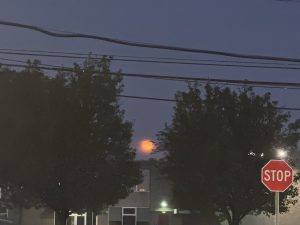
The strawberry moon rising after finishing remote work one night

My internship had two main components: editing Professor McKee’s manuscript ahead of publication this fall and fleshing out the bibliography for that manuscript. I also got the chance at the beginning of the summer to conduct archival research in the collection of Pierre Eugene du Simitiere at the Philadelphia Library Company

Why did you apply for this internship?  

I applied for this internship because I have a longstanding interest in the Atlantic World, around which Professor McKee’s research focuses. When I saw the job listing, I sent Professor McKee a paper I wrote for Professor Ignacio Gallup-Diaz’s pirates seminar about why a pirate can’t be a journalist and the rest is history.
 
Working remotely for the first time? What has that experience been like for you? 

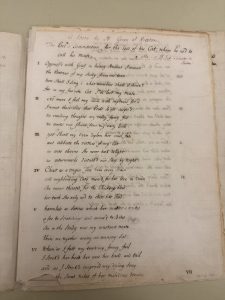
The Poet’s Lamentation for the loss of his Cat, whom he used to call his mate: a poem by Jo Green of Boston from the 1700s found in the papers of Pierre Eugene du Simitiere, page 1

My research this summer was largely remote, making it the first time I had ever worked a remote job. The experience was great for me, as I was able to create my own flexible schedule built around goals I set for myself. Alongside careful guidance from Professor McKee, I was able to complete my work in the environment and manner that worked best for me, and produced some great work because of it. 

Can you talk about the skills you are learning and why they are important to you?  

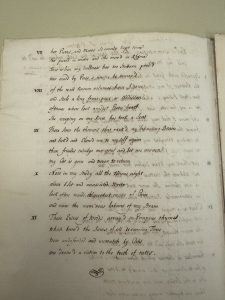
The Poet’s Lamentation for the loss of his Cat, whom he used to call his mate: a poem by Jo Green of Boston from the 1700s found in the papers of Pierre Eugene du Simitiere, page 2

Over the summer, I got to hone my copyediting skills via copyediting Professor McKee’s upcoming monograph ahead of its publication this fall. Copyediting has been a skill I have practiced for a while, and is important to me because it is one of the chief ways I support my peers in the humanities as well as my staffers in the news department at the Bi-College Newspaper. Getting to spend my summer editing an academic manuscript written by an established scholar was great practice for me, and I now feel more confident than ever to tackle both my friends’ papers and my staffers’ articles this fall. 

Summer of Storytelling: Lilah Goldman ‘26


Name
: Lilah Goldman
Class Year: 2026
Major: English, Education 

Internship Organization: Bryn Mawr Summer Humanities Research Program
Internship Title:  Digital Storytelling in Social Work Research Assistant
Location: Bryn Mawr, PA

What’s happening at your internship? We would love to hear what kind of work you are doing!  

I am working on Dr. Rachel Speer’s Digital Storytelling in Social Work project, which seeks to expand opportunities for self-reflection, professional and personal identity development, and digital media skills development within the implicit social work curriculum. My work each week involves designing and preparing to facilitate a series of workshops for graduate social work students. I have had so much fun creating my own digital stories to use as examples, as well as accessible tip sheets and tutorials for future students. 

Why did you apply for this internship?  

I applied to this internship because as an Education major, I wanted more experience with lesson planning and curriculum design, and I loved that it offered the opportunity to be creative and explore digital storytelling on top of that. Plus, I was excited to get to know and work closely with a new faculty member I wouldn’t have otherwise met, and learn more about graduate education programs. 

Working remotely for the first time? What has that experience been like for you? 

Working remotely for the first time has taught me a lot of self-discipline in establishing routines that separate work from distractions, while still allowing me to take care of myself. Since I don’t necessarily need to leave the house each day for work, I’ve become more intentional about moving my body throughout the day and taking appropriate breaks to explore my new neighborhood and enjoy the summer in Philadelphia. I’ve had a lot of fun finding new coffee shops to work from, but I do look forward to the few work days when I meet with Dr. Speer or other collaborators in person. I have learned that I certainly value working in a collaborative environment, which is why I am eager to help facilitate the workshops I’ve been designing when the fall semester begins.  

What is most rewarding about your internship? 

The most rewarding aspect of my internship has been getting to spend my days creating stories that help me better understand myself and that I can share with others. I have really come to appreciate the creative process that digital storytelling requires, and I love getting to experiment with different media and video editing software while engaging in self-reflection every week. This project has taught me about my values, relationships, and self-perceptions, and has made me feel more comfortable sharing them with others. The cherry on top is that this work will also help graduate students embark on this journey of self-understanding, shaping their professional identities as future social workers. 

Natalie Schliekelman ’26: Summer of Advocacy with PennEnvironment!


Name: Natalie Schliekelman
Class Year: 2026
Major: Environmental Studies, Growth and Structure of Cities
Minor: English
 
Internship Organization:  PennEnvironment
Internship Title:   Advocacy Intern
Location:   Philadelphia, PA
 
What’s happening at your internship? We would love to hear what kind of work you are doing!  

PennEnvironment Deputy Director Flora Cardoni and I meeting with Rep. Tim Briggs and constituents (not shown)

I’ve been working with the team at PennEnvironment, an environmental nonprofit that does a variety of work to make Pennsylvania greener, including conservation, clean water, zero waste, and climate change-focused campaigns. Depending on the week, I work with different projects and campaigns, so depending on the day I might be coalition-building with local elected officials and community leaders, doing communications work with projects such as threatened and endangered insects in PA, phonebanking constituents, or writing letters to the editor. I’ve also helped with more administrative (but still interesting!) projects like combing over our media contact list, or updating our legislative social media database. Some highlights include testifying at a PA Department of Environmental Protections hearing in support of stricter methane protections, and running logistics for lobby meetings with six Pennsylvania legislators and 40+ constituents, including Bryn Mawr’s own state representative, Rep. Tim Briggs!

Why did you apply for this internship? 

PennEnvironment affiliates testifying at the DEP methane protections hearing

The Bryn Mawr College Environmental Program is very versatile – there’s so many different paths you could take with it, from environmental science research to environmental advocacy. Internships are a great opportunity to learn more about a specific section of the field and potentially narrow down your focus within the department. I’m very interested in environmental advocacy, and PennEnvironment does really cool advocacy work, so working with them is a great opportunity! They do a wide variety of different environmental campaigns, so I have been able to try out a lot of different projects and see what I like best. As a Growth & Structure of Cities major, I have also been intrigued by seeing how larger-scale political contexts play out on a local/state-level scale in Pennsylvania, from more sustainability-focused cities like Philadelphia to rural towns with fracking as a huge economic sector.
 
Was there anything special about how you found this internship? 

PennEnvironment is a branch of the national environmental group Environment America, which has 30 state branches, including one in my home state of Georgia. Last summer, I did a part-time internship with Environment Georgia. During my time with Environment Georgia, I met with a PennEnvironment staff member to learn more about PennEnvironment’s work with plastic bag bans. My time at Bryn Mawr has taught me the importance of networking, so I followed-up in the spring about interviewing for a summer internship! Environment America offers a lot of resources for its members, such as weekly trainings for the interns, so it’s been a great opportunity to get to work within the Environment America network twice, and PennEnvironment is one of the oldest branches so it’s great to see their work in action. 

What has been your favorite part of this internship?  

I’ve really loved the people aspect! Thanks to my summer funding from Bryn Mawr, I’ve been able to stay in Philly for part of the summer and work in the office. I enjoy getting to chat with my supervisors and other interns while I work, and I feel like I’m able to learn so much more from hearing tidbits and stories from my supervisors about their work. I also find connecting with people through advocacy work to be really rewarding – I found it intimidating at first to cold-call elected officials and constituents, but it’s a great feeling when I convince someone to take political action, like signing a petition or reaching out to their representatives. I’ve had some fascinating conversations and it can really test my knowledge of the policies I’m campaigning for when someone challenges me or asks me specific questions about different bills.

The Sailor Project at Girard College with Vivian Bloom ‘26 


Name
: Vivian Bloom
Class Year: 2026
Major:  English
Minor: Spanish

Internship Organization: Founder’s Hall at Girard College
Internship Title:   Collections Intern
Location: Philadelphia, PA
 
What’s happening at your internship? We would love to hear what kind of work you are doing!  

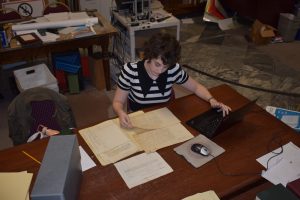
This internship was the culmination of a three-year project collecting and documenting information about sailors who worked for Stephen Girard, a merchant, banker, and philanthropist in early America, and the richest man in America when he died. Girard saved all of his papers, allowing us access to information that is usually lost. This project is exciting because it highlights individuals often left out of history. Sailors were often poor, lower-class, or people of color. These documents contained names, jobs, wages, physical descriptions, family details, literacy status, arrest records, clothing brought on board, and other small details that help create a picture of real people who lived and worked during this time. Founders Hall has maintained these records for a long time, but accessing the information about the sailors was challenging due to the large volume of papers and the extensive period covered. The project aimed to create a spreadsheet that organizes the crew members on each ship, along with any details about them in one place. This effort to make this information easier to access will help people better understand the maritime world of the late 18th and early 19th centuries.
 
Why did you apply for this internship?  

Many people wonder why as an English major I applied for an internship focused on history. I approach English with a historical lens. I am particularly interested in how literature and media shape our understanding of history and affect the historical record. Plus, I just love old things. My favorite spot on campus is special collections, so when I learned about the internship at Founder’s Hall that involves working with historical documents, I was eager to apply. This internship also caught my attention because it focuses on the maritime world, which I developed an interest in when I took a course on Moby-Dick last semester. I am particularly fascinated by the social, class, and racial dynamics on ships and working with records of real sailors lets me explore those interests further.
 
What has been your favorite part of this internship? 

I love puzzles and this project felt like one big historical puzzle. We had to review documents with incomplete information and compile them to gain a clearer understanding of the bigger picture. For example, one document listed names and jobs, while another showed wages. Our job was to connect the information from both. Sometimes, we encountered different spellings of the same name, and we had to determine if they referred to the same person. It was sometimes tough to figure out, but it was so satisfying when the pieces fit together.  

What is something you have learned from your internship that you didn’t expect? 

I discovered that there is such strong network of relationships between museums in Philadelphia. We had several opportunities to visit other museums, engage with their archivists, all thanks to connections within the museum community. There was one day when we were unable to work from Founder’s Hall due to electrical work, but thanks to my supervisor’s connections, we were able to relocate our documents and continue working at the American Philosophical Society for the day. There is such a spirit of collaboration and cooperation between institutes.