Name: Sophie Podolin
Class Year: 2027
Major: Anthropology
Internship Organization: Philabundance
Internship Title: Community Food Access Intern
Location: Philadelphia, PA
What’s happening at your internship? We would love to hear what kind of work you are doing!
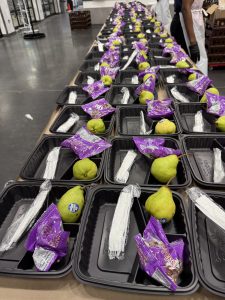 Philabundance is a large-scale nonprofit organization that operates a variety of programs, all dedicated to a central mission: driving hunger from our communities. During my internship, I have primarily worked with the LunchBox program, which provides 40,000 meals to children across the nine counties serviced by Philabundance. When the school year ends and summer begins, many children lose access to the free breakfast and lunch meals they would typically receive at school. The LunchBox program addresses this critical gap by delivering fresh, nutritious meals to families throughout the summer months. I have supported this effort by working closely with the executive chefs at the Philabundance Community Kitchen to help ensure smooth day-to-day operations, while also organizing and assisting the volunteers who contribute to the program’s success.
In addition to my work with the LunchBox program, I have also collaborated with the Community Food Access team on the development of the Mobile Market initiative, a new program designed to bring free fresh produce to directly to underserved neighborhood across the Philabundance service area. My role has involved collecting and analyzing data from ZIP codes across the region to help identify underserved areas and inform internal logistics to ensure an effective implementation of the program. Through this experience, I have gained valuable insight into nonprofit program design, data-driven decision making, and the broader challenges of ensuring equitable food access.
 Why did you apply for this internship?
I applied for an internship at Philabundance after completing a 360 course cluster at Bryn Mawr titled, Taste. One main focus of this interdisciplinary program was understanding how food systems reflect broader issues of equity, access, and identity. In particular, I was drawn to our discussions about how food aid programs must be culturally responsive in order to be truly effective. These conversations challenged me to think critically about what it means to meet communities where they are, not only in terms of providing food, but in respecting the foodways and traditions that are meaningful to them.
Influenced by this academic experience, I knew I wanted to spend the summer working with a local organization that engages directly with food insecurity in a way that centers community needs. Philabundance stood out in this space, not only for it’s wide range of programs, but also for its commitment to community centered programming. Applying what I learned in the classroom to real-world service felt like a natural next step, and Philabundance offered the ideal setting for that learning to continue.
What has been your favorite part of this internship?
One of the most personally rewarding aspects of my internship at Philabundance has been the relationships I’ve formed with my coworkers. As this was my first formal internship, I initially felt nervous about adapting to a new professional environment, particularly within the limited timeframe of a ten week program. However, from my very first day, I was met with warmth, encouragement, and a genuine sense of inclusion. The staff at Philabundance have not only been welcoming, but also generous with their time and guidance, which has allowed me to feel supported and valued as a member of the team. These relationships have significantly enhanced my internship experience and provided me with a strong sense of community within the organization. Working alongside such dedicated individuals has been both motivating and inspiring and will leave a lasting impact on my personal and professional growth.
Can you give us three adjectives and three nouns that describe your internship experience?
The three nouns I would use to describe my time at Philabundance are: Excel spreadsheets, walk-in freezers, and food.
Throughout my internship, I’ve worked on a wide range of data spreadsheets, something I had some experience in the past, but not in a professional setting. Learning to navigate and analyze data in a new way was initially challenging, but over time I’ve grown much more comfortable with the process. I now find myself able to engage with data sets more confidently (and without so much frustration)!
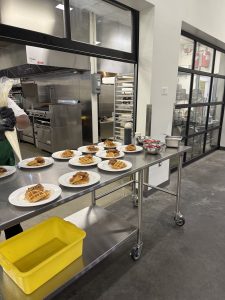
Working out of the Philabundance Community Kitchen (PCK) has also been one of the highlights of my experience. The building houses three operational kitchens and many walk-in freezers and coolers. With the intense Philly summer heat, I’ve found myself extremely grateful for those cool spaces, and I’ve definitely become well-acquainted with them.
Another meaningful aspect of being based at PCK has been getting to know the students enrolled in Philabundance’s free culinary training program. Each day, the students prepare a delicious lunch for everyone in the building. Sharing meals with them and witnessing their progress first-hand has been a memorable part of my time at PCK, and I will certainly miss it when my internship ends.
The three adjectives I would associate with my time at Philabundance are sweaty, goofy, and occasionally chaotic.
Helping to run the LunchBox program has been one of the most rewarding parts of my internship, and it involves a significant amount of physical labor. Whether I’m moving boxes of fresh meals or helping volunteers navigate the facility, the work has definitely kept me active, often leaving me breaking a sweat by mid-morning.
I would also describe my time as goofy because of the lighthearted, fun dynamic I’ve shared with my coworkers at the Philabundance Community Kitchen. Despite the demanding nature of the work, there is always room for laughter, inside jokes, and spontaneous moments of silliness. That sense of joy and team spirit has made the experience incredibly enjoyable and memorable.
Finally, I would describe my time as occasionally chaotic. Shifts in public policy, including changes to SNAP funding under the current administration, have had real and immediate effects on the organization’s programs and operations. But what has stood out to me most is how resilient and adaptable the Philabundance staff are. No matter what challenges arise, they meet them with creativity, determination, and a deep commitment to community. Being a part of that kind of environment has been inspiring.

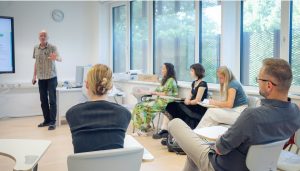 I am currently working as a research intern at the Trauma Institute located in the Psychotherapy science faculty at SFU in Vienna. So far, my internship has involved attending interesting conferences, such as The Nightmare of the Biomedical Approach to Mental Health in Slovenia, helping with literature research and reviews, and assisting with interesting projects. I was trained in an interviewing method to support ongoing research at the institute. Additionally, I have been able to visit and tour the SFU outpatient clinics, and I will be helping at and attending the upcoming World Congress of Psychotherapy hosted at SFU.
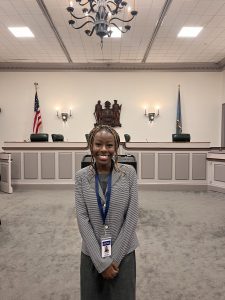
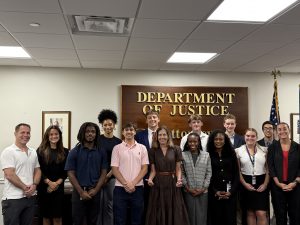
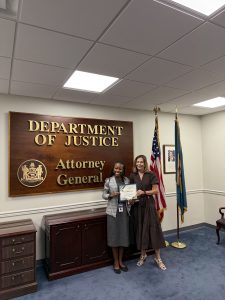 For my Internship at the Department of Justice, I am working in the Criminal Division’s Violent Crime Enterprise Unit (VCE) under a Deputy Attorney General. My main project includes watching and taking notes on body-cam footage on a gun charge and a homicide. In this case, the Deputy Attorneys General works with law enforcement to indict gang members and keep the public safe. Aside from my main project, I also volunteered at the Community Youth Resource Fair, that is under the Community Outreach Program, where families can access resources related to educational programs and mental health. In addition, there was also a chance to speak with government agencies, nonprofits, and businesses in the state of Delaware. Lastly, I was able to make a presentation with other interns for Diversity Equity and Inclusion week for training the Deputy Attorneys General on Microaggressions, which was a rewarding opportunity!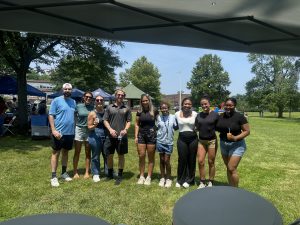
 Was this internship what you expected it to be?