Name: Naomi Oliver
Class Year: 2027
Major: Biology
Minor: Health Studies
Internship Organization: University of Michigan Medical School
Internship Title: Summer Undergraduate Research Fellowship
Location: Ann Arbor, MI
 What’s happening at your internship? We would love to hear what kind of work you are doing!
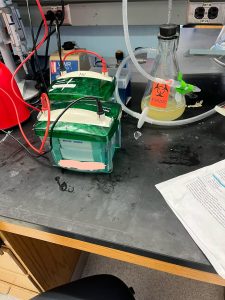
The Holinstat Lab at the University of Michigan focuses on developing novel anti-platelet therapies to combat America’s leading cause of death: heart disease. Currently, I am testing a new drug that was developed in the lab that will hopefully be an efficient treatment for thrombosis.
Why did you apply for this internship?
I wanted to be fully immersed in a research program that would help me gain valuable skills to bring back to Bryn Mawr. At the same time, being involved in life-saving medicine was a big deal when deciding on this internship.
 What is something you have learned from your internship that you didn’t expect?
I didn’t expect to gain such a deep understanding of platelets and inhibition pathways! This program involves so much more than lab technique. Before learning any new assay, I learn exactly what the experiment means and why we are conducting it.
Can you talk about the skills you are learning and why they are important to you? 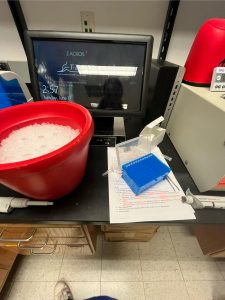
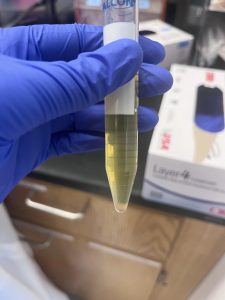
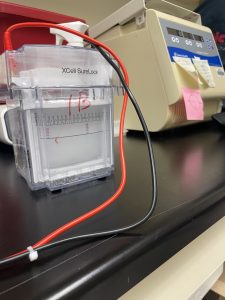
So far, I have learning platelet prep, aggregometry and western blot. Platelet prep converts whole blood from a fresh sample into washed platelets of a certain concentration. This is how we prep the cells for experimentation, and it will be an important foundational skill in any future platelet work. Aggregometry measures platelet function, and can tell us whether a donor’s platelets are fit for experimentation. Western blot is a much broader assay, and is used across several scientific disciplines. It is used to detect and identify specific proteins, and in my project, tells me if the platelet inhibition pathway has been activated.
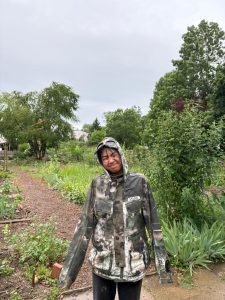
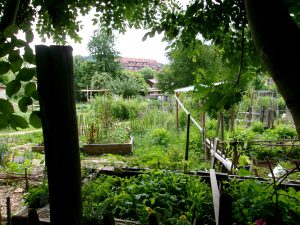
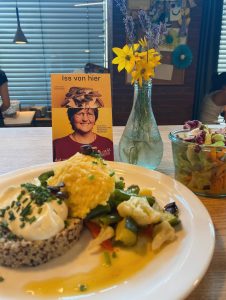 Being an economics major, a summer internship in Freiburg, the “Green City” known for its environmental and sustainable practices, at first sounded pretty unconventional. However, food security and sustainability education have always been great passions of mine which has driven many of my projects and papers both in and out of Bryn Mawr. As I go deeper into my major curriculum taking classes like Developmental Economics have greatly shaped my view of the world and how economics can be used as a tool to better promote cultural competency and community. Pairing that with my involvement in community belonging through the Enid Cook Center and the Intercultural Learning and Living Center makes this the perfect way to spend my summer. Especially considering Vauban, the communal district where many homeowners actually took part in the planning of the city in late 1990’s, happens to be where zusammen garten, our community garden is located. It’s a great intercultural meeting place where around 250 people from 16 different countries regularly garden here together: whether on monthly action days or in their own garden plots it’s where I’ve also been working and spending much of my free time!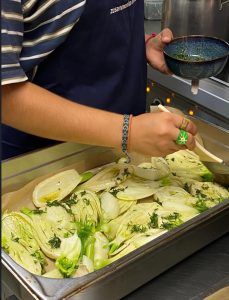

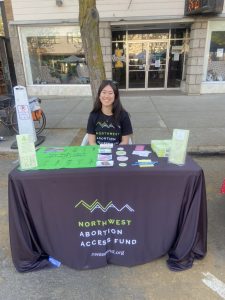
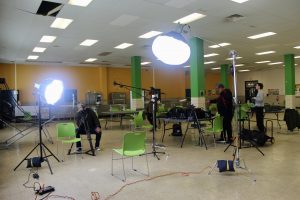


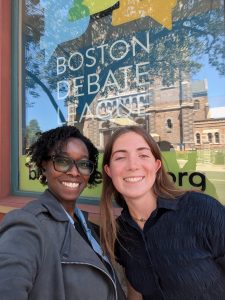 At my internship, I am working on a variety of projects centering around communications and marketing. I am helping promote the Boston Debate League’s new podcast as well as creating promotional videos for the organization. Finally, I am developing a social impact report on the BDL as the nonprofit approaches its 20th anniversary.
 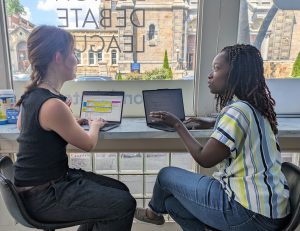 I have learned more about how to interview people, and how to prepare for interviews so that you can gain all the information you need.
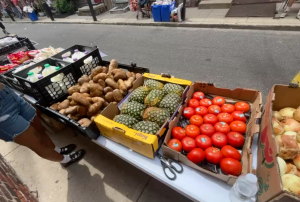 At my internship with Mighty Writers in South Philadelphia, I help distribute food and produce to the local community every day. On Fridays, we also give out diapers to mothers who need them. My responsibilities include organizing supplies, setting up distribution tables, greeting people, and making sure everything runs smoothly. I also talk to community members while they wait in line, which helps create a welcoming and friendly environment.
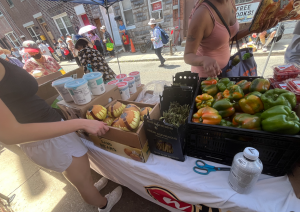 My favorite part of the internship has been setting up the distribution area and organizing the food in a way that’s efficient and easy for people to navigate. I also really enjoy talking to locals, especially the elderly. Many of them are kind and chatty, and I love listening to their stories. There’s something special about creating a calm and friendly space during what can be a stressful time for others.
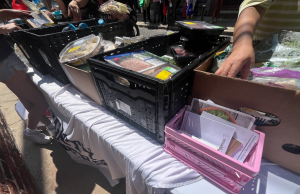 The biggest challenge has been dealing with bad or expired food and making sure everyone follows the distribution guidelines. It’s tough to turn someone away or ask them not to take more than what is allowed. These situations are uncomfortable, especially when I know the person is just trying to provide for their family. I’ve had to learn how to be firm while still being respectful and kind.