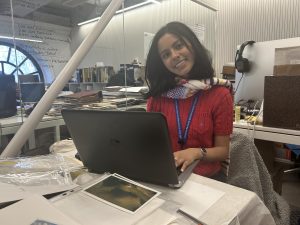
Sarah Elizabeth Fernandez ’26 Learns about History, Art, and Archives for the Summer


Name: Sarah Elizabeth Fernandez
Class Year: 2026
Major: Political Science
Minor: History of Art

Internship OrganizationCentro de Documentación (CEDOC) Angélica Pérez Germain, Museo Nacional de Bellas Artes (MNBA)
Internship Title:   Archive Intern
LocationSantiago, Chile

What’s happening at your internship? We would love to hear what kind of work you are doing!  

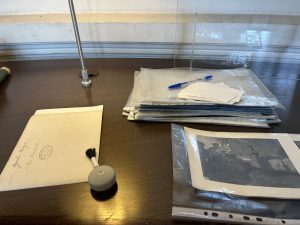
For the last few months, I have been doing work in the archives at the Museo Nacional de Bellas Artes (MNBA). The tasks I completed for the Centro de Documentación (CEDOC) Angélica Pérez Germain varied but all the work had a focus on preserving and promoting Chile’s contributions to the art world. Within the work one transferable skill I learned were the procedures to follow when handling documents and photos.

Why did you apply for this internship? 

I discovered my internship opportunity through the partnership Bryn Mawr has with IES abroad. I was thrilled once I received my placement in Santiago because I had studied abroad the previous fall in Latin America through the study abroad office. I felt this was the right choice for me since I could continue to build upon skills and IES matches students to internships that aligns with their career interests which was an important deciding factor for my junior summer.

What is something you have learned from your internship that you didn’t expect? 

One of my main projects while working in the archives was assisting in the translation of documents from English to Spanish. This work was valuable because it allows for more researchers to access the history and for the archive to be more complete overall. I was able to step into the role of a translator and learn more about my capabilities as an individual. Since I had been abroad in Argentina the previous year, I had some experience using my Spanish in professional settings. However, the practice of translating documents such as those outlining art purchases and internal communications allowed me to see I have a stronger set of comprehension skills than I had expected of myself.  

What is most rewarding about your internship?

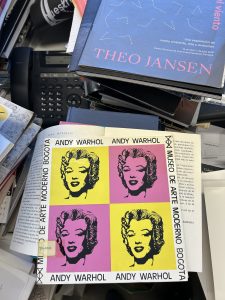
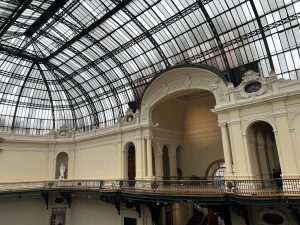
The most rewarding part of my summer internship was contributing to the archive. Due to the fact that the museum is the oldest in the Americas, the archive is vast and is in need of constant organizing. Throughout the summer the archive received various donations from Chilean artists who left their documents and personal archives to the museum. It was exciting and impactful to uncover history through the stories of artists, collectors, and institutions in connection to the museum. The team I worked with including students from local universities and departments in conjunction with the archive helped me understand the importance of Chilean history. One experience that was particularly valuable was the opening of the Sala Chile (Gallery) focused on the life and art of Chilean artist, Roberto Matta. The archive helped organize the exhibition and provided historic context to establish the permanent exhibition titled Historias de una Colección. I was able to attend the opening and hear from the various groups who collaborated on this project including the ministry of culture. 

CS and Math Major Khanh Ha Nguyen Gains Hands-On Industrial Experience In The Tech World 


Name
: Khanh Ha Nguyen
Class Year: 2027
Major:  Computer Science
MinorMathematics

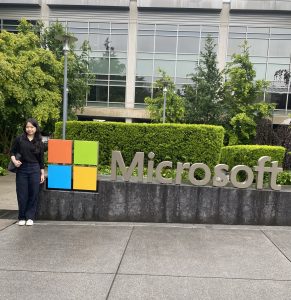
Internship OrganizationMicrosoft
Internship Title:   Explore Intern
LocationRedmond, WA

What’s happening at your internship? We would love to hear what kind of work you are doing!  

This summer, I’m interning at Microsoft as an Explore intern, where I have the opportunity to explore both the fields of software engineering and product management. I’m collaborating with two other interns to build a new website feature for a Microsoft enterprise social networking platform, called Viva Engage. For the first three weeks, I learned a lot about product design through writing product specification documents and aligning our work with the team and user goals, which helped me better understand how technical decisions intersect with user experience and business impact. On the engineering side of the remaining weeks, I’ve been able to gain hands-on experience with programming by working with both the front-end and back-end of the feature. I have the chance to also present my work and learning to more than a hundred people in the Viva Engage team.

Why did you apply for this internship? 

As a second-year college student seeking to gain industrial experience, the Microsoft Explore program caught my attention. Their emphasis on growth, building, and exploring aligned with what I was looking for at that time, so I decided to give myself a shot and applied right when the application was open. I didn’t expect that I would get in, considering how competitive the internship was.

Can you give us three adjectives and three nouns that describe your internship experience? 

Three adjectives: supportive, challenging, fun  

Three nouns: exploration, network, growth 

What is most rewarding about your internship? 

The most rewarding part of my internship has been the incredible mentorship and support I’ve received from my team. Coming in with limited experience navigating a large codebase or working in a professional environment, I made numerous mistakes. However, thanks to the patience and encouragement of my mentors, I never once felt like I didn’t belong. Every question I asked was met with genuine support, and I was always encouraged to keep learning and growing. That kind of environment made a huge difference in my confidence and helped me grow not only as an engineer but also as a teammate. 

Sophia Kim Conducts Research with Children’s Hospital of Philadelphia, Center for Autism Research 


Name
: Sophia Kim
Class Year2027
Major: Neuroscience
Minor: Biology

Internship OrganizationChildren’s Hospital of Philadelphia, Center for Autism Research
Internship Title:  Student Clinical Research Assistant
LocationPhiladelphia, PA

What’s happening at your internship? We would love to hear what kind of work you are doing! 

This summer, I had an invaluable opportunity to continue my position as a Student Clinical Research Assistant at CHOP’s Center for Autism Research, specifically with the Infant Synchrony team. Our team, consisted of four student interns this summer, aimed to develop a novel screening method using interactional synchrony in hopes to detect earliest signs of autism.

In simple terms, interactional synchrony refers to the temporal coordination or alignment of individuals’ behavior, emotions, speech, during a social interaction. A common example of this would be smiling back at someone who is smiling at you or making eye contact during a conversation. As research has shown various differences in the manifestation of interactional synchrony between neurotypical and autistic individuals, a core study of our team was to further study how interactional synchrony could be used as a tool of detecting early signs of potential autism in infants.

As part of the IS team, a big part of my work included watching infant and caregiver videos taken from earlier clinical study visits and annotating the audio/video data prior to computer analysis. Following the guidelines that indicated which quality factors could potentially impact the analysis, I worked both individually and with my co-interns to encode impacted parts of the video data. Further, throughout my time at CHOP, we were given the opportunity to shadow in-person study visits and observe how developmental and autism assessments (Mullen, ADOS) were conducted through live video footage.

This experience, along with our weekly career talks hosted by the Center for Autism Research alumni and faculty, allowed me to further branch out my interest in clinical research. Lastly, during the last few weeks at my internship, I completed an independent research project studying the “The Role of Culture in Interactional Sychrony and its Relevance to ASD Diagnostic Assessments”, and presented at our annual Student Trainees in Autism Research (STAR) Presentation day. 

Why did you apply for this internship? 

I decided to apply for this internship because I was seeking an opportunity to gain experience in clinical research, specifically in the field of pediatric research. As my ultimate goal is to go to medical school and become a pediatrician, I was particularly drawn to the Children’s Hospital of Philadelphia (CHOP), as it is a renowned institution known for its excellence in both medical and behavioral research, as well as its quality in patient care. Hence, when I came across this opportunity on Handshake, I immediately knew that I wanted to apply. Given that autism is an area of research that holds personal relevance for me as well, I believed this internship would offer a valuable opportunity for both my personal and academic growth.

What has been your favorite part of this internship?

My favorite part of this internship was participating in the STAR Speaker Series, a weekly panel featuring alumni and faculty from CHOP’s Center for Autism Research. Each week, professionals from a variety of fields and professions (i.e. clinical researchers, research assistants, medical residents, etc.) shared their career journeys and the specific work they were currently doing. I particularly appreciated the QnA session after every talk, as it opened up the floor for the students to network with the speakers, and was a great chance to learn from my co-interns as well. This opportunity, along with several other research/career talks hosted at CHOP were incredibly both helpful and insightful, and allowed me to learn more about different paths within research.  

Can you talk about the skills you are learning and why they are important to you? 

A technical skill I gained from this experience was learning how to navigate REDCap. Since most of our data encoding was done through this web-based application, I spent a lot of time organizing and managing data in this platform and troubleshooting when needed. Secondly, communication was a critical skill I was able to strengthen during this internship. We were given a lot of flexibility and independence with our day-to-day work, and while support and supervision was given, it was mainly up to the interns to ask questions, seek advice, and network. Hence, over the course of my time here at CHOP, I was able to become more comfortable asking for help when I needed it, speak up during professional meetings, and utilize my time wisely to complete given work at my own pace. Although these skills aren’t directly related to my future career or my current research (which focuses more on fundamental laboratory techniques), I believe they are highly valuable and transferable. Being able to manage data efficiently, conduct research and work independently, and communicate with both my co-workers and supervisors are all essential skills that will benefit me in any work environment moving forward.  

What is most rewarding about your internship? 

A major aspect of autism screening development involves not only early detection but also improving accessibility and availability of autism evaluations. For this reason, along with working to develop a novel technologies to better detect early signs of autism, our teams is focused on reducing disparities in access to screenings, particularly by integrating evaluations into pediatric visits at local clinics in Philadelphia. Hence, knowing that my work directly contributes to these efforts are very rewarding, as it plays a critical role in making early intervention for autism more attainable for children. 

Emma Dermansky ’27: My Summer in NYC Government

Name: Emma Dermansky
Class Year: 2027
Major:  Political Science         

Internship OrganizationManhattan Borough President Budget Office + Office of Council Member Shaun Abreu
Internship Title:   Budget Intern/Constituent Services Intern
LocationNew York, NY

What’s happening at your internship? We would love to hear what kind of work you are doing!  

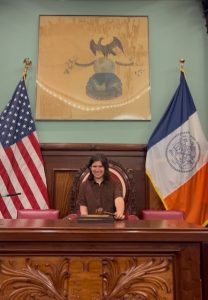
The current Borough President, Mark Levine, is leaving in January to become the comptroller, so I’ve been archiving past grant information for the next budget team. Council member Shaun Abreu just won another term! And the day-to-day work goes on. The office has a case load of around 300-400 constituent cases a month. The cases I work on are mostly related to housing, sanitation, and parks. We’re also planning a summer block party, and I’ve been helping organize the vendors for that.

Why did you apply for this internship? 

After taking a few political science courses, I knew I was interested in working in public service, and I was drawn towards local government. Working at my city councilor’s office and the Manhattan Borough President’s office offered me the chance to understand how NYC’s government affected the issues in the city I grew up in.

Was there anything special about how you found this internship? 

I had to do something way out of my comfort zone: emailing. I sent so many emails. When I was looking into internships, there was no active internship posting for my city office, so I reached out to ask. As for the borough president, I wasn’t initially planning on working with the budget office, I was connected with them through a mentor I had met at the PLEN conference I went to in January. Power of networking! 

What is most rewarding about your internship? 

Helping people with their issues, but also giving people the tools to advocate for themselves. When I talk to people and explain 311, or tenant rights, or police precinct community meetings, It gives them new opportunities to empower themselves within NYC’s system. In housing especially, there are a lot of resources out there, but not that many people know about them, and I get to change that! 

Rachel Dopico ’26 Advances Health Equity at the American College of Physicians 


Name
: Rachel Dopico
Class Year: 2026
Major:    History
Minor: Health Studies, Environmental Studies

Internship OrganizationAmerican College of Physicians
Internship Title:   Ryan Mire, MD Summer Internship Program
LocationPhiladelphia, PA

What’s happening at your internship? We would love to hear what kind of work you are doing!  

Dinner with ACP’S Board of Regents

During my internship, I worked in the Strategy & Innovation department within the American College of Physicians (ACP). This placement enabled me to interact with many departments and projects and gain a comprehensive understanding of ACP’s work. I worked primarily on a new project, helping to increase the visibility of ACP’s initiative making obesity care more equitable through regional action grants. I was able to closely familiarize myself with the work of the 12 grantees, who are doctors from ACP chapters across the country. Their projects are novel and improve the experiences of patients and providers in the field of obesity medicine through outreach in areas like medical education, nutrition, and more. I wrote short and long summaries for each of the twelve projects, helped to conduct outreach to grant applicants, and assisted with planning for a marketing video to promote the project. The best part of my work throughout the summer, though, was getting to interview some of the grantees, and learn about their backgrounds and work in underserved communities. I also worked with members of our team in Philanthropy and helped draft a newsletter and letter to donors. Generally, I got the opportunity to learn what exactly the work of a strategy department entails, and how they serve to further the work of organizations like ACP.

Why did you apply for this internship? 

Site Visit to Johns Hopkins

I applied for this internship because I felt drawn to the mission of ACP and appreciated their prioritization of health equity through initiatives like the internship program. The American College of Physicians serves its member base of 161,000 doctors but also is involved in lots of patient advocacy. I also wanted the chance to supplement my undergraduate and other internship experiences with exposure to the healthcare ecosystem at large and learn about other possible career paths within public health. I more than accomplished that this summer, and throughout programming visited health systems like Johns Hopkins, medical schools, regulatory agencies, and more. We also had the chance to speak with a range of physicians one-on-one through subject matter expert talks. I have learned to see the world in terms of health systems and understand how, beyond hospitals, clinics, pharmacies, outpatient care centers, imaging centers, and many other entities overlap. One moment that stuck out to me was hearing one doctor we spoke with reference how medicine is a social science, and politics is medicine on a larger scale.

Was there anything special about how you found this internship?

Visit from Dr. Ryan Mire

This is Bryn Mawr’s first ever summer partnering with the American College of Physicians to fund a student to participate in the internship program, and I am so grateful I found this opportunity through the career center! 

What has been your favorite part of this internship?

My favorite part of the internship was getting to meet people, both my peers and members of the organization. I was in a cohort with 9 other interns, and it was really rewarding to learn alongside them and even work together on some projects. We met weekly as a cohort, and attended site visits and talks with subject matter experts, where we met leaders in diverse careers across internal medicine. While I do not want to be a physician, I am excited to work alongside doctors in my public health career.

What is most rewarding about your internship? 

The most rewarding part of the internship was getting a glimpse into the world of passionate, energetic, smart, and above all hopeful people in the healthcare world fighting for health equity. Amidst drastic cuts to healthcare access from the federal government right now, restricting Medicare, Medicaid, and Affordable Care Act coverage and generally gutting public health, it was incredibly rewarding to meet so many people who are leaders in the field and who are making a difference on a micro and macro level. As someone who wants to work in public health, and is interested in health policy, this experience infused me with a lot of hope.

Ayla Conn ’27 Spends Summer Interning with FORA

Name: Ayla Conn
Class Year: 2027
Major:   International Studies
Minor: Spanish, Linguistics

Internship OrganizationFORA
Internship Title:   Administrative Restorative Justice Intern
LocationChicago, IL

What’s happening at your internship? We would love to hear what kind of work you are doing! 

What does a day in your internship look like? Forging Opportunities for Refugees in America, or FORA, is a nonprofit located in the heart of the community it serves, a thriving immigrant neighborhood in Northern Chicago. They’ve grown from working with 12 students to nearly 120, providing “High-Impact Tutoring” (HIT) to K-12 refugee students to support their adjustment into Chicago schools and ensure they feel caught up to grade level. As an Administrative Intern, my typical day at work is dynamic—it starts with two 2-hour tutoring sessions, where I work one-on-one with students on math facts and reading fluency. HIT activities might look like warming up with math games, talking through problems in a workbook, or reading a book out loud, pausing for comprehension questions and to sound out new words on a whiteboard. With up to 80 students in the building at a time, the room is always full of energy, from the start of the day at 9:00 until students start to trickle out at 1:30. Then, in the afternoons, the interns stick around to help FORA staff with a variety of projects. I’ve gotten to work directly with several members of staff, including our managing director, to support our budding summer speaker series, coordinate and advertise community events, research new solutions to keep our data organized, and more!

Why did you apply for this internship? 

Why did you apply for this internship? I grew up in the Chicago area, so I was excited by the opportunity to return home to work at an incredible organization located just 15 minutes from my front door. I’ve worked in a handful of tutoring-adjacent jobs on campus, including in the Writing Center and as a language TA, and I hoped to expand those skills while making an impact in a new environment. I also wanted to learn more about how a small, community-driven organization like FORA works behind the scenes.

What has been the biggest challenge you have faced at your internship? 

The adjustment from tutoring undergraduates to working with 7-year-olds! The students at FORA are all such hard workers, whether they’re in first grade or rising highschoolers, but working with kids presents a distinct set of challenges that has been a learning curve for me—especially during the summer, when most of them would rather be spending a day relaxing at the beach than wrapping up their subtraction workbook. Just over halfway into my time here, I am starting to feel confident in the strategies I’ve developed to keep different types of learners engaged, and I know I have learned as much from the students as I teach!  

What is most rewarding about your internship? 

The most rewarding part of working at FORA that I could not have expected is the extent to which I’ve felt able to make an impact. Being involved in a student’s “aha!” moment and seeing how they grow over the course of the 8-week summer semester is incredibly valuable. In particular, I’ve been consistently working with one rising sixth grader who was new to FORA this summer. Seeing her accomplish such amazing academic goals, like completing two levels on our math app and finishing a chapter book in the first few weeks alone, in addition to making connections with other students and tutors, has been such a privilege to witness. Our summer speaker series has also been such a fun surprise, as I’ve learned about the career trajectories of a wide range of FORA and Chicagoland community members, from local politicians and business owners to board members and former tutors, and had the opportunity to be in contact with many of these speakers to coordinate their visits. 

Summer Internship Experience: Rose Sunderland-McKay, ’27


Name: Rose Sunderland-McKay
Class Year2027
Major:   Anthropology
Minor Dance

Internship OrganizationBryn Mawr College Social Science/Humanities Summer Research Program
Internship Title:  Student Research Assistant
LocationBryn Mawr, PA

What’s happening at your internship? We would love to hear what kind of work you are doing! 
I am assisting Professor Melissa Pashigian with her pre-fieldwork research through the department of Anthropology at Bryn Mawr. Professor Pashigian’s research is centered around the topics of migraine and dizziness, exploring the lived experiences of various different populations with these conditions through an anthropological lens. At this point in the evolution of her project, my contribution to this work consists primarily of gathering informational materials for her to use as informants for her research process. Through performing searches in various scientific databases, social science journals, and social media platforms, my co-worker and I provide relevant articles and information to her, as well as document important patterns in the literature by observing the quantity and content of our search results. We do this work both individually and collaboratively, having daily meetings to discuss each of our findings and progress, and guide the independent work we do for the rest of our day.

Why did you apply for this internship?  

Going into this summer, I was very motivated to engage in an opportunity that gave me experience that I could apply to my future academic and personal goals – this position seemed to align wonderfully with my motivations. As an anthropology major, I am grateful to take lots of coursework that greatly interests me. However, I have yet to be able to engage in the development of an anthropological research project out in the world. I hoped that this experience would give me valuable experience in this area, and increase my skillset and preparedness for doing my own research in the future. Alongside this, I also hoped that it would give me insight into how much I enjoy doing anthropological research! I knew that I was interested in the topic, and thought it would be a great opportunity to explore both cultural and medical anthropology in a tangible way, and acquire more information about myself and what I want my future career goals to look like.

Was there anything special about how you found this internship? 

At the time that the application for this internship opened, I happened to be taking an Anthropology of Global Public Health with Professor Pashigian at the time. My Professor informed our class about the internship. I also saw the internship posted on Handshake, because I had been avidly looking on the site for potential summer opportunities at that time. 

What has been your favorite part of this internship?

I have so enjoyed my time working with my co-worker and Professor! Most mornings, the three of us have a meeting to discuss what we did the day before; findings, progress we made, questions, what we’ll do today, etc. During this time, I have learned that I can develop professional relationships that are also very fulfilling. In other words, I’ve learned that a professional relationship doesn’t have to be boring, but rather it can be about sharing ideas that each of us are passionate about and having fruitful discussions about the material we are working with, and how it connects to the world. I have also learned, through working in this consistent, smaller group of people, that I can share my ideas – even if I am not sure about them – and have them be valid. I am more capable of intellectual collaboration than I thought I was! 

What is something you have learned from your internship that you didn’t expect? 

Throughout the process of discussing my independent work on the project with my professor and co-worker, I have learned that I am more capable of engaging in scientific research than I thought I was. Although I knew from the time that I applied that I was interested in the topic of the research, I was somewhat unsure about what it would be like to engage in the more tedious tasks of documenting searches, and reporting on my specific findings. I remember the first time that my Professor told us to “come ready to discuss what we had found” I was quite intimidated – what if I didn’t find anything? What if the information I did find wasn’t helpful? However, through being encouraged every day to converse about what I had found while researching, I learned that I was not only making valuable contributions, but also able to talk about them! This increased my academic confidence, and taught me that my brain actually enjoys thinking critically about issues in both cultural and medical anthropology. 

What has been the biggest challenge you have faced at your internship? 

A challenging part of my research has been the lack of available scholarship on certain important aspects of the project. This means that oftentimes, when performing searches, it’s hard to get relevant results – or sometimes any results at all – to come up. This is challenging because it requires me to get very creative about the specific combinations and types of search terms I am using, and also because at times, it has been difficult for me not to view these “unsuccessful searches” as personal failures. As time has gone on, however, my Professor has helped me understand that a search that returns no results is just as “successful” as one that returns a lot of results, because it’s still telling us something important about the literature. Sometimes, for example, about a gap in the literature that could exist because of relevant systemic and structural circumstances. Asking yourself “why?” when a search doesn’t produce results can lead to important realizations about the very reason why the research is important in the first place! 

Can you talk about the skills you are learning and why they are important to you? 

As an Anthropology major, the research experience I’m gaining through this internship is sure to be extremely helpful for me as I continue to pursue my coursework – whether it be for essays, projects, or presentations in Anthropology, or even in other subjects as well. I have received training not only from my Professor, but also from Bryn Mawr’s research librarians. Through this, I have gained many tangible research skills, such as navigating databases like Proquest, Web of Science, Pub Med, Tripod and Google Scholar. I am also improving in my ability to read quickly and scan articles for relevance, as this is something that my supervisor is challenging my co-worker and I to do. Alongside this, I completed the CITI (Collaborative Institutional Training Initiative) Training about ethical research, and received hands-on instruction in transcript coding from my professor. All of these skills – as well as the fundamental experience of actively contributing to an anthropological research project and its development – will aid and inform the upcoming planning of my thesis on logistical and conceptual levels. Engaging in this process has taught me not only about how research can be developed, but also that I enjoy doing this type of research! In this, I am so grateful for the insight that this experience has given me, and will be sure to carry my new skills and knowledge with me in my near and distant academic endeavors. 

What is most rewarding about your internship? 

The collaborative relationship between my professor, my co-worker and myself has been especially rewarding because we truly all benefit from each other’s contributions, and learn from each other every day. This is because we all have unique strengths that we bring to the project, and unique perspectives that we are able to provide when discussing relevant concepts. With this, my professor has made a point of embracing our unique qualities, which has allowed us to explore in ways that most interest and suit us. In this way, there is some gratifying freedom within the structure of our contributions to the project. For instance, as a double major in dance and anthropology, I have a long-term passion for the body, and interest in somatic research. Although this project is not directly related to somatics, my professor was interested in the connections between the scholarship on migraines and dizziness, and more somatic, artistic scholarship about the body. Upon hearing about my curiosity in these areas, she encouraged me to perform some searches that might help bridge the gap between these different research areas, or contribute applicable – even if not directly related – information.  

Can you give us three adjectives and three nouns that describe your internship experience? 

Adjectives: Creative, consistent, collaborative  

Nouns: Expansion, Confidence, Transformation 
The Rush of Getting it right (and Sometimes Wrong) by Mariya Mushtaq ‘26 


Name: Mariya Mushtaq
Class Year: 2026
Major: Computer Science
Minor: Data Science

Internship Organization: Liberate Inc.
Internship Title:  Machine Learning Intern
LocationRemote (USA)

What’s happening at your internship? We would love to hear what kind of work you are doing! 

This summer, I’m working as a Machine Learning Intern at Liberate, a fast-growing Series A startup building in the voice AI space. At this stage of my work, I’m working on curating high-quality training datasets for fine-tuning LLMs using real customer service transcripts – essentially turning raw, messy data into something that large language models can actually learn from. I’ve also been brainstorming logic to evaluate and structure this data in ways that directly impact how helpful and accurate the AI can be in real conversations. The project I’m working on is currently being experimented with to evaluate key metrics – and if successful, could help shape product decisions at a larger scale than I had expected.

Why did you apply for this internship?  

Liberate has been the kind of environment where things move fast, ideas are taken seriously, and there’s real space to learn by building. The team’s pace, ambition, and openness to experimentation have made it an ideal place to grow – not just technically, but also in confidence. There’s something energizing about knowing your work could make it into production and potentially shape how the product evolves. Being part of a small, focused team where everyone is working hard toward a shared vision has taught me a lot about autonomy, adaptability, and staying curious.

What has been your favorite part of this internship?   

Definitely the dataset work. I’ve really enjoyed the process of curating training data and developing logic to evaluate and structure it effectively. Thinking through how raw transcripts can be transformed into meaningful inputs for large language models – and how to design evals that actually reflect useful performance – has been both challenging and rewarding. It’s given me a much deeper appreciation for how critical high-quality data is in building reliable AI systems. Something that really stuck with me was a conversation where I mentioned my fear of breaking production. My manager laughed and said, “I broke production at my first job too – that’s how you learn,” and the CTO added, “If anything breaks, that’s on us, not you. Go ahead and explore.” That mindset has made it easier to take risks, experiment, and grow more confidently throughout the internship. 

What is something you have learned from your internship that you didn’t expect? 

One thing I didn’t expect to learn was just how important it is to be comfortable with being wrong. Coming into a fast-paced startup, I expected an intense, high-pressure environment where mistakes were to be avoided at all costs. I started this internship thinking I needed to get everything right on the first try, but I quickly learned that experimentation, failure, and iteration are not just accepted here; they’re expected. I learned that psychological safety isn’t just a buzzword; it’s a real strategy. Giving people the freedom to experiment and fail without fear is what allows a team to move quickly and build fearlessly. That realization was a significant mindset shift. It empowered me to take more initiative, try different approaches, and ultimately build more confidence in my decision-making. It’s been a powerful lesson in trusting the process of learning itself.

Chaewon Lee ’27 Interns with Nationalities Service Center  


Name: Chaewon Lee
Class Year: 2027
Major: Geology, History
Minor: Environmental Studies

Internship Organization: Nationalities Service Center
Internship Title:  RUI Program Intern
LocationPhiladelphia, PA

What’s happening at your internship? We would love to hear what kind of work you are doing!

The Nationalities Service Center is a non-profit organization that hosts a variety of programs to support Philadelphia’s immigrant and refugee community. During my summer, I was part of the Refuge Upskilling Initiative (RUI) program, which is part of the Employment department, where I assisted my supervisors in crafting individualized skill planning documents for our clients. These individualized skill plannings outlined the goals and desired career goals of our clients, and we as a team would support them in achieving these goals. Many of our employment programs seek to provide our clients with the necessary skills to succeed in the United States, such as learning how to find jobs, take ESL courses, write resumes, and essentially build your career. The RUI program calls for employer partnerships (employers in the Philadelphia region who would like to enroll their immigrant and refugee employees with our program), thus I also worked on calling many companies to advocate for our program and for potential partnerships. Additionally, this summer, I was able to call and meet clients and hear their success stories with our training plans.

Why did you apply for this internship? 

I applied to intern for the Nationalities Service Center because of our current political environment and hostility towards immigrant and refugee communities. As an immigrant myself, I experienced first-hand the hardships of moving to a new country; the fear of blindly facing every step of life in a foreign place. With the already difficult circumstance of moving to a new country added on to the pressure of the political hostility towards immigrants, I wanted to do whatever was possible within my ability to be a help to these communities. I wanted this summer to be one where I can be a service to others and truly be a light of hope during our challenging times. Moreover, as a political science major with interest in policy, I wanted to gain hands-on experience on how much federal policies affect the people in our community.

What has been your favorite part of this internship?

My favorite part about my internship was the people I got to meet and work with. I will be honest, there were many challenging days where almost so many of us felt hopeless do to so many of our coworkers getting laid off and our programs shutting down because of massive budget cuts. Despite all the valid reasons to feel hopeless, dreadful, and disheartened, I was shocked by the resilience of my supervisors and other staff members. Everyone around me would always come to work with a smile, and a bright attitude that would help not only all of us feel a little more hopeful, but also our clients. Seeing everyone still hold onto the strand of hope that was all fabricated through each and every one of our efforts to be a reason for our clients’ smile was an amazing experience. NSC’s staff members’ resilience, strength, kindness, and dedication was inspiring and I hope to be like them one day.

What has been the biggest challenge you have faced at your internship? 

The biggest challenge I faced at my internship has been trying to convince companies and employers to partner with our organization. To support the RUI program, we need companies and employers to become partners and provide us with employees or we provide them with our clients that way both parties go through the program together. However, this is easier said than done. The majority of my calls with employers would always end with “we are not interested” or most will not even hear about the program as soon as I mention immigrants and refugees. This was incredibly disheartening and oftentimes left me feeling stuck and powerless in society. I went to intern for this organization to be a source of help, but I felt as if everything I was doing did not matter because society was rather neglectful towards our cause and also afraid of supporting us due to the overall political environment. Thus, there were many days where I simply did not know how to tackle this greater obstacle: society’s perception towards immigrants and refugees. I am still in the process of figuring this challenge out, but I have learned through my experience with NSC that there is hope as long as we keep trying, which was proven to be true when I was finally able to receive an answer from an employer saying they were interested!

Fatma Ayad ’28 Engages in a Summer of Digital Technologies 


Name: Fatma Ayad
Class Year: 2028
Major: Geology, History
Minor: Environmental Studies

Internship OrganizationBryn Mawr College Library and Information Technology Services
Internship Title: Digital Technology Internship
LocationBryn Mawr, PA

What’s happening at your internship? We would love to hear what kind of work you are doing!  

Showing visualizations to participant at Swarthmore’s Tri-Co Digital Scholarship Conference

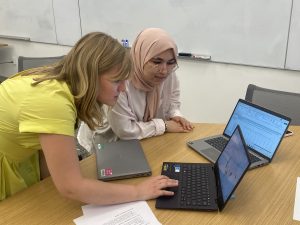
Over the past summer, I had the pleasure of collaborating with four wonderful teammates on three different projects. From data visualization to conference management, each project was different from the other, teaching us a diverse set of skills. The Digital Technology Internship, aptly named, emphasized digital competencies like Critical Making and Data Analysis and how to apply these skills on hands-on projects. More specifically, we applied these skills on three projects:  

  1. Data Visualization of Bryn Mawr’s Factbooks: The Data Visualization project involved working with the Institutional Research department to visualize Bryn Mawr’s Factbooks and showcase them on the college’s website. We did so by converting static data to accessible and interactive graphs using Tableau, which is a data visualization tool. 
  2. Creation of Lab Safety Videos: In collaboration with the Environmental and Health Safety department, we worked on creating educational lab safety videos for Bryn Mawr’s faculty and students, focusing on graphical presentation, video production, and accessibility. 
  3. Management of Institute of Liberal Arts Digital Scholarship (ILiADS) Conference: As part of the Local Arrangements team of the ILiADS Conference, which was held at Bryn Mawr this year, we worked on pre-conference logistics and on-site coordination. Our responsibilities included shooting a tour guide video around Bryn Mawr, preparing welcome packets, and producing promotional material.

Why did you apply for this internship? 

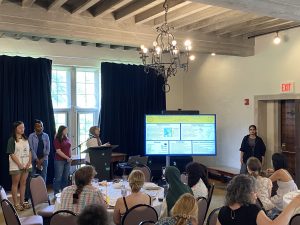
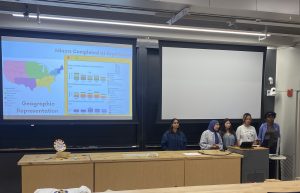
Presenting at LITS Summer Internship Showcase

I applied for the Digital Technology Internship because I wanted to explore how digital tools can be thoughtfully integrated into academic, administrative, and community settings. As a Computer Science major, I’m very interested in the application of technology in real-life problems, and through this internship, I wanted to explore a more critical approach to technology. I was especially drawn to the program’s emphasis on collaboration, accessibility, and critical digital literacy. In the lens of critical thinking, this internship allowed me to approach technology in a more ethical and human-centered way. Looking back at my internship experience, I feel like it successfully helped me achieve all these objectives that I hoped for.

What has been your favorite part of this internship?  

Presenting at ILiADS Conference

I was blessed to have a beautiful connection with my teammates, who each had their own unique input on the projects. We had a very dynamic and collaborative relationship, which facilitated communication and made the projects run very smoothly and productively. In addition, we all shared three awesome supervisors that led these projects with wisdom, insight, and understanding. Despite all the cool tech I got to learn throughout, all these meaningful connections were my favorite part of this internship. What started as professional relationships grew to be wonderful friendships! I also got to build connections outside of our office, and that is with different departments across Bryn Mawr, like the Institutional Research department and Environmental and Health Safety department, and with different Liberal Arts colleges through ILiADS, like Grinnell College and Carleton College. That helped me expand my professional network within Bryn Mawr and beyond! 

Can you talk about the skills you are learning and why they are important to you? 

Firstly, as a Computer Science major, technical skills matter a lot to me as I am in the process of preparing myself for the technical field. Through this internship, I learned how to use Tableau proficiently and how to apply it in data analysis and visualization. In addition, I learned HTML in order to learn how to embed these graphical visualizations to the college’s website and ensure it’s accessible to all Bryn Mawr website visitors. We also learned video production using WeVideo and video content management using Panopto. Outside of technical skills, we learned about Data Management and Preservation when working with Bryn Mawr’s statistical data, by cleaning and organizing multiple Excel sheets of information. In addition, critical design was also an important aspect to the internship as it made me realize that good design isn’t just functional, but it’s inclusive, intentional, and aware of its social context. As someone who wants to work in tech, I now see ethical reflection as just as essential as technical skill. Additionally, one of the most important skills that I focused on was communication. While it’s often emphasized in workplaces, it can be the hardest to apply as it is skill that involves other individuals. It is the backbone of project management and can determine the success of a project. Whether I was working with stakeholders, project clients, supervisors, or teammates, thoughtful communication helped me understand expectations, stay aligned, and move projects forward. It wasn’t just about talking, it was also about listening, asking the right questions, and making sure everyone was on the same page. Finally, I’m beyond grateful to Bryn Mawr, the LITS Department, and the Digital Technology Internship for supporting my personal and professional growth this summer. As an upcoming sophomore and international student, I truly appreciate the opportunity to be part of a program that has helped shape my journey and opened the door to future opportunities.