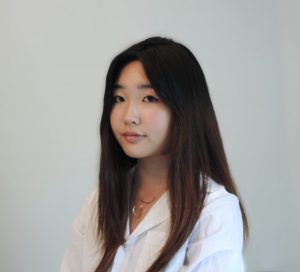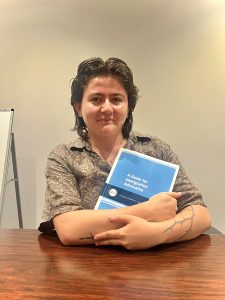
FSH Technologies Summer Internships: Kripa Lamichhane ’26 


Name
: Kripa Lamichhane
Class Year: 2026
Major: Computer Science
Minor: Data Science

Internship OrganizationFSH Technologies
Internship Title:   Technical Product Manager
Location:  Philadelphia, PA

What’s happening at your internship? We would love to hear what kind of work you are doing! 

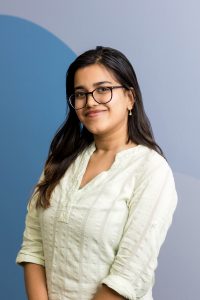
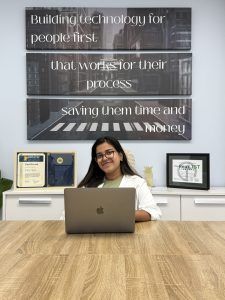
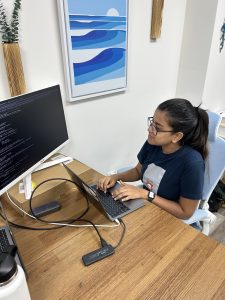
Looking back at my time at FSH Tech, I am incredibly grateful for the experience, knowledge and interpersonal skills that I have been able to acquire. Speaking of work, I’ve been part of a huge project with Pittsburgh Public Schools, where I interact directly with clients from Food Services to understand the challenges they face with their current software. My team and I have been dealing with them to develop tailored software solutions that are used by 52 schools and impact over 22,000 students’ nutrition and health. Beyond this, I contribute to technical responses for RFPs (Requests for Proposals) issued by government agencies which are real-world technical documents that outline solutions to public sector challenges. What I most enjoy is being part of a team that believes that software has to be for people before anything else.

Why did you apply for this internship? 

My goal was to break into Technical Product Management by solving meaningful, real-world problems that have an impact upon people’s lives.I am drawn to this internship opportunity as there are values within this company that consider people and sentiment seriously. It also offered me a chance to work at engineering-product-client boundary and learn how to build something that’s functional and technically proficient. I understood that this internship would allow me to grow along different axes and that’s why I came to this opportunity.

What has been your favorite part of this internship? 

Getting to see how my work can make an impact has been most rewarding whether that’s developing systems that serve thousands of students or improving internal operations. I also routinely receive constructive criticism from PMs and advisors, which works to accelerate not only my professional but also personal growth. What really sets this internship apart is the high standard to learn fast and how elevated my manager holds interns. I’ve been given ownership, with confidence, and with a look behind the curtain at both the operations and technical sides of the company.

Can you give us three adjectives and three nouns that describe your internship experience? 

Adjectives: Impactful, Empathetic, Fast-paced  

Nouns: Ownership, Collaboration, Hockey-stick Growth

Agatha Yoo ’26  Explores Legal Learning in Conshohocken 

Name: Agatha Yoo
Class Year: 2026
Major: Political Science

Internship OrganizationGroen Strokoff O’Neill LLC
Internship Title:   Legal Intern
LocationConshohocken, PA

What’s happening at your internship? We would love to hear what kind of work you are doing!  

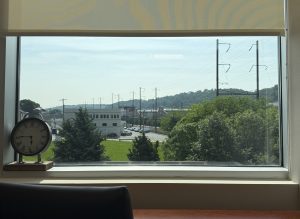
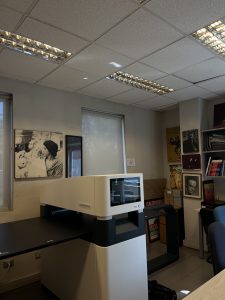
My office view!

As a legal intern, the tasks assigned to me were varied depending on which attorney I was working under, and the type of case they were working on. A majority of my tasks required me to write legal documents and letters such as petitions, demands, and complaints. In addition to these formal documents, I was tasked with composing memos that concisely summarized medical reports and depositions.

Why did you apply for this internship?  

As a prospective law student, I felt that I needed to gain experience before committing to applying for law school. Groen Strokoff O’Neill is a firm comprised of attorneys and paralegals who have proven themselves through not only their accomplishments, but their dedication to their local community. My supervisor in particular strives to serve his community through offering services pro bono. These characteristics are what I not only aspire to work amongst but strive to uphold as I continue in the legal field.

What has been the biggest challenge you have faced at your internship?  

The biggest challenge I faced at my internship was the fact that I was the only intern. It felt intimidating to be working with professionals in the field, and at first, I admit to feeling uneasy with my own capabilities. However, I am here to learn and grow, which I definitely have accomplished. Although uncomfortable the first few days, being the only intern has allowed me to fully immerse myself in the reality of working in the legal field. I’ve also been granted a variety of tasks due to being the only intern, allowing me to experience even more than I could have imagined! 

What is most rewarding about your internship?  

The most rewarding part about my internship is being able to see my work in open case files. To be able to see my work being used by the attorneys is exciting. It means that my work has actively helped individuals rightfully have a strong voice in the legal system. I aim to continue advocating for my community and beyond as I go forward. 

Archaeology in Austria: My work with the Vienna Institute of Archaeological Science by Carey Klopfenstein ‘26 


Name: Carey Klopfenstein
Class Year: 2026
Major: Anthropology
Minor: Museum Studies, Classical and Near Eastern Archaeology

Internship Organization: Vienna Institute of Archaeological Science
Internship Title:   Intern
LocationVienna, Austria

What’s happening at your internship? We would love to hear what kind of work you are doing! 
How I set up bones for taking morphometric analysis photos

I’ve been very lucky to do a variety of things at my internship. With one of my supervisors, Dr. Magdalena Blanz, I mainly worked with goose bones from the site of Mühlacker near the ancient Roman city of Carnuntum. I looked through boxes full of bones from the site and identified the tarsometatarsi and humeri of greylag geese. I then took photos of the tarsometatarsi for morphometric analysis. I also worked on cleaning and preparing samples of bone from people from Bronze Age Austria for isotope analysis. During the second part of my work week, I worked with Dr. Birgit Bühler. We worked with metal artifacts from the Avar culture, an early Medieval culture originally from eastern Central Asia that settled in parts of Central Europe. I was privileged enough to be able to see artifacts from the excavations at Zillingtal which have not yet been published. I started out by presorting the artifacts based on the illustrations done at the excavation in the 1980s and learning more about early Medieval metalworking techniques, and then we looked through some of the most promising boxes to check their preservation and which were most promising for analysis.

Why did you apply for this internship? 

The site of Carnuntum including reconstructed Roman buildings

Honestly, a big part of the appeal for me was that I would find out whether or not I got in before the deadlines for other summer internship applications, so I wouldn’t have to go through the exhausting process of applying for all the places I was interested in at the same time. I had applied for the IES Vienna Internship funding last summer and didn’t get in, so I wasn’t very hopeful, but I figured if I didn’t apply again I would always regret it and wonder what if. I chose to apply for Vienna specifically because I’m pursuing Museum Studies and there are so many different museums in the city (over 100!) My focus within my major is Archaeological Anthropology, so when I found out that VIAS was willing to interview me I was thrilled.

Was there anything special about how you found this internship?  

The little goose figurine given to me by my supervisor Magdalena Blanz

Because I was doing an IES internship program, I worked with Nika Protic at IES to find an internship to do with the program. Nika was incredibly kind and helpful every step of the way. I wasn’t aware of VIAS before she mentioned them to me.

What has been your favorite part of this internship? 

There were so many parts of my internship that I loved that it’s hard to choose, but I have to say my favorite part has been the people. I’ve tried to take every opportunity I could to meet people in Vienna’s community of archaeological scholars and everyone has been so warm and welcoming. All of my coworkers were such interesting people. Magdalena’s office is filled with a lush forest of plants and she collects little animal figurines. She’s also part of a brass quintet. Birgit does horseback archery, learned to read Ogham, the ancient Irish script, and travels to watch Orcas. I had so many wonderful conversations both about archaeology and about people’s lives. On my last day, Magdalena gave me a little goose figurine to commemorate my work on the goose bones and I was really touched.     

What is something you have learned from your internship that you didn’t expect?  

I wasn’t expecting just how long Austria has been a diverse place and the role of cultural identity. Even before the Roman conquest, Iron Age Austrians had access to far reaching trade routes. Roman sites such as Carnuntum and Vindobona (where Vienna now stands) were places of interactions between Romans and Celtic peoples. Under Avar rule, genetic evidence suggests that groups of people of various European groups adopted Avar cultural practices. On the other end the remains of a woman have been found which genetic analysis indicates that her ancestry was from modern day Mongolia, but her dress and burial indicate that presented, and perhaps identified, herself, with the culture of the Roman province of Pannonia. I didn’t know that much about ancient and Medieval Austria before this summer, and I was fascinated by the rich history of different cultures and their interactions here. Also, there is a type of Avar earring called a Bommel, a German word for the pompoms on top of winter hats, which I thought was very cute. 

Can you talk about the skills you are learning and why they are important to you? 

I wasn’t expecting just how long Austria has been a diverse place and the role of cultural identity. Even before the Roman conquest, Iron Age Austrians had access to far reaching trade routes. Roman sites such as Carnuntum and Vindobona (where Vienna now stands) were places of interactions between Romans and Celtic peoples. Under Avar rule, genetic evidence suggests that groups of people of various European groups adopted Avar cultural practices. On the other end the remains of a woman have been found which genetic analysis indicates that her ancestry was from modern day Mongolia, but her dress and burial indicate that presented, and perhaps identified, herself, with the culture of the Roman province of Pannonia. I didn’t know that much about ancient and Medieval Austria before this summer, and I was fascinated by the rich history of different cultures and their interactions here. Also, there is a type of Avar earring called a Bommel, a German word for the pompoms on top of winter hats, which I thought was very cute. 

Can you give us three adjectives and three nouns that describe your internship experience? 

Enriching, welcoming, enlightening  

Practice, gecrets (geese secrets),  bommels  

What is most rewarding about your internship?  

My supervisors talked a lot about how much the stuff I was doing was helping them, and I was really happy to be helping them out. I also found it incredibly cool to be face to face and handling artifacts. Unfortunately, because they’re unpublished, I can’t include images of the Avar metal artifacts, but some of them were incredibly beautiful and well preserved, and I could hardly believe that I was right there holding them. 

Was the internship what you expected it to be? 

I would say that this internship exceeded my expectations. I was excited going into it, but my expectations were vague and I was really happy with how it turned out. 

Cass Fischer Murphy ’26 Explores Immigration Law in Philadelphia


Name: Cass Fischer Murphy
Class Year: 2026
Major: Spanish
Minor: Gender and Sexuality Studies, Philosophy

Internship Organization: Esperanza Immigration Legal Services
Internship Title:   Legal Intern
LocationPhiladelphia, PA

What’s happening at your internship? We would love to hear what kind of work you are doing!  

 I work at Esperanza Immigration Legal Services, the small legal department of the nonprofit Esperanza, which serves low-income immigrant communities in Philadelphia. Due to its limited capacity for representation (there is only one attorney), its legal services primarily comprise work outside of the courtroom. A large amount of this work involves assisting people with their citizenship applications. Though a relatively lower-risk immigration status to be in, the process is still difficult for our clients for a variety of reasons, be they related to finances, language, age, or literacy. Completing the application for naturalization can involve assisting clients with their taxes, medical records, among other bureaucratic things. Naturalization clients are very rewarding to work with, as citizenship represents a big step for them and is easy to achieve with the right advocacy. Two of my most happy moments at work have been interpreting for a woman who passed her citizenship interview, and co-teaching a citizenship interview test prep class. The second-most common kind of petition I have dealt with is asylum– a much riskier and harder to access legal protection. Eligibility for asylum is multi-tiered and fairly specific, and highly influenced by contemporary politics. Constructing a claim involves a balance of personal testimony, country conditions, and legal analysis. Filing pro se asylum applications has illuminated to me the vast failures of the US immigration system. For example, the fact that the executive branch was legally able to cancel Temporary Protected Status for 350,000 Venezuelan asylum seekers in the US without advance notice highlights the chaotic and unstable nature of the system as a whole. It is very disheartening to not be able to give an answer to asylum seekers when they ask about their futures– nothing is certain anymore. Yet, helping someone file their application makes a huge difference for them, even if their chances of it being granted are slim. It isn’t up to me to decide what work is “worth it” or not– though the system makes it harder and harder to help people, it means that the need for immigration advocacy is even more urgent.

Why did you apply for this internship?  

I’m interested in pursuing immigration law as a potential career, and for that reason I decided to intern at an immigration nonprofit. I want to work in immigration law because it’s one of the most pressing issues of our time, and because it allows me to draw on my studies in Latin American history.     

What is something you have learned from your internship that you didn’t expect? 

My experiences with immigration law have shown me the real-life effects of the historical events I have studied here at Bryn Mawr. Through my studies in Latin American history, I understand that a lot of the turmoil plaguing Latin America today is a direct consequence of U.S. interventions and extractivist policy dating from the 20th century to today. The U.S. has made itself rich from Latin America, and then it exploits and dehumanizes the people that it has displaced. That’s what makes recent events all the more galling. Yet, I’m glad that I am able to use my studies in a way that directly helps people. 

Can you talk about the skills you learned and why they are important to you? 

For anyone interested in helping asylum seekers, many nonprofits will have regular clinics where you can help people apply for asylum, both remote and in person. Philly has a lot of great organizations– I would recommend looking at the member groups of the Pennsylvania Immigration Coalition to start! 

Updating an Art History Syllabus: Ellie Leonardo ‘26

Name: Ellie Leonardo
Class Year: 2026
Major: History

Internship Organization: Bryn Mawr College
Internship Title:  Research Assistant
Location: Bryn Mawr, PA

What’s happening at your internship? We would love to hear what kind of work you are doing!  

I’ve been working on updating the syllabus for an art history course being taught in the fall. The course is HART B310 Topics in Medieval Art: Kings, Caliphs, and Emperors: Images of Authority. Right now the main thing I’ve been doing is reading the current syllabus as well as some potential new material and making suggestions on what we should include. 

Why did you apply for this internship?  

I applied for this internship because I wanted to get research experience to help prepare for my thesis. It is really difficult to get this kind of experience in the humanities so I feel really lucky to get to work with Professor Walker. The class also has high overlap with my research interests so it has been super helpful when thinking about potential topics for my thesis!  

What has been your favorite part of this internship? 

Getting to do a job that I actually enjoy and am interested in. I think a lot of young people have this problem where you can never get to do work that has any alignment with your long term interests and for me this makes work really exhausting. Working on this has been great because often the material I was reading was really interesting to me.  

Can you give us three adjectives and three nouns that describe your internship experience? 

Adjectives: Personal, In Flux, Perspective-Changing  

Nouns: Care, Connection, Compound 

A Summer Exploring Dark Stars by Manolya Yatman ‘26 

Name: Manolya Yatman
Class Year: 2026
Major: Astrophysics
Minor: Applied Mathematics

Internship OrganizationKeck Northeast Astronomy Consortium, Colgate University
Internship Title:   Research Fellow
LocationHamilton, NY

What’s happening at your internship? We would love to hear what kind of work you are doing! 

Photo of the Ring Nebula my friend Halle and I took while doing some recreational observing!

This summer, I am working as a Research Fellow in the Physics and Astronomy Department at Colgate University. I’m part of the dark matter research group, specifically working on Dark Stars–stars that are theorized to have formed in the early universe through dark matter annihilation rather than nuclear fusion (the same process that powers our Sun). Currently, I am developing Python codes that allow us to identify Dark Star candidates using data from the James Webb Space Telescope!
Why did you apply for this internship? 

Throughout my time in college, I’ve been looking for opportunities each summer to do research in various areas of astrophysics. This year, I will be applying to graduate school, so getting experience in different areas gives me a better idea of what kind of research I want to work on in the future! I was also hoping that I would get some ideas for my Senior Thesis, and even if I end up working on something else, reading/writing scientific papers and getting experience with programming is super helpful for preparation for both my thesis and for graduate school.

Was there anything special about how you found this internship? 

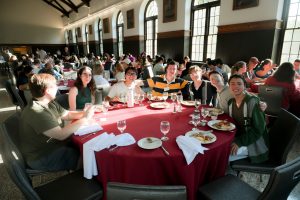
Research Dinner with the summer cohort (credit: Jason Qiu)

Yes! This fellowship is through the Keck Northeast Astronomy Consortium (KNAC), which is made up of eight small liberal arts colleges and universities, aiming to promote astronomy research. Bryn Mawr students can apply through our bi-co relationship with Haverford, which is a KNAC member. I found out about it after attending the KNAC Symposium last fall, where some of my Haverford friends presented their research. 

What has been your favorite part of this internship?

My favorite part of the internship has definitely been working on a fringe idea, investigating an unproven theory with newly released data. Through this research, I’ve gotten a much better understanding of dark matter and how it can interact with baryonic (regular) matter, as well as the process of testing scientific theories. I also love our weekly group meetings, where I get to learn about the projects my groupmates are working on; the scientific exchange and conversations is super exciting and reminds me why I want to pursue a career in astrophysics. Outside the lab, I’ve been pleasantly surprised by how vibrant the summer research community is here, even in such a rural area. I was initially nervous about making friends, but I’ve connected with students across departments. Whether it’s beach volleyball at the sand courts, late-night movies in the planetarium, or swimming in Lake Moraine, the off-hours have definitely been a great highlight of the experience. 

Interfaith Youth Education and Organizing with Isabelle Stid ’26


Name: Isabelle Stid
Class Year: 2026
Major: Religion
Minor: Gender and Sexuality Studies 

Internship OrganizationInterfaith Philadelphia
Internship Title:   Youth Initiatives Intern
LocationPhiladelphia, PA

What’s happening at your internship? We would love to hear what kind of work you are doing!  

A student’s “Good Deeds Tree”

This summer, I have had the amazing opportunity to intern at Interfaith Philadelphia, which organizes and facilitates inter-religious dialogue and action across the city. I am the Youth Initiatives Intern and work directly with the director of Youth Initiatives at IP. My main responsibility this summer has been planning and facilitating the Interfaith Youth Neighborhood Mosaic Summer Program. Mosaic is a week-long free program for middle schoolers that helps students foster pride in their own religious and cultural identity, while also forming and promoting community. This year, Interfaith Philadelphia had two Mosaic Programs, one at the Gesu School in North Philly and the other at the Philadelphia Praise Center in South Philly. During the program, students do different art projects, activities, and guest speakers come in to talk about their religious traditions. Most importantly, students complete Interfaith Philadelphia’s “passport to understanding,” which teaches students to Be Curious, Welcome In, Venture Out, Stand Tall, and Stand With. Other than Mosaic, I am also involved in a lot of planning for the upcoming year. I am working on modernizing activity and lesson plans for youth, reaching out to colleges and universities to plan alternative break trips, and helping to plan personalized curriculum for local schools and faith communities.

Why did you apply for this internship? 

Interfaith Philadelphia staff outing to the Philadelphia Museum of Art to learn about the Museum’s collections across religious traditions

I first learned about Interfaith Philadelphia because Bryn Mawr partners with them annually for alternative spring break trips. I have gone on two of these trips and absolutely loved learning about religious diversity within Philly. When I learned Interfaith Philadelphia had a summer internship program, I knew I had to apply! I am a religion major and am very involved with Bryn Mawr’s interfaith community, so working at IP seemed like a natural extension of my academic interests and social passions. Moreover, from going on Alternative Break trips, I knew I would love the team and work climate at IP as well.


What has been your favorite part of this internship?


My favorite part of this internship has been facilitating Mosaic by far. I learned I really love working with kids, and especially while teaching them about religion and interfaith dialogue, which are two subjects I am so passionate about. It was wonderful to see kids come out of their shells, get interested in the material we were learning about, make new friends, and more. A large part of Mosaic is creating a self-portrait throughout the week, and it was amazing to watch students gain confidence in their skills as artists and create pieces that they were proud of. While working with 10+ middle schoolers during the summer can definitely be tiring, I found it to be incredibly worthwhile and so much fun as well.

Can you give us three adjectives and three nouns that describe your internship experience? 

Nouns: Community Diversity Openness  

Adjectives: Fulfilling Educational Impactful

Jessica Silver ’26 Looks Behind the Scenes – View on the International Healthcare System


Name: Jessica Silver
Class Year: 2026
Major: Neuroscience
Minor: Health Studies

Internship OrganizationHealth Hub Vienna
Internship Title:   IES Abroad Psychology
LocationVienna, Austria

What’s happening at your internship? We would love to hear what kind of work you are doing! 

This summer I had the opportunity to intern at Health Hub Vienna. This organization works as a hub for startups, a place to share ideas for products to be integrated into the international healthcare market. As an intern, I was given tasks to research specific products and individuals important to this process, who are part of the up-and-coming startups. Throughout my internship I was also able to network with the founders of these startups, and to hear their pitches describing the initial product details. Overall, there was a great emphasis placed on learning more about the international healthcare system from a broader view, and to know how healthcare products transition from basic ideas to becoming fully integrated into the market.

Why did you apply for this internship? 
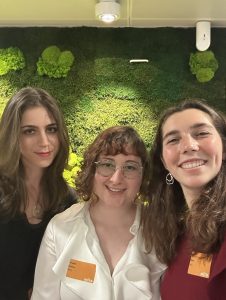
I am extremely passionate about the healthcare system, and I want to pursue a career within healthcare in the future. On the other hand, I have always wanted to experience living internationally, however being a current premedical student, I do not have space in my undergraduate years to complete a semester abroad. Spending a summer abroad studying something related to the healthcare system perfectly balanced these two passions, while not taking space from my busy semester schedules. As I researched possible options, the IES Psychology Program in Vienna related the most to my interests, and so I made it happen. I ended up having the most amazing experience during my eight weeks abroad, and I would suggest that everyone pursue something similar during their undergraduate years.

Was there anything special about how you found this internship? 

I found this internship after attending a study abroad informational fair on Bryn Mawr’s campus, and looking specifically for summer opportunities.

What has been your favorite part of this internship?  
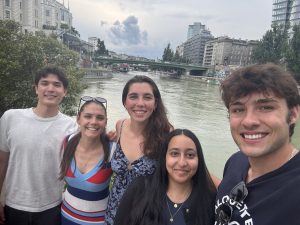
My favorite part of this internship was the incredible work-life balance present in the Vienna culture, and the ability to travel easily on any given weekend. From the first day of my internship, my colleagues mentioned how after the end of work hours, nobody does work for the remainder of the day. This gave me an opportunity to explore the city after the end of a work day, using the convenient public transportation. Then, on the weekends I would travel with some friends to a nearby city or even country, to spend some time exploring places I had never previously visited.     

What is something you have learned from your internship that you didn’t expect? 

This summer, I learned how to utilize AI technology in a variety of contexts, which was unexpected. The company that I interned with uses AI for all preliminary research, and so I was introduced to a new platform and utilized it for my tasks throughout the summer. While the platform organized all the information in a very easy-to-understand format, it felt strange to use it so casually when completing my tasks. 

Working remotely for the first time? What has that experience been like for you? 

My internship was hybrid, and so generally two days of the week were spent in the office, while the other two were remote. While I enjoyed having the flexible freedom of working where I wanted, personal interaction is very important to me, and so I felt as though the remote days impacted my ability to get to know my coworkers during my internship. 

Can you talk about the skills you learned and why they are important to you? 

This summer, I quickly learned how to be very independent, as I was living in a new place, in a completely new country than I had grown up in. This summer was a big learning experience for me, with a variety of learning curves, most of which were good. Learning how to live fully on my own, without parents or a cafeteria to rely on, combined with planning my own trips and adventures, provided me with an incredible experience this summer. More specifically relating to my internship, I learned how to integrate myself into a new culture, with methods of communication and teamwork different than I am used to in the US. I continued learning every day, and felt as though I ended the summer with a better grasp of a new culture and way of living.  

What has been the biggest challenge you have faced at your internship? 

The biggest challenge I had during my internship was the language barrier that was present. Although most of my colleagues spoke some level of English, they were much better at German, and sometimes reverted to it when in a group setting, leading to me being unable to understand what they were saying in meetings. I handled this challenge by continuing to request translations in English when they were finished, or reminding them that I do not know what is being said. When this was requested, they were very responsive and translated to English so that I could understand everything and be a part of the conversation. 

Can you give us three adjectives and three nouns that describe your internship experience?

Adjectives: Informative, spectacular, transformative  

Nouns: Friendship, travel, discovery

What is most rewarding about your internship?  

Although the tasks that I was assigned to complete during my internship were not the most interesting to me personally, it was rewarding to notice how much of a difference they made to the progress being made in my company. This applied most clearly to the preparation being done for the big networking event hosted by my company, for which they used my prepared lists to reach out to healthcare organizations personally, and then prepared a keynote speech. In addition to the work being done in my internship, it was rewarding to have been given the chance to visit so many new places, and explore the world in the two months I was living in Vienna.

Was this internship what you expected it to be?

The internship this summer, and living in Vienna, was a better experience than I ever could have dreamed of. Without a second thought I would pursue a similar experience again in the future, and I would encourage everyone else to experience something of this nature at some point in their lives. 
Laurel Gabbard ’26 Works in the Archives in Santiago, Chile!


Name: Laurel Gabbard
Class Year: 2026
Majors: History of Art, Spanish
Minor: Museum Studies

Internship OrganizationArchivos de la Facultad de Artes en la Pontificia Universidad Católica de Chile
Internship Title:   Archives Intern
LocationSantiago, Chile

What’s happening at your internship? We would love to hear what kind of work you are doing! 

Pontificia Universidad Católica de Chile

This summer, I have been interning in Santiago, Chile, working in the archives of the School of Arts at the Pontificia Universidad Católica de Chile. As an intern working in the theater archives, I have been introduced to a wide array of archival materials, including but not limited to documentary footage, interviews, photos, letters, posters, and theater programs. My main task consisted of transcribing, subtitling, and translating three documentaries that focus on different elements of Chilean theatrical history, all of which, in some capacity, focused on theater as a revolutionary act that can operate as a push against state power and dictatorship. I also transcribed interviews conducted with Alberto Kurapel and Susana Cáceres, Chileans living in exile in Canada during the dictatorship, and who, in their time in Montreal, formed a theater company that produced acts based on their own experiences in political exile. I also had the chance to meet with the subject of one of the documentaries, Jacqueline Roumeau, the founder of an organization that coordinates theater, and more broadly, art opportunities, within prisons as an act of rehabilitation and reintroduction into society after incarceration. My supervisor recently presented the three documentaries that I subtitled at a three-day long event at the Chilean embassy in Buenos Aires, Argentina, and knowing that I contributed to the accessibility and understanding of these visual archives is very exciting!

Why did you apply for this internship? 

Digital Humanities Lab

I originally applied for the IES Abroad summer internship program, along with Career and Civic Engagement funding knowing that I wanted the opportunity to live and work in a Spanish-speaking country and get more comfortable with my professional abilities in my second language. As I worked with IES to find an internship placement, I knew I wanted to be in the arts and humanities sector, so when I was presented with the opportunity to interview for a position in the archives of the School of Arts, I knew that would receive the guidance and experience I was looking for!

What has been your favorite part of this internship?  

My favorite part of this internship, besides the professional experience I have gained, has been getting to know my coworkers and supervisors, and in doing so, gain insight not only into professional life in Chile, but also being able to learn tons about Chilean culture, history, social issues, and be a part of the day to day office conversations! My coworkers, in addition to other university-age interns at the office all welcomed me with open arms and helped me learn tons about what it is like to be young in Chile, and I feel very lucky to have had this experience of full linguistic and social immersion in addition to my professional experience. 

What is something you have learned from your internship that you didn’t expect? 

Coworkers and I on my last day!

As a history of art major, I came into this internship with a lot of knowledge about art history, but less about theater and performance art as archival materials. I have been able to learn a lot about the way that archives can preserve the history and memory of works of art and performance that are less tangible and more fleeting. In this case, it has to do with the way that the archives at my internship hold onto the memory of Chilean theater, although one can never experience the exact moment of the production in the same way again. The collections of videos, audios, interviews, pamphlets, posters, and other mediums that the theater archives hold has pushed me to reconceptualize my understanding of what forms of art are easily “archivable”. As I prepare to begin my senior thesis this coming year, I have been considering the way that the corporeality and tangibility, or lack thereof, of performance art can be catalogued and remembered, and how our perceptions of history and memory are changed by how we register art as a physical or non-physical item. I did not go into my internship expecting that something that falls into the realm of theater performance could be so related to what I may want to write my thesis on, but I feel lucky to have had this experience and open my mind to a new realm of critical thinking in the field of art history! 

Immersion in Environmental Education at Bosque Santiago with Miya Matsumune ‘26 


Name: Miya Matsumune
Class Year: 2026
Major: Geology, History
Minor: Environmental Studies

Internship OrganizationBosque Santiago
Internship Title:   Intern
LocationSantiago, Chile

What’s happening at your internship? We would love to hear what kind of work you are doing!  

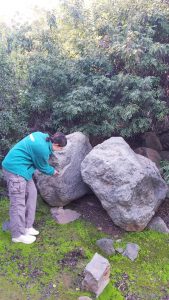
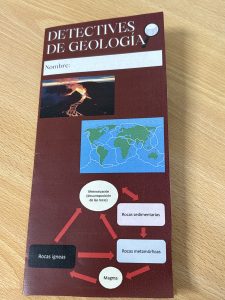
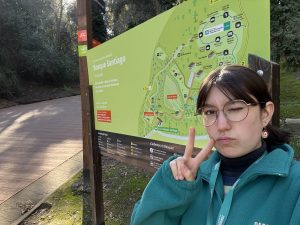
Bosque Santiago is a center for environmental education within Santiago’s Parque Metropolitano. As an intern, I planned a geology workshop for kids as my personal project, and helped out with other workshops, tours, and events.
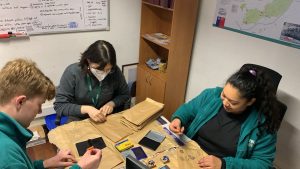
Why did you apply for this internship? 

Environmental education is my dream field of work. I love to teach others, invent games and activities, and I am passionate about sustainability and community outreach.
What has been your favorite part of this internship?  

Bosque Santiago is operated entirely in Spanish, and I am not a native Spanish speaker. It was difficult to adjust at first, because I wanted to speak professionally with my supervisor and I was worried about coming across as not intelligent or capable because of my limited Spanish abilities. However, as I became more comfortable with everyone, I began to relax and formed strong relationships with my supervisor and co-workers.

Was this internship what you expected it to be?   

I did not expect there to be so much freedom in this internship, however I ended up enjoying how much autonomy I had in the position. I was able to choose my own personal project and work on it at my own pace. Because of this, I was able to improve my proactivity and advocate for myself.