
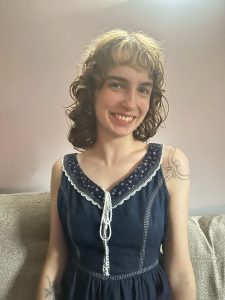
Name: Sam Wagner-Robertson
Class Year: 2026
Major: Biology
Minor: Chemistry
Internship Organization: Biomedical Sciences at the University of Pennsylvania School of Veterinary Medicine
Internship Title: Undergraduate Researcher
Location: Philadelphia, PA
What’s happening at your internship? We would love to hear what kind of work you are doing!

Human T cell nuclei I treated with RNA FISH to detect specific molecules
My internship is at Dr. Anguera’s research lab, where we examine various genetic mechanisms that contribute to a female bias in autoimmune diseases, including lupus and scleroderma. Although our lab is located at UPenn’s veterinary school, our research and lab members expand beyond the veterinary field. Our work involves analysis of both mouse and human samples, studying the inactive X-chromosome and sex differences in immune responses.
Why did you apply for this internship?

Pachi, Dr. Anguera’s dog
At Bryn Mawr College, I work in Dr. Williamson’s lab researching Batten disease, a fatal pediatric neurodegenerative disorder. This experience launched my love for immunology, solidified my goal of pursuing a career in research, and sparked a curiosity of how research is conducted in other environments and BMC’s summer funding allowed me to do just that. Knowing about BMC’s funding opportunity, I reached out to different labs whose work I wanted to be a part of over the summer. Fascinated with Dr. Anguera’s blend of genetics and immunology, I was ecstatic to hear there was an opening in her lab as an undergraduate researcher. After a few emails and meetings with Dr. Anguera, we built an internship founded on my career goals and interests, allowing me to be a part of every stage of the research process.
What has been your favorite part of this internship?
Truly every aspect of this experience has been incredible, and I’m not sure if I can pick just one to be my favorite. Maybe it has been becoming a part of the lab: learning about our lab members’ research journeys and even their favorite TV shows. Maybe it has been working full time in a laboratory setting and getting to experience different aspects of research and new protocols. Or maybe it’s the benefit of working at UPenn Vet, where so many people bring their dogs to work. Overall, I am very thankful for the opportunity to work with and learn from such amazing people, and I am very excited to return next year!
Can you talk about the skills you are learning and why they are important to you?

A lab outing to Ben & Jerry’s (some members not pictured)
Dedicating these past 10 weeks to research has strengthened my laboratory skills tenfold. I have learned procedures for mouse care and research, advanced my skills in imaging and data analysis, studied recent papers, and gained insight about different research paths. The skills I have gained this summer will act as a pivotal foundation for my work this upcoming senior year for my thesis, as well as later pursuing a PhD. Additionally, I will be continuing to improve these skills and more when working in the Anguera lab after graduating from Bryn Mawr this spring.
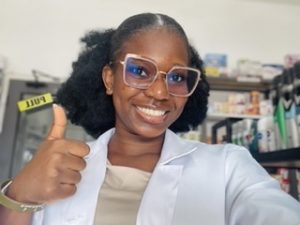
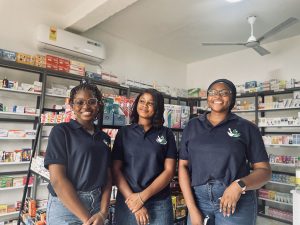
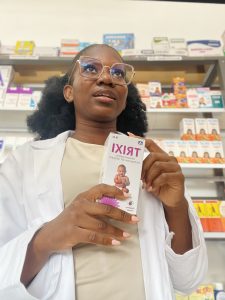 At Family Life Pharmacy, I’ve been getting a real hands-on feel for what goes into patient care. I spend a good part of my day talking with patients who are either picking up prescriptions after a hospital visit or preparing for one. I help make sure they’re getting the right medications for their needs. I also run a few basic tests (like malaria, typhoid, and blood pressure checks), which give more insight into what patients are dealing with based on the symptoms they share.
 I was always very interested in applying for a psychology-related internship. When I found out about the opportunity to intern in Vienna, I was immediately sold. Not only would it be really cool to be able to do an internship in a different country and explore the differences in psychology and therapy between the U.S. and Austria, but, since I am from the Netherlands, it was also a chance for me to be closer to home and family. Additionally, the opportunity to work at the trauma institute in the psychotherapy department aligns well with my interests and academic goals.
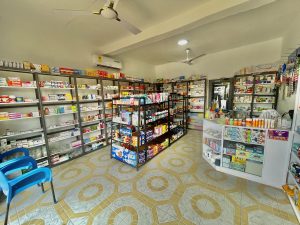 Although I was raised in Ghana, I wasn’t familiar with many local languages due to the country’s ethnic diversity and the dominance of English in schools. At the pharmacy, I was surprised to find that most clients communicated in “Fante” when describing medical conditions or requesting medications. Many drugs – even foreign ones – had local names, which made it challenging to assist them initially. However, with the support of the staff and my willingness to learn, I picked up the frequently used names over time. This experience deepened my appreciation for cultural and linguistic competence in healthcare settings.


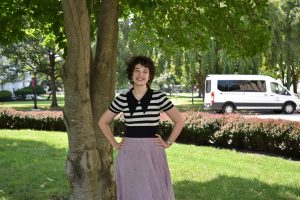
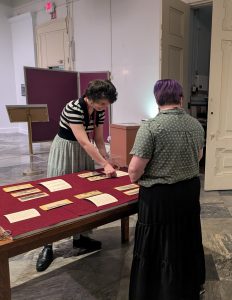
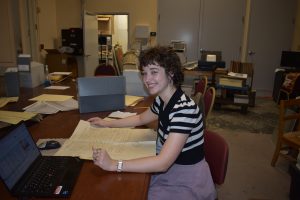 This internship was the culmination of a three-year project collecting and documenting information about sailors who worked for Stephen Girard, a merchant, banker, and philanthropist in early America, and the richest man in America when he died. Girard saved all of his papers, allowing us access to information that is usually lost. This project is exciting because it highlights individuals often left out of history. Sailors were often poor, lower-class, or people of color. These documents contained names, jobs, wages, physical descriptions, family details, literacy status, arrest records, clothing brought on board, and other small details that help create a picture of real people who lived and worked during this time. Founders Hall has maintained these records for a long time, but accessing the information about the sailors was challenging due to the large volume of papers and the extensive period covered. The project aimed to create a spreadsheet that organizes the crew members on each ship, along with any details about them in one place. This effort to make this information easier to access will help people better understand the maritime world of the late 18th and early 19th centuries.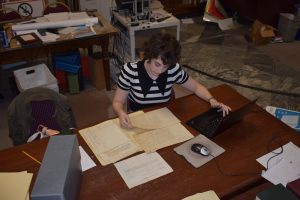
 What is something you have learned from your internship that you didn’t expect?
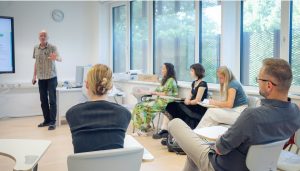 I am currently working as a research intern at the Trauma Institute located in the Psychotherapy science faculty at SFU in Vienna. So far, my internship has involved attending interesting conferences, such as The Nightmare of the Biomedical Approach to Mental Health in Slovenia, helping with literature research and reviews, and assisting with interesting projects. I was trained in an interviewing method to support ongoing research at the institute. Additionally, I have been able to visit and tour the SFU outpatient clinics, and I will be helping at and attending the upcoming World Congress of Psychotherapy hosted at SFU.