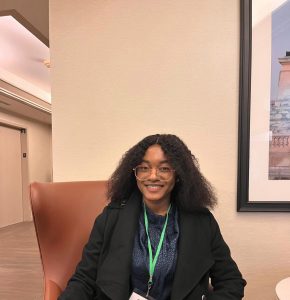
Researching Accessibility in Computer Science Education: Sandra Adu ‘27 


Name
Sandra Adu
Class Year: 2027
Major: Mathematics
Minor: Data Science

Internship Organization: Computer Science Department, Haverford College
Internship Title: Summer Research Intern
Location: Haverford, PA

What’s happening at your internship? We would love to hear what kind of work you are doing! 
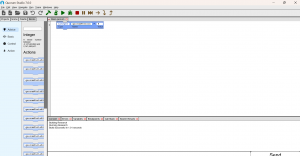
This summer, I am working with Professor John Dougherty at Haverford College on a research project that examines how to make introductory computer science courses more accessible to students with disabilities. We are testing the Quorum programming language, which was designed to be more inclusive, and observing how it performs in real classroom scenarios. My work has included background research, experimenting with Quorum myself, and tracking where it succeeds and where students might still encounter difficulties. I spend several days each week working independently and meet regularly with my supervisor to review progress and adjust the direction as needed.

Why did you apply for this internship?  
I wanted to experience what research actually looks like beyond what is taught in class, and to work on something that makes a meaningful difference for students. Accessibility has always been important to me, but I had not considered how it applies to computer science education until this opportunity arose. This project was a great fit because it combines technical problem-solving with thinking about how students with different needs can feel included in learning. 

Was there anything special about how you found this internship? 
I found this internship through a faculty recommendation, which made it feel very personal and intentional. My professor knew I cared about both mathematics and accessibility and thought this project aligned well with my interests. It felt encouraging to know someone saw my potential and connected me to meaningful work. 

What has been your favorite part of this internship? 

I have really enjoyed the independence this internship provides. There is something fulfilling about creating my own schedule, trying different approaches, and learning from mistakes along the way. At the same time, the regular check-ins with my supervisor have shown me how valuable it is to seek feedback early instead of trying to perfect everything on my own. 

What is something you have learned from your internship that you didn’t expect? 

I did not expect to realize how many small, often-overlooked challenges students can face when using even so-called “accessible” tools. I assumed that the software would resolve most of the problems, but many gaps remain. This experience has taught me to think more critically about what accessibility truly means — it is more than just adding a feature or two. 

Working remotely for the first time? What has that experience been like for you? 

Working partially remotely has been an adjustment, but it has taught me how to manage my time and create structure for myself. It can feel a little isolating at times, but I have learned to keep communication open with my supervisor and to stay disciplined with my schedule. I appreciate the flexibility it offers and the quiet focus it allows when I need to think deeply about the research.  

Can you talk about the skills you are learning and why they are important to you? 

I am learning how to break a research question into smaller, actionable steps and how to document findings clearly so others can build on them. I am also practicing how to critically evaluate tools and approaches, rather than just assuming they work as advertised. These skills feel important because they apply not only to research but also to any future project where problem-solving and clarity matter. 

What has been the biggest challenge you have faced at your internship? 

The biggest challenge has been dealing with uncertainty AND not knowing if the approach I am taking will lead to useful insights. Research does not always move in a straight line, and it can be hard to tell if I am on the right track. I am learning to be patient with the process and to view setbacks as part of the work, rather than as failures. 

Can you give us three adjectives and three nouns that describe your internship experience? 

Adjectives: eye-opening, thoughtful, independent 

Nouns: research, accessibility, growth  

What is most rewarding about your internship? 

Knowing that the work I am doing could help make it easier for future students to succeed in computer science is incredibly rewarding. Even though this project is just one small step, it feels meaningful to contribute to something that might open doors for others. 

Was this internship what you expected it to be? 

This internship turned out to be more open-ended and self-directed than I expected, which was both exciting and intimidating. I thought there would be a more rigid plan to follow, but instead I have had the opportunity to shape the project and take ownership of it. That has made it more meaningful than I imagined. 
Between the Synapse by Nirvaa Shah ‘27 


Name
: Nirvaa Shah
Class Year: 2027
Major: Biology
Minor: Philosophy

Internship Organization: Department of Neurosurgery, Perelman School of Medicine
Internship Title:  Research Assistant
Location: Philadelphia, PA

What’s happening at your internship? We would love to hear what kind of work you are doing! 

Through my pursuit of the sacred harmony of the brain and the automotive factory that lies within it, I have been gifted with the opportunity to work with neurosurgeons and medical/graduate students who have engaged themselves with the chasms of the brain. Through the unique marriage of both the basic, clinical, and translational aspects of medicine, in this lab, I have worked in projects such as the CCI repair project which aim to study the impact of organoids as cornerstones to the future of neurosurgery. By gaining experience with techniques such as brain sectioning, imaging, and brain analysis, I have been exposed to the specific pathways of research and the manner in which model animals such as rats can echo the inner workings of the human brain. 

Why did you apply for this internship? 

As a child, it had been a deep fascination of mine the way in which certain elements of the human body, like the heart, can be transplanted from an entirely different body and restore function to the host body as though nothing had ever been dysfunctional in the first place. Although I had previously considered the brain to be a domain that was ill-accustomed to the consequences of traumatic injuries, through exploring Dr. Han-Chiao Isaac Chen’s lab online, I was keen on altering and sharpening the lens in which I had formerly viewed the potentials of transplantations in neuroscience. Through reading about his work and efforts in optimizing neural interface technologies for the restoration of brain function, the potentials of neural rewiring seemed both holistic and vast.  

What is something you have learned that you didn’t expect? 

The intertwining of techniques such as surgical transplantations, immunohistochemistry, and other such disciplines, has cultivated an experience that not only focuses on the development of rudimentary lab skills but on the overall impact and significance of each step of the story. One of my most treasured lessons is that of brain sectioning, which is ironically both a therapeutic and challenging process. It involves the slicing of a brain covered in a frozen film, and the integration of arts in order to align a single slice onto a given slide. I would have never thought I would have to pick up the paintbrush after elementary school, but this specific activity allows for the sweet engagement of the inner child and the inner scientist. As part of my training, I have been learning how to become one with the brush and to align the slice as perfectly as possible for the successful analysis of the brain’s recovery upon the transplantation of an organoid.  

What is most rewarding about your internship? 

Every Monday our lab hosts a session in which we can communicate and learn about the narratives of each member, whether it be a medical student, a doctor, or a computer scientist and further. The diverse walks of life that are true to the journeys of each member invite me to explore the “why’s” and the “how’s” that depict their stories. As the Mondays pass by, I have learned that passion and effort are not on a steady timeline. They do not exist on a linear curve or on a scale defined by the terms of success. Instead, they may arise at any point and may dim through the passage of time, but their existence is all that matters. Through my time in this lab I hope to come out not solely learning but in being open to giving myself the time to grow and develop my passion into not simply a dream but a lifelong pursuit. 

Sophia Beckmann ’26: A Summer at SERC


Name: Sophia Beckmann
Class Year: 2026
Major: Biology

Internship OrganizationSmithsonian Environmental Research Center (SERC)
Internship Title:   Plant and Molecular Ecology Intern
LocationEdgewater, MD

What’s happening at your internship? We would love to hear what kind of work you are doing! 

First day out at GCReW in front of the CO2 lab

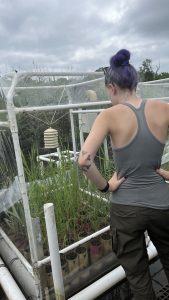
Right now, I just finished census, which is when we count and measure all the plants in the experiment I work on. It’s a very rigorous job, but everyone does their part to get it done. I was a team leader for the second year in a row, so I was responsible for keeping my team on task and checking on them in the Maryland heat. Before this, I have mostly been conducting fieldwork in the marsh looking at soil and leaf greenhouse gas emissions using a portable greenhouse gas analyzer. I also designed and deployed a decomposition experiment this summer using tea bags and bags of plant litter.

Why did you apply for this internship? 

Checking in sea level rise experiment chambers

SERC is at the center of climate change research, which is a passion close to my heart. SERC is also home to the Global Change Research Wetland (GCREW), which has long running global change experiments. The community and people at SERC is unlike any other, they’re extremely welcoming and hardworking which inspires me day after day.

Can you talk about the skills you are learning and why they are important to you? 

I am developing my R coding skills, method creation and adaptation, and scientific communication skills. R is a commonly used coding language which I use to process large datasets, and even though it’s challenging at times I now can see how applicable it can be to other situations. It also feels like a testament to my growth journey since I’ve been at SERC. In my internship, I keep finding myself adding on new things to my project, which requires methods so I can implement it. I have to push myself to think about feasibility, and materials and be prepared to change things when I get to the field if needed. It helps me keep the big picture in mind of what I am trying to do. Scientific communication is vital to climate change science. It needs to be shared with the public, and other scientists to inspire and educate.  

Can you give us three adjectives and three nouns that describe your internship experience? 

Three adjectives to describe my summer at SERC are insightful, reflective, and joyful.  

Three nouns to describe my summer at SERC are bonds/ friendships, marsh, and biogeochemistry.

FSH Technologies Summer Internships: Kripa Lamichhane ’26 


Name
: Kripa Lamichhane
Class Year: 2026
Major: Computer Science
Minor: Data Science

Internship OrganizationFSH Technologies
Internship Title:   Technical Product Manager
Location:  Philadelphia, PA

What’s happening at your internship? We would love to hear what kind of work you are doing! 

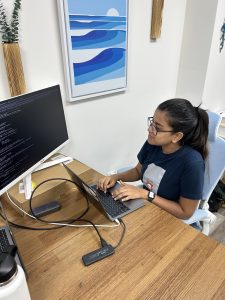
Looking back at my time at FSH Tech, I am incredibly grateful for the experience, knowledge and interpersonal skills that I have been able to acquire. Speaking of work, I’ve been part of a huge project with Pittsburgh Public Schools, where I interact directly with clients from Food Services to understand the challenges they face with their current software. My team and I have been dealing with them to develop tailored software solutions that are used by 52 schools and impact over 22,000 students’ nutrition and health. Beyond this, I contribute to technical responses for RFPs (Requests for Proposals) issued by government agencies which are real-world technical documents that outline solutions to public sector challenges. What I most enjoy is being part of a team that believes that software has to be for people before anything else.
Why did you apply for this internship? 

My goal was to break into Technical Product Management by solving meaningful, real-world problems that have an impact upon people’s lives.I am drawn to this internship opportunity as there are values within this company that consider people and sentiment seriously. It also offered me a chance to work at engineering-product-client boundary and learn how to build something that’s functional and technically proficient. I understood that this internship would allow me to grow along different axes and that’s why I came to this opportunity.
What has been your favorite part of this internship? 

Getting to see how my work can make an impact has been most rewarding whether that’s developing systems that serve thousands of students or improving internal operations. I also routinely receive constructive criticism from PMs and advisors, which works to accelerate not only my professional but also personal growth. What really sets this internship apart is the high standard to learn fast and how elevated my manager holds interns. I’ve been given ownership, with confidence, and with a look behind the curtain at both the operations and technical sides of the company.

Can you give us three adjectives and three nouns that describe your internship experience? 

Adjectives: Impactful, Empathetic, Fast-paced  

Nouns: Ownership, Collaboration, Hockey-stick Growth

Wilhelmina Lawher-Lawher ’28 Interns as Summer Library Resident with LITS at Bryn Mawr 


Name: Wilhelmina Lawher-Lawher
Class Year: 2028

Internship Organization: Library and Technology Information Services (LITS),
Bryn Mawr College
Internship Title:   Summer Library Resident
Location: Bryn Mawr, PA

What’s happening at your internship? We would love to hear what kind of work you are doing!  

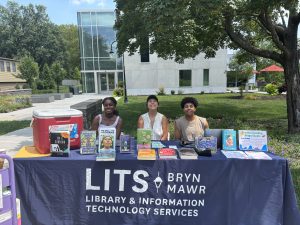
From left – I, Sunny(’25) & Jess(’25) at our second Books on Wheels event as part of our summer reading program

This summer, I’m one of six Summer Library Residents working full-time with the Library and Technology Information Services (LITS). This program is designed to allow students to learn more about the field of library and information science by gaining hands-on job training and working experience with librarians. No two days are the same, and that’s what makes it exciting. I’ve been rotating through departments and learning about different aspects of library work, from front-facing public services to technical and behind-the-scenes operations. Some of my day-to-day responsibilities include assisting patrons at the Canaday and Carpenter circulation desks, shelving books, labeling and processing new materials, inventorying collections, and helping with large-scale measuring and shifting projects. These tasks have shown me how much coordination and attention to detail are required to maintain a functional and accessible library. Beyond the daily operations, I’m working on two larger, collaborative projects with the other residents. First, I’m working with two other residents to design and launch an info kiosk in Canaday Library. We created informative trifold brochures covering topics like how to find a book and using Tripod, where to find different study spaces, how to use EZBorrow/ILL, and how to connect with research and subject librarians, among others. In creating this info kiosk, we thought carefully about the location of the kiosk and how to make the information visually engaging and accessible. We hope the info kiosk will make a real difference in how all students feel and interact with the library. As an extension of LITS’ Summer Reading Program, we designed and launched the Summer Reading Bingo Game, as well as hosted two Books on Wheels events, all of which were open to students, faculty, staff, and alumni/ae, to encourage participation and reading. The bingo sheets we created had fun prompts like “read a book in a swimsuit” or “read a book by a non-American author.” Participants who complete a row win prizes. It’s been so satisfying to see people across the Bryn Mawr community engage with our Bingo game, as we see it as a small but joyful way to build reading culture.

Why did you apply for this internship?

I’ve always viewed libraries as more than just study spaces. For me, they’ve been places of community, curiosity, and discovery. As someone who values accessibility and educational equity, I wanted to explore how libraries serve not just individuals but entire communities. When I saw the Library Summer Residency posting, I thought of it as an opportunity to both gain work experience and learn more about the field of library and information science. As a Bryn Mawr student, I also appreciated that this internship would let me see the inner workings of the very libraries available to me. This program has added a new layer of appreciation for the spaces that have supported my academic journey so far.

What has been your favorite part of this internship?

 Hands down, working on the info kiosk project has been my favorite part. It allowed me to be creative and practical at the same time. My group was responsible for identifying gaps in knowledge that new students might have about library resources, then translating that into approachable and visually friendly brochures. We spent time writing, designing, choosing colors and layouts, and mapping out the kiosk’s placement to make it as accessible and welcoming as possible. We contemplated questions like: Where do students naturally pause in the library? What kind of language feels inviting instead of intimidating? The whole process, from research to design to implementation, felt like a real-world application of user-centered design, something I didn’t expect to be doing in a library setting but thoroughly enjoyed. 

What is something you have learned from your internship that you didn’t expect? 

I didn’t expect to learn just how many different career paths exist within Library and Information Science. Through weekly discussions, I’ve gotten to speak with archivists, catalogers, digital scholarship specialists, research librarians, and even with Chris Barth, our new CIO/Director of Libraries. What surprised me the most is how interdisciplinary libraries are today. I must admit that no two people have the same background or career path. I used to think of libraries primarily as solely book-centered spaces, but this internship has shown me that they’re evolving into hubs for digital access, activism, and scholarly communication. Additionally, this internship has helped me strengthen both technical and interpersonal skills in ways I didn’t anticipate. For example: Customer service: Working the circulation desk taught me how to assist patrons efficiently and kindly. Attention to detail: Whether it’s labeling materials accurately or shelving in precise call number order, this work has enhanced my focus and patience. Project planning and collaboration: From brainstorming and designing the info kiosk to organizing the Summer Reading Bingo program, I’ve had the chance to collaborate with my colleagues to plan and execute our projects as well as learn to work independently when necessary. Adaptability: Tasks and priorities shift daily, and being able to adapt and remain flexible has been an important skill I have improved on. These skills have taught me how to work in collaborative, service-driven environments, which I believe will benefit me in future endeavors. I encourage every member of the Bryn Mawr College community, from students, staff, faculty, to alumnae, to make full use of the library. Some resources and services often go unnoticed, but once you start exploring, you’ll be amazed by how much easier, richer, and more fulfilling your academic and even personal journey can become. Whether you need research support, a quiet study space, reading recommendations, or help with interlibrary loans, Bryn Mawr College’s libraries are here for you. 

Agatha Yoo ’26  Explores Legal Learning in Conshohocken 

Name: Agatha Yoo
Class Year: 2026
Major: Political Science

Internship OrganizationGroen Strokoff O’Neill LLC
Internship Title:   Legal Intern
LocationConshohocken, PA

What’s happening at your internship? We would love to hear what kind of work you are doing!  

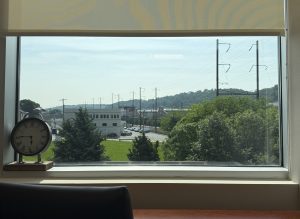
My office view!

As a legal intern, the tasks assigned to me were varied depending on which attorney I was working under, and the type of case they were working on. A majority of my tasks required me to write legal documents and letters such as petitions, demands, and complaints. In addition to these formal documents, I was tasked with composing memos that concisely summarized medical reports and depositions.

Why did you apply for this internship?  

As a prospective law student, I felt that I needed to gain experience before committing to applying for law school. Groen Strokoff O’Neill is a firm comprised of attorneys and paralegals who have proven themselves through not only their accomplishments, but their dedication to their local community. My supervisor in particular strives to serve his community through offering services pro bono. These characteristics are what I not only aspire to work amongst but strive to uphold as I continue in the legal field.

What has been the biggest challenge you have faced at your internship?  

The biggest challenge I faced at my internship was the fact that I was the only intern. It felt intimidating to be working with professionals in the field, and at first, I admit to feeling uneasy with my own capabilities. However, I am here to learn and grow, which I definitely have accomplished. Although uncomfortable the first few days, being the only intern has allowed me to fully immerse myself in the reality of working in the legal field. I’ve also been granted a variety of tasks due to being the only intern, allowing me to experience even more than I could have imagined! 

What is most rewarding about your internship?  

The most rewarding part about my internship is being able to see my work in open case files. To be able to see my work being used by the attorneys is exciting. It means that my work has actively helped individuals rightfully have a strong voice in the legal system. I aim to continue advocating for my community and beyond as I go forward. 

Archaeology in Austria: My work with the Vienna Institute of Archaeological Science by Carey Klopfenstein ‘26 


Name: Carey Klopfenstein
Class Year: 2026
Major: Anthropology
Minor: Museum Studies, Classical and Near Eastern Archaeology

Internship Organization: Vienna Institute of Archaeological Science
Internship Title:   Intern
LocationVienna, Austria

What’s happening at your internship? We would love to hear what kind of work you are doing! 

How I set up bones for taking morphometric analysis photos

I’ve been very lucky to do a variety of things at my internship. With one of my supervisors, Dr. Magdalena Blanz, I mainly worked with goose bones from the site of Mühlacker near the ancient Roman city of Carnuntum. I looked through boxes full of bones from the site and identified the tarsometatarsi and humeri of greylag geese. I then took photos of the tarsometatarsi for morphometric analysis. I also worked on cleaning and preparing samples of bone from people from Bronze Age Austria for isotope analysis. During the second part of my work week, I worked with Dr. Birgit Bühler. We worked with metal artifacts from the Avar culture, an early Medieval culture originally from eastern Central Asia that settled in parts of Central Europe. I was privileged enough to be able to see artifacts from the excavations at Zillingtal which have not yet been published. I started out by presorting the artifacts based on the illustrations done at the excavation in the 1980s and learning more about early Medieval metalworking techniques, and then we looked through some of the most promising boxes to check their preservation and which were most promising for analysis.

Why did you apply for this internship? 

The site of Carnuntum including reconstructed Roman buildings

Honestly, a big part of the appeal for me was that I would find out whether or not I got in before the deadlines for other summer internship applications, so I wouldn’t have to go through the exhausting process of applying for all the places I was interested in at the same time. I had applied for the IES Vienna Internship funding last summer and didn’t get in, so I wasn’t very hopeful, but I figured if I didn’t apply again I would always regret it and wonder what if. I chose to apply for Vienna specifically because I’m pursuing Museum Studies and there are so many different museums in the city (over 100!) My focus within my major is Archaeological Anthropology, so when I found out that VIAS was willing to interview me I was thrilled.

Was there anything special about how you found this internship?  

The little goose figurine given to me by my supervisor Magdalena Blanz

Because I was doing an IES internship program, I worked with Nika Protic at IES to find an internship to do with the program. Nika was incredibly kind and helpful every step of the way. I wasn’t aware of VIAS before she mentioned them to me.

What has been your favorite part of this internship? 

There were so many parts of my internship that I loved that it’s hard to choose, but I have to say my favorite part has been the people. I’ve tried to take every opportunity I could to meet people in Vienna’s community of archaeological scholars and everyone has been so warm and welcoming. All of my coworkers were such interesting people. Magdalena’s office is filled with a lush forest of plants and she collects little animal figurines. She’s also part of a brass quintet. Birgit does horseback archery, learned to read Ogham, the ancient Irish script, and travels to watch Orcas. I had so many wonderful conversations both about archaeology and about people’s lives. On my last day, Magdalena gave me a little goose figurine to commemorate my work on the goose bones and I was really touched.     

What is something you have learned from your internship that you didn’t expect?  

I wasn’t expecting just how long Austria has been a diverse place and the role of cultural identity. Even before the Roman conquest, Iron Age Austrians had access to far reaching trade routes. Roman sites such as Carnuntum and Vindobona (where Vienna now stands) were places of interactions between Romans and Celtic peoples. Under Avar rule, genetic evidence suggests that groups of people of various European groups adopted Avar cultural practices. On the other end the remains of a woman have been found which genetic analysis indicates that her ancestry was from modern day Mongolia, but her dress and burial indicate that presented, and perhaps identified, herself, with the culture of the Roman province of Pannonia. I didn’t know that much about ancient and Medieval Austria before this summer, and I was fascinated by the rich history of different cultures and their interactions here. Also, there is a type of Avar earring called a Bommel, a German word for the pompoms on top of winter hats, which I thought was very cute. 

Can you talk about the skills you are learning and why they are important to you? 

I wasn’t expecting just how long Austria has been a diverse place and the role of cultural identity. Even before the Roman conquest, Iron Age Austrians had access to far reaching trade routes. Roman sites such as Carnuntum and Vindobona (where Vienna now stands) were places of interactions between Romans and Celtic peoples. Under Avar rule, genetic evidence suggests that groups of people of various European groups adopted Avar cultural practices. On the other end the remains of a woman have been found which genetic analysis indicates that her ancestry was from modern day Mongolia, but her dress and burial indicate that presented, and perhaps identified, herself, with the culture of the Roman province of Pannonia. I didn’t know that much about ancient and Medieval Austria before this summer, and I was fascinated by the rich history of different cultures and their interactions here. Also, there is a type of Avar earring called a Bommel, a German word for the pompoms on top of winter hats, which I thought was very cute. 

Can you give us three adjectives and three nouns that describe your internship experience? 

Enriching, welcoming, enlightening  

Practice, gecrets (geese secrets),  bommels  

What is most rewarding about your internship?  

My supervisors talked a lot about how much the stuff I was doing was helping them, and I was really happy to be helping them out. I also found it incredibly cool to be face to face and handling artifacts. Unfortunately, because they’re unpublished, I can’t include images of the Avar metal artifacts, but some of them were incredibly beautiful and well preserved, and I could hardly believe that I was right there holding them. 

Was the internship what you expected it to be? 

I would say that this internship exceeded my expectations. I was excited going into it, but my expectations were vague and I was really happy with how it turned out. 

Cass Fischer Murphy ’26 Explores Immigration Law in Philadelphia


Name: Cass Fischer Murphy
Class Year: 2026
Major: Spanish
Minor: Gender and Sexuality Studies, Philosophy

Internship Organization: Esperanza Immigration Legal Services
Internship Title:   Legal Intern
LocationPhiladelphia, PA

What’s happening at your internship? We would love to hear what kind of work you are doing!  

 I work at Esperanza Immigration Legal Services, the small legal department of the nonprofit Esperanza, which serves low-income immigrant communities in Philadelphia. Due to its limited capacity for representation (there is only one attorney), its legal services primarily comprise work outside of the courtroom. A large amount of this work involves assisting people with their citizenship applications. Though a relatively lower-risk immigration status to be in, the process is still difficult for our clients for a variety of reasons, be they related to finances, language, age, or literacy. Completing the application for naturalization can involve assisting clients with their taxes, medical records, among other bureaucratic things. Naturalization clients are very rewarding to work with, as citizenship represents a big step for them and is easy to achieve with the right advocacy. Two of my most happy moments at work have been interpreting for a woman who passed her citizenship interview, and co-teaching a citizenship interview test prep class. The second-most common kind of petition I have dealt with is asylum– a much riskier and harder to access legal protection. Eligibility for asylum is multi-tiered and fairly specific, and highly influenced by contemporary politics. Constructing a claim involves a balance of personal testimony, country conditions, and legal analysis. Filing pro se asylum applications has illuminated to me the vast failures of the US immigration system. For example, the fact that the executive branch was legally able to cancel Temporary Protected Status for 350,000 Venezuelan asylum seekers in the US without advance notice highlights the chaotic and unstable nature of the system as a whole. It is very disheartening to not be able to give an answer to asylum seekers when they ask about their futures– nothing is certain anymore. Yet, helping someone file their application makes a huge difference for them, even if their chances of it being granted are slim. It isn’t up to me to decide what work is “worth it” or not– though the system makes it harder and harder to help people, it means that the need for immigration advocacy is even more urgent.

Why did you apply for this internship?  

I’m interested in pursuing immigration law as a potential career, and for that reason I decided to intern at an immigration nonprofit. I want to work in immigration law because it’s one of the most pressing issues of our time, and because it allows me to draw on my studies in Latin American history.     

What is something you have learned from your internship that you didn’t expect? 

My experiences with immigration law have shown me the real-life effects of the historical events I have studied here at Bryn Mawr. Through my studies in Latin American history, I understand that a lot of the turmoil plaguing Latin America today is a direct consequence of U.S. interventions and extractivist policy dating from the 20th century to today. The U.S. has made itself rich from Latin America, and then it exploits and dehumanizes the people that it has displaced. That’s what makes recent events all the more galling. Yet, I’m glad that I am able to use my studies in a way that directly helps people. 

Can you talk about the skills you learned and why they are important to you? 

For anyone interested in helping asylum seekers, many nonprofits will have regular clinics where you can help people apply for asylum, both remote and in person. Philly has a lot of great organizations– I would recommend looking at the member groups of the Pennsylvania Immigration Coalition to start! 

Updating an Art History Syllabus: Ellie Leonardo ‘26

Name: Ellie Leonardo
Class Year: 2026
Major: History

Internship Organization: Bryn Mawr College
Internship Title:  Research Assistant
Location: Bryn Mawr, PA

What’s happening at your internship? We would love to hear what kind of work you are doing!  

I’ve been working on updating the syllabus for an art history course being taught in the fall. The course is HART B310 Topics in Medieval Art: Kings, Caliphs, and Emperors: Images of Authority. Right now the main thing I’ve been doing is reading the current syllabus as well as some potential new material and making suggestions on what we should include. 

Why did you apply for this internship?  

I applied for this internship because I wanted to get research experience to help prepare for my thesis. It is really difficult to get this kind of experience in the humanities so I feel really lucky to get to work with Professor Walker. The class also has high overlap with my research interests so it has been super helpful when thinking about potential topics for my thesis!  

What has been your favorite part of this internship? 

Getting to do a job that I actually enjoy and am interested in. I think a lot of young people have this problem where you can never get to do work that has any alignment with your long term interests and for me this makes work really exhausting. Working on this has been great because often the material I was reading was really interesting to me.  

Can you give us three adjectives and three nouns that describe your internship experience? 

Adjectives: Personal, In Flux, Perspective-Changing  

Nouns: Care, Connection, Compound 

A Summer Exploring Dark Stars by Manolya Yatman ‘26 

Name: Manolya Yatman
Class Year: 2026
Major: Astrophysics
Minor: Applied Mathematics

Internship OrganizationKeck Northeast Astronomy Consortium, Colgate University
Internship Title:   Research Fellow
LocationHamilton, NY

What’s happening at your internship? We would love to hear what kind of work you are doing! 

Photo of the Ring Nebula my friend Halle and I took while doing some recreational observing!

This summer, I am working as a Research Fellow in the Physics and Astronomy Department at Colgate University. I’m part of the dark matter research group, specifically working on Dark Stars–stars that are theorized to have formed in the early universe through dark matter annihilation rather than nuclear fusion (the same process that powers our Sun). Currently, I am developing Python codes that allow us to identify Dark Star candidates using data from the James Webb Space Telescope!
Why did you apply for this internship? 

Throughout my time in college, I’ve been looking for opportunities each summer to do research in various areas of astrophysics. This year, I will be applying to graduate school, so getting experience in different areas gives me a better idea of what kind of research I want to work on in the future! I was also hoping that I would get some ideas for my Senior Thesis, and even if I end up working on something else, reading/writing scientific papers and getting experience with programming is super helpful for preparation for both my thesis and for graduate school.

Was there anything special about how you found this internship? 

Research Dinner with the summer cohort (credit: Jason Qiu)

Yes! This fellowship is through the Keck Northeast Astronomy Consortium (KNAC), which is made up of eight small liberal arts colleges and universities, aiming to promote astronomy research. Bryn Mawr students can apply through our bi-co relationship with Haverford, which is a KNAC member. I found out about it after attending the KNAC Symposium last fall, where some of my Haverford friends presented their research. 

What has been your favorite part of this internship?

My favorite part of the internship has definitely been working on a fringe idea, investigating an unproven theory with newly released data. Through this research, I’ve gotten a much better understanding of dark matter and how it can interact with baryonic (regular) matter, as well as the process of testing scientific theories. I also love our weekly group meetings, where I get to learn about the projects my groupmates are working on; the scientific exchange and conversations is super exciting and reminds me why I want to pursue a career in astrophysics. Outside the lab, I’ve been pleasantly surprised by how vibrant the summer research community is here, even in such a rural area. I was initially nervous about making friends, but I’ve connected with students across departments. Whether it’s beach volleyball at the sand courts, late-night movies in the planetarium, or swimming in Lake Moraine, the off-hours have definitely been a great highlight of the experience.