
Name: Jacquelyn LeBlang
Class Year: 2028
Major: Prospective Political Science, French and Francophone Studies
Internship Organization: Mural Arts Philadelphia
Internship Title: Restorative Justice Intern
Location: Philadelphia, PA
What’s happening at your internship? We would love to hear what kind of work you are doing!
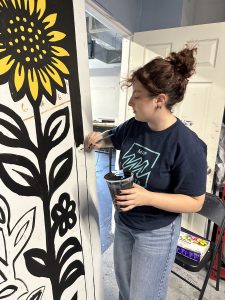
Painting a mural in preparation for a paint event at Barnes on the Block
At Mural Arts, every day is something different. I currently split my time between their main office and their Restorative Justice office. At the Restorative Justice office, I primarily work on project management with the department’s project manager. We work jointly on filling out information such as the artist selection process, to the project goals. I have also been working on categorizing artwork from those who are currently incarcerated at SCI Phoenix. Mural Arts has a partnership program that aids incarcerated artists through supporting their art as well as giving them employment at the prison. Just last week, there was a reception at the Barnes Foundation for the opening of the exhibit Where I’m From, which displays art by the men at SCI Phoenix as well as art from justice-impacted individuals part of Mural Arts’ Rec Crew.
At the main office, I have been able to work with a variety of different departments. I have supported the Mural Arts Institute in hosting a workshop at Drexel University. I have also worked with Mural Operations in inputting information for site selection. However, I primarily work with the office manager to help support her in her daily tasks.
Why did you apply for this internship?
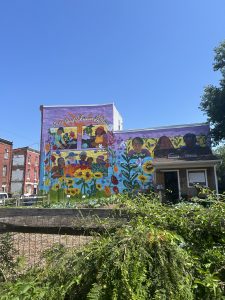
A mural dedication for Sanctuary Farm Philadelphia in Sharswood
After almost a year of living just outside Philadelphia, I was intrigued by the numerous mural art pieces I saw throughout the city. In doing some further research about prominent art organizations in Philadelphia, I found Mural Arts. By perusing their website, I found that a lot of their work was deeply rooted in social justice initiatives, and I was fascinated by the intersection between art and restorative justice. I wanted to learn more about how art can ignite social change and help justice-impacted individuals and those in reentry.
What has been your favorite part of this internship?
My favorite part of this internship has been all of the people I have been able to meet and all of the events that I have been able to attend. A year ago, I would have never imagined that I would get the opportunities that I have had at Mural Arts. Even individuals who work at Mural Arts have told me that they’ve also been able to have experiences that they never thought they would have before working at this organization. So far, I have been able to attend amazing events ranging from mural dedications to a private showing in the Barnes Foundation.
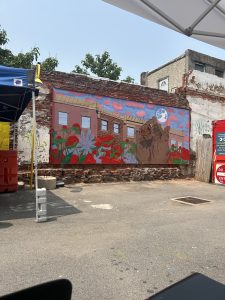
Mural dedication at the Kensington Love Lot for an interchangeable mural. The Love Lot was created in partnership with Prevention Point Philadelphia with the goal of harm reduction
During my internship, I have been lucky enough to have the opportunity to speak with numerous talented artists, Mural Arts Executive Director and Founder Jane Golden, members of Congress, and many other notable individuals. Through long-time employees of the organization, I have also been able to learn so much about Mural Arts’ extensive history. I have heard first-hand accounts varying from Mural Arts’ origins as the Philadelphia Anti-Graffiti Network to when Mural Arts hosted Prince Charles and Camilla during their 2007 visit to Philadelphia. However, the most rewarding stories to hear have been those whose lives have changed for the better through their work with Mural Arts.
What is most rewarding about your internship?
What has been most rewarding about this internship is how many lives have been positively impacted by this organization. Many individuals who have been participants in Mural Arts’ social justice programs have been hired for long-term positions within the organization. For example, their program, called Color Me Back, has provided same-day work and pay for vulnerable communities, as well as giving them access to career and recovery services. Another example is from the Restorative Justice program, which has provided high post-program employment rates and recidivism rates that are much lower than the national average.