Nora Hugo ’26 Interns with Mother & Child Education Center 

Name: Nora Hugo
Class Year: 2026
Major: Sociology
Minor: Spanish 

Internship Organization: Mother & Child Education Center
Internship Title:  Summer Intern
Location: Portland, OR

What’s happening at your internship? We would love to hear what kind of work you are doing!  

Mother & Child aims to support all families with children under 5 years that come to us. From diapers and wipes to maternity clothes to carseats, we receive and give out donated items, hoping to fill in the gaps for families who may not be able to afford these needs. Being a no-barrier organization means that, as long as we have the items they need, we are able to materially support anyone who comes to our door, regardless of their situation. More than the supplies we give out, we support clients with empathy and knowledge–aiming to give them information about local resources along with skills to help them raise their children. As an intern, I work alongside a small team, learning from them every day about the ways we can support our clients.  

Why did you apply for this internship? 

I applied for this internship because I wanted to do work that felt meaningful, and day-to-day tasks that felt fulfilling. I wanted to learn more about the Portland community and its needs, and I wanted to work with families and children. This internship has provided me with opportunities to meet these goals and learn more about what kind of work I want to do. Not only do I think the mission of Mother & Child is important, but I enjoy the work that I do every day and directly see its impact on clients.

Why did you apply for this internship?  

I applied for this internship because I wanted to do work that felt meaningful, and day-to-day tasks that felt fulfilling. I wanted to learn more about the Portland community and its needs, and I wanted to work with families and children. This internship has provided me with opportunities to meet these goals and learn more about what kind of work I want to do. Not only do I think the mission of Mother & Child is important, but I enjoy the work that I do every day and directly see its impact on clients.  

What has been the biggest challenge you have faced at your internship? 

We try to schedule appointments primarily, but we do receive a lot of walk-ins as well. This means that we never know what a day is going to look like, and I have had to learn to balance my time very intentionally. Choosing which projects to work on during downtime, managing a rush where we have clients walking in and phones ringing, and knowing when to ask for help and when to figure something out myself has been a continual challenge–but one that I have been able to meet so far. Having to think about the way I use my time is an important skill, and one that I continually work on–at my internship and in the rest of my life. 

What is most rewarding about your internship? 

Mother & Child is a nonprofit organization, funded by grants and stocked with donations. The nature of being completely donation-based is that often, we do not have the exact items that people are looking for. So, I get excited when someone wheels in a new stroller for donation, or when we receive hygiene items that we have in stock less often, or find the perfect toy for a kid who comes in with their parent. Those moments when we don’t have certain items make me appreciate them even more when we do have them, and being able to give someone an item that is hard to find feels so rewarding, even more so when I realize how much stress is alleviated just by not having to look for an item elsewhere. 
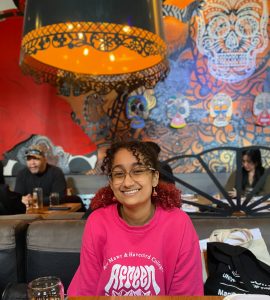
Jiya Iyer ‘27 Interns at Drexel College of Medicine 


Name
: Jiyer Iyer
Class Year: 2027
Major: Biology
Minor: Spanish
 
Internship Organization: Drexel University College of Medicine
Internship Title:   Drexel Summer Undergraduate Research Fellowship, SURF Fellow
Location: Philadelphia, PA

What’s happening at your internship? We would love to hear what kind of work you are doing!  

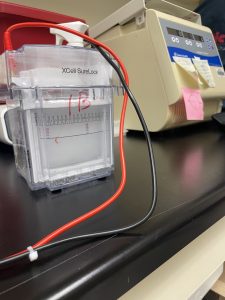
Western blotting

This summer, I have been interning at Drexel College of Medicine through the Drexel Summer Undergraduate Fellowship program in a lab studying Parkinson’s disease. I have learned so much about scientific research, including techniques for cell culture, quantifying protein expression and western blotting. My day-to-day work includes running experiments to study expression of cell survival proteins in a Parkinson’s cell model. I have also been shadowing Drexel grad students to gain exposure to other fields and techniques of lab research. It’s been really cool seeing real-life applications of topics that I learned about in my biology classes and translating previous knowledge I’ve gained into the work that I’m currently doing.

Why did you apply for this internship?  

I applied for this internship because I’m really interested in doing research as a career, and I wanted to gain more experience in a lab. I’m particularly interested in neurology and immunology research, which is why I was so excited to be matched with Dr. Sandhya Kortagere’s lab that does neuroimmunology work.  

What has been your favorite part of the internship? 

So far, aside from the really cool science I’ve been doing, my favorite part of this internship has been the people I’ve gotten to work with. The grad students in my lab are some of the smartest and coolest people I’ve ever met, and they’ve really solidified my desire to pursue a graduate degree in science as well! I know the connections I’ve made here will be so beneficial to me in the future, and I’m so grateful to have learned from such wonderful humans. 

Can you give us three adjectives and three nouns that describe your internship experience? 

Adjectives: interesting, challenging, exciting  

Nouns: gloves, gels, cells

Priita Peterson ’26 interns at Innovation Academy in Germany’s “Green City” 


Name
: Priita Peterson
Class Year: 2026
Major: Environmental Studies
Minor: Spanish

Internship Organization: Innovation Academy e.V.
Internship Title:   Summer Intern 
Location: Freiburg, Germany
 
What’s happening at your internship? We would love to hear what kind of work you are doing!  

Test run of in-progress climate adaptation tour

I am working at Innovation Academy e.V, a small non-profit that runs sustainability focused tours in Freiburg and other cities in Europe for students and professionals and organizes various other projects around sustainability education. My first project was to research and create a presentation on waste management policy in the E.U. as a part of a waste management tour. This was added onto their presentation about Freiburg’s waste management which I also updated and translated to English. My main project has been to develop a tour about climate adaptation in Freiburg for high school age students. The city can serve as a great example for heat and rainwater adaptation, especially with the city’s implementation of the sponge city concept. For this tour I have researched the city’s policy on climate adaptation and the many locations where it has been implemented. I have also developed a route, quiz questions, and activities for the tour. Along with this project, I have been preparing materials for tours, sometimes also going on the tours and taking photos/videos as well as running the organization’s instagram.

Why did you apply for this internship?  

A sea of Frelo bikes

Having taken classes from both Victor Donnay and Carol Hager – both of whom organize the 360 that goes to Freiburg, Germany – I had heard about the Innovation Academy Sustainability Internships multiple times and therefore decided to look into it. As an environmental studies major I am interested in urban issues of sustainability and environmental justice and was fascinated by the “Green City” of Freiburg. I was interested in experiencing it for myself and learning about how it had earned that title and maybe take ideas back to the US with me.

What has been the biggest challenge you have faced at your internship? 

My biggest challenge at this internship has been working an office job for the first time that is primarily in front of a computer. This is both an adjustment from my past work environments as well as an adjustment from US work culture to German work culture. A lot of my work is independent and without strict deadlines or stepping stones. Therefore, it requires much more initiative, time management, and communication. It has been a challenge for me to not be scared to ask questions. I am working to be more independent and organized with my projects while still being communicative about the process. In terms of German work culture, I am loving the separation of work and personal life.  

What has been your favorite part of this internship?  

“Sponge city” model which is used as a stop on the climate adaptation tour

My favorite part of this internship has been going on tours and meeting students from all over the US who all have different backgrounds and interests under the topic of sustainability and environmental studies. By talking to them and hearing them compare Freiburg to their hometowns, I have learned about not only Germany, but also about cities in the US. It was especially fascinating to hear about what the city of Gainesville, Florida is doing around climate mitigation and resilience. These tours have also opened my eyes to innovative city planning, especially in the area of transportation, as well as food sustainability and waste management. These topics that I am learning about and researching about become part of my lived experience in Freiburg as I now try to bike everywhere and be more conscious of my own waste to try to re-use products and share food as much as I can. 

The Sailor Project at Girard College with Vivian Bloom ‘26 


Name
: Vivian Bloom
Class Year: 2026
Major:  English
Minor: Spanish

Internship Organization: Founder’s Hall at Girard College
Internship Title:   Collections Intern
Location: Philadelphia, PA
 
What’s happening at your internship? We would love to hear what kind of work you are doing!  

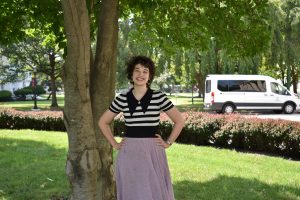
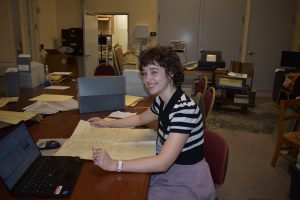
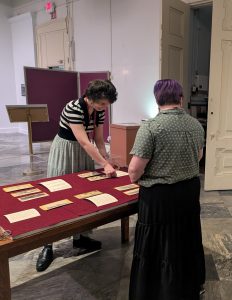
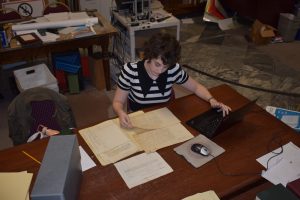
This internship was the culmination of a three-year project collecting and documenting information about sailors who worked for Stephen Girard, a merchant, banker, and philanthropist in early America, and the richest man in America when he died. Girard saved all of his papers, allowing us access to information that is usually lost. This project is exciting because it highlights individuals often left out of history. Sailors were often poor, lower-class, or people of color. These documents contained names, jobs, wages, physical descriptions, family details, literacy status, arrest records, clothing brought on board, and other small details that help create a picture of real people who lived and worked during this time. Founders Hall has maintained these records for a long time, but accessing the information about the sailors was challenging due to the large volume of papers and the extensive period covered. The project aimed to create a spreadsheet that organizes the crew members on each ship, along with any details about them in one place. This effort to make this information easier to access will help people better understand the maritime world of the late 18th and early 19th centuries.
 
Why did you apply for this internship?  

Many people wonder why as an English major I applied for an internship focused on history. I approach English with a historical lens. I am particularly interested in how literature and media shape our understanding of history and affect the historical record. Plus, I just love old things. My favorite spot on campus is special collections, so when I learned about the internship at Founder’s Hall that involves working with historical documents, I was eager to apply. This internship also caught my attention because it focuses on the maritime world, which I developed an interest in when I took a course on Moby-Dick last semester. I am particularly fascinated by the social, class, and racial dynamics on ships and working with records of real sailors lets me explore those interests further.
 
What has been your favorite part of this internship? 

I love puzzles and this project felt like one big historical puzzle. We had to review documents with incomplete information and compile them to gain a clearer understanding of the bigger picture. For example, one document listed names and jobs, while another showed wages. Our job was to connect the information from both. Sometimes, we encountered different spellings of the same name, and we had to determine if they referred to the same person. It was sometimes tough to figure out, but it was so satisfying when the pieces fit together.  

What is something you have learned from your internship that you didn’t expect? 

I discovered that there is such strong network of relationships between museums in Philadelphia. We had several opportunities to visit other museums, engage with their archivists, all thanks to connections within the museum community. There was one day when we were unable to work from Founder’s Hall due to electrical work, but thanks to my supervisor’s connections, we were able to relocate our documents and continue working at the American Philosophical Society for the day. There is such a spirit of collaboration and cooperation between institutes.