Name: Theresah Tawiah
Class Year: 2027
Major: History
Minor: Biology, Health Studies
Internship Organization: Akropong Government Polyclinic
Internship Title: Public Health and Epidemiology Intern
Location: Ghana
What’s happening at your internship? We would love to hear what kind of work you are doing!

Community outreach at the Boko Catholic School about menstrual hygiene
At the Akropong Government Polyclinic, I’m gaining hands-on experience in vaccine distribution, disease control, and health monitoring. I’ve learned how vaccines are sourced globally through the Global Alliance for Vaccines and Immunization (GAVI), stored at controlled temperatures (+2°C to +8°C), and transported through Ghana’s health system, from national to sub-district levels via cold rooms and cold boxes. I’ve also seen how damaged vaccines are carefully disposed of to prevent contamination, with EPA and NDA oversight.
Using digital tools like DHIMS2, with the help of the team, I track vaccine administration, while immunization monitor charts help me visualize campaign progress. I am working under the guidance of Mr. Marfo, the District Disease Control Officer for Atwima Nwabiagya North.
In the disease control area, I’ve learned about TPT (Tuberculosis Preventive Therapy), which is used to protect individuals exposed to TB from developing active disease.
I’ve also begun learning a bit about nutrition, including how accurate assessments play a key role in monitoring child health and avoiding misdiagnoses.
I had the opportunity to lead a community health outreach about Menstrual hygiene at the Boko Catholic school, where I spoke to about 90 girls and educated them on the menstrual cycle and how to keep themselves healthy and clean during menstruation.
Why did you apply for this internship?

A picture with the Atwima Nwabiagya North Disease control officer
I chose this internship because it brings together my passion for public health, my academic background, and my personal connection to the Akropong community. Having previously worked at the Akropong Government Polyclinic around the COVID-19 pandemic, I saw firsthand how clear communication and local trust can shape health outcomes. That experience sparked my interest in epidemiology and disease prevention. Returning now as an intern allows me to deepen my practical knowledge of health systems, strengthen my community engagement skills, and contribute meaningfully to the place that first inspired my public health journey.
Was there anything special about how you found this internship?
Yes, this internship is special to me because it’s not something I just stumbled upon. After connecting with the Akropong Government Polyclinic during the COVID-19 pandemic and being a volunteer there to support health education and vaccine awareness, gave me experience that has sparked my passion for public health. So coming back now as an intern feels intentional and personal, like continuing a journey that began during a critical time for the community and for me.
What has been your favorite part of this internship?

A picture of vaccines for the various sub district clinics and hospitals
My favorite part has been working with young girls, children, and the wider community. I’ve especially enjoyed the moments spent interacting with people, listening to their concerns, answering their questions, and helping them understand how to take care of their health. Whether it’s educating mothers about immunizations or encouraging young girls to prioritize their well-being and menstrual hygiene, these one-on-one connections have been the most rewarding part of this experience.
What is something you have learned from your internship that you didn’t expect?
One important thing I’ve learned is that effective public health work goes beyond data and policies, it’s about people. Building trust, listening with empathy, and communicating clearly are just as vital as knowing the science. I’ve seen how small actions, like educating someone about vaccine safety or correcting a nutrition misconception, can make a big difference. This experience has taught me that true impact often starts at the community level.
Can you talk about the skills you learned and why they are important to you?
I’ve learned practical skills in vaccine handling, cold chain management, and data tracking through systems like DHIMS2. I’ve also become more familiar with how immunization campaigns are organized and monitored. Alongside these technical skills, I’ve grown in health communication and community engagement, especially when educating people on disease prevention and interacting with vulnerable groups. These skills are important to me because they’ve given me real-world insight into how public health systems function and shown me how to connect compassion with action in the field.
What has been the biggest challenge you have faced at your internship?
My biggest challenge has been working in environments where there aren’t always enough resources to do the job effectively. At times, the lack of adequate tools, materials, or support systems made it difficult to carry out certain tasks smoothly. I also had to take time to understand how things work within the public health structure, how decisions are made, how data is managed, and how interventions are implemented. These challenges have taught me to be resourceful, to ask questions, and to keep learning even in tough situations.
Can you give us three adjectives and three nouns that describe your internship experience?
Eye-opening experience
Community-centered work
Impactful
What is most rewarding about your internship?
The most rewarding part has been engaging directly with the community, especially working with young girls and children. I’ve really enjoyed the opportunity to interact with people, listen to their concerns, and share helpful health information in ways they can relate to. Being part of something that builds trust and awareness at the grassroots level has been incredibly fulfilling and has reminded me why I am choosing public health in the first place.
Was this internship what you expected it to be?
Not entirely. I came in with an idea of learning about vaccines and public health systems, but being on the ground showed me so much more. I didn’t expect the level of adaptability it would require or how much I’d enjoy connecting with the community. It challenged me in new ways, but it also confirmed that I’m on the right path.
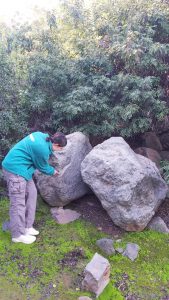
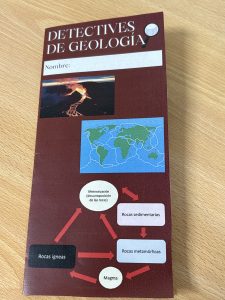 Bosque Santiago is a center for environmental education within Santiago’s Parque Metropolitano. As an intern, I planned a geology workshop for kids as my personal project, and helped out with other workshops, tours, and events.
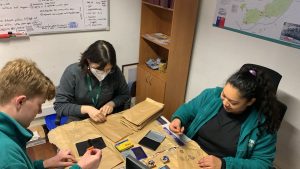 Environmental education is my dream field of work. I love to teach others, invent games and activities, and I am passionate about sustainability and community outreach.
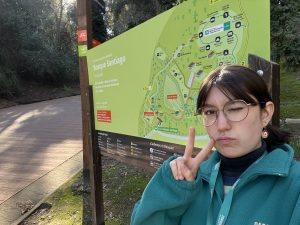 I did not expect there to be so much freedom in this internship, however I ended up enjoying how much autonomy I had in the position. I was able to choose my own personal project and work on it at my own pace. Because of this, I was able to improve my proactivity and advocate for myself.
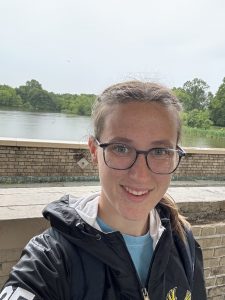
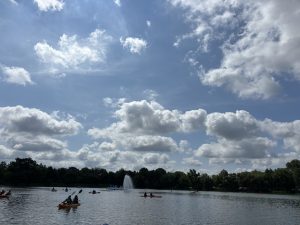
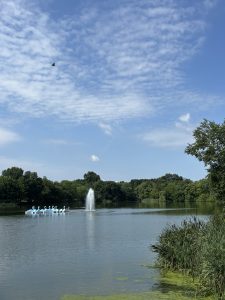
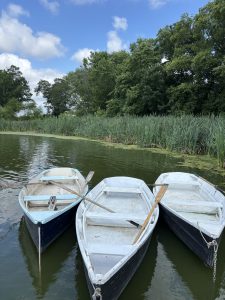 I have gotten to be involved with so many different programs at Discovery Pathways this summer! Early on, while the school year was wrapping up for local K-12 schools, much of my work involved preparing for the start of our Youth Environmental Leaders Program, assisting on field trip visits, and working at the community boating and family fishing events. I also got to watch my first dragon boat race, since the Discovery Pathways team had a regatta in Philadelphia which was really exciting. For the last month, I have primarily been assisting with the Youth Environmental Leaders Program. This program targets BIPOC, immigrant, and refugee youth and gives them opportunities to learn about leadership, public speaking, fishing, boating, water testing, and sustainability. For the leaders, returning students who are now serving as mentors to the new students, the program also aims to assist them with job readiness skills such as practicing interviews and creating a resume. I have also been busy with visits from local rec centers and community groups who visit us at FDR Park where we take them on nature walks, kayaking on Edgewood lake, or fishing. I have also been assisting at the free community boating and free family fishing programs which target the local Southeast Philadelphia community. These programs can serve hundreds of visitors on any given day, and are an excellent opportunity for me to learn more about the local communities and practice my public speaking skills.
 I initially learned about Discovery Pathways through my lab partner, who had interned there last summer. Some students from Dr. Young’s Fish and Community Praxis Class, which I took this spring, were also placed at Discovery Pathways which gave me another opportunity to connect with Adam and the organization.